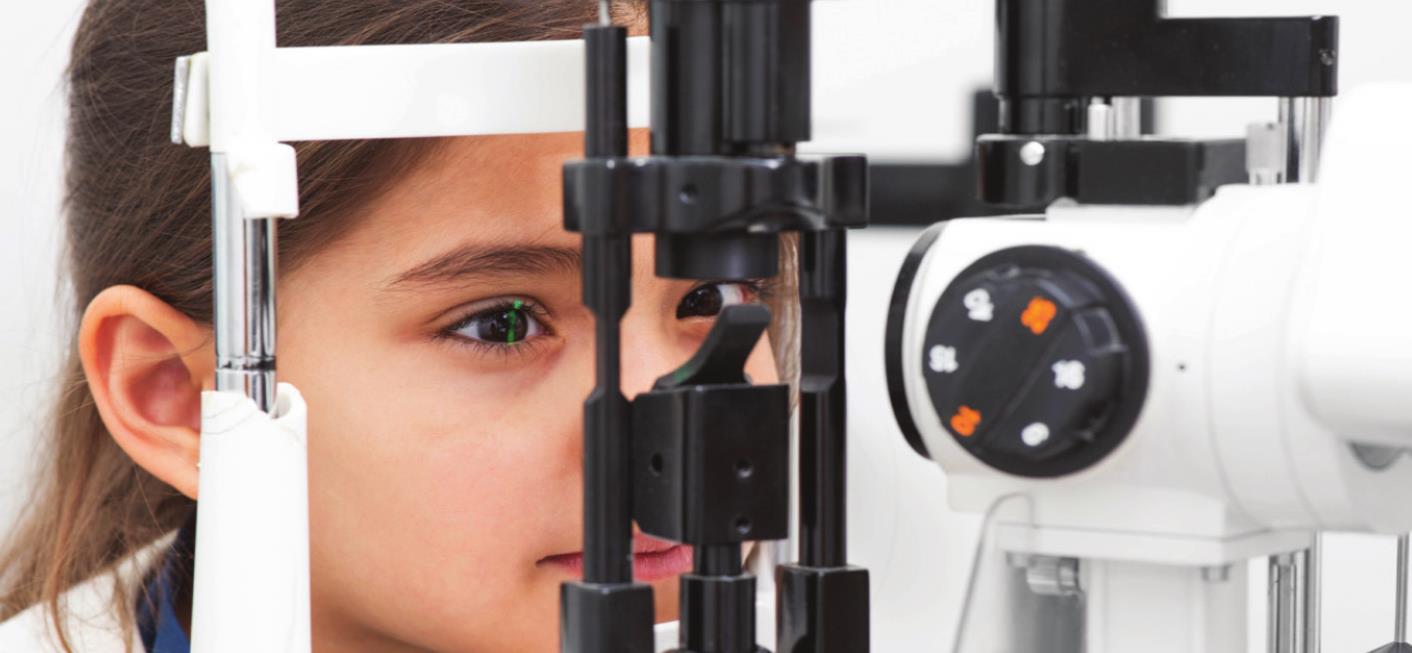
IF YOU’RE THE PARENT OF A SCHOOL-AGED CHILD, the month of August will likely be spent stockpiling school supplies, picking out backpacks, and finding new clothes or uniforms that fit just right. But, as you complete your back-to-school checklist, don’t overlook the critical step of scheduling a comprehensive eye exam for your child.
Why add an eye exam to the already lengthy back-to-school list? Learning and good vision are inextricably linked, and the demands on a child’s eyesight increase steadily with progression through school. A child who can’t focus properly on the subject matter at hand is destined for poor academic performance, which can have a lifelong impact on his or her attitude toward school and learning.
What’s more, with the growing reliance on tablets, smart phones, and other electronic devices as educational tools, the increase in screen time is leading to more visual challenges, such as computer vision syndrome (CVS), among kids of all ages.
But it’s not just academic performance that is impacted when kids’ eyesight is suboptimal. Their athletic and recreational activities can suffer, as well. After all, it’s difficult to enjoy and excel in team sports when you can’t keep your eye on the ball. Even playing games in the backyard with friends is hampered when a child’s vision is impaired.
It’s important for parents to be aware that a child’s vision matures right along with the rest of his or her body and that prescriptions can change frequently. Therefore, regular eye exams are needed to catch changes for the worse before they begin to impact learning. According to the American Optometric Association (AOA), every child should receive a comprehensive baseline eye exam between the ages of 6 months and 12 months, at least one comprehensive eye exam between the ages of 3 and 5 years to check for any conditions that could have long-term effects, and an annual comprehensive eye exam before starting first grade.
But aren’t those vision screenings performed by your child’s pediatrician or school nurse sufficient? Don’t bet your child’s vision and academic performance on it. Vision screenings should not be considered a substitute for comprehensive eye exams. While they can help alert parents to the possibility of vision impairment, they can also overlook serious problems that an experienced eye doctor would catch.
Your eye doctor’s main concern in conducting an eye exam is establishing a clear picture of your child’s eye health and vision development. Along with conducting a comprehensive review of your child’s health and developmental history, the doctor can check the eyes, both internally and externally, for evidence of disease or general health problems; test your child’s visual acuity at near and far distances; check eye coordination and eye muscle function; verify that the eyes can perceive depth and easily shift focus from near to far; check eye-hand-foot coordination; and test for problems like amblyopia (lazy eye), strabismus (crossed eyes), color vision deficiencies, nearsightedness, farsightedness, and astigmatism. If the exam reveals any vision or eye-health deficiencies, the doctor can recommend the appropriate corrective measures. Parents and teachers can do their
Parents and teachers can do their part to help detect vision problems in their children or students by staying alert to the following signals:
• Holding reading materials too close or consistently sitting too close to the television
• Using a finger to follow along or losing their place when reading
• Squinting, tilting the head, or closing one eye to see better
• Frequently complaining of headaches or tired eyes
• Frequently rubbing the eyes
• Excessive tearing or light sensitivity
• Avoiding activities that require near vision, such as reading or using the computer
• Avoiding activities that require far vision, such as sports
• Getting lower-than-normal grades.
Any of these symptoms should prompt a visit to the eye doctor to have your child checked for refractive errors such as nearsightedness, farsightedness, or astigmatism.
School places demands on kids’ vision that go well beyond what’s written on the blackboard. So, schedule a comprehensive back-to-school eye exam now and give your child the best opportunity for academic success in the future.