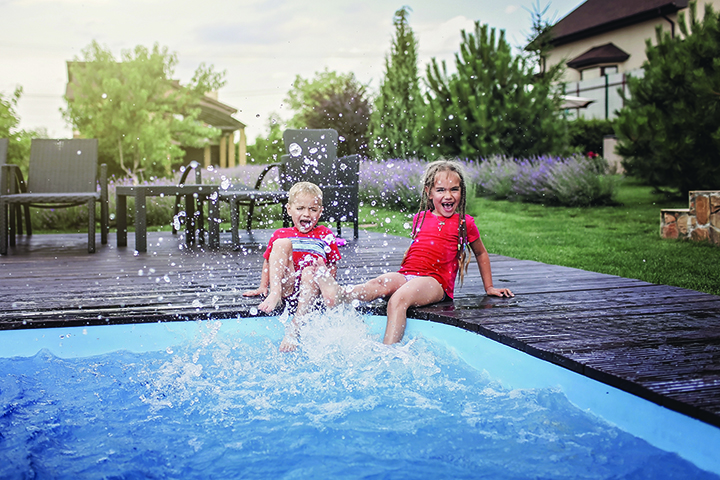
IT’S EVERY POOL OWNER’S worst nightmare—an unattended youngster climbs into the pool and accidentally drowns before anyone realizes what’s going on. And this fear is well founded. The US Consumer Product Safety Commission (CPSC) estimates that nearly 300 children under the age of five drown in swimming pools and spas nationwide each year, and more than 3,200 children in that age group go to hospital emergency rooms due to submersion injuries in pools and spas.
But parents and caretakers can do more than simply throw up their hands and hope for the best when it comes to keeping young kids safe around the pool or spa. The good news is, with a basic precautions, parents and caretakers can significantly reduce the likelihood of an accidental drowning. Here’s how:
Fence it in
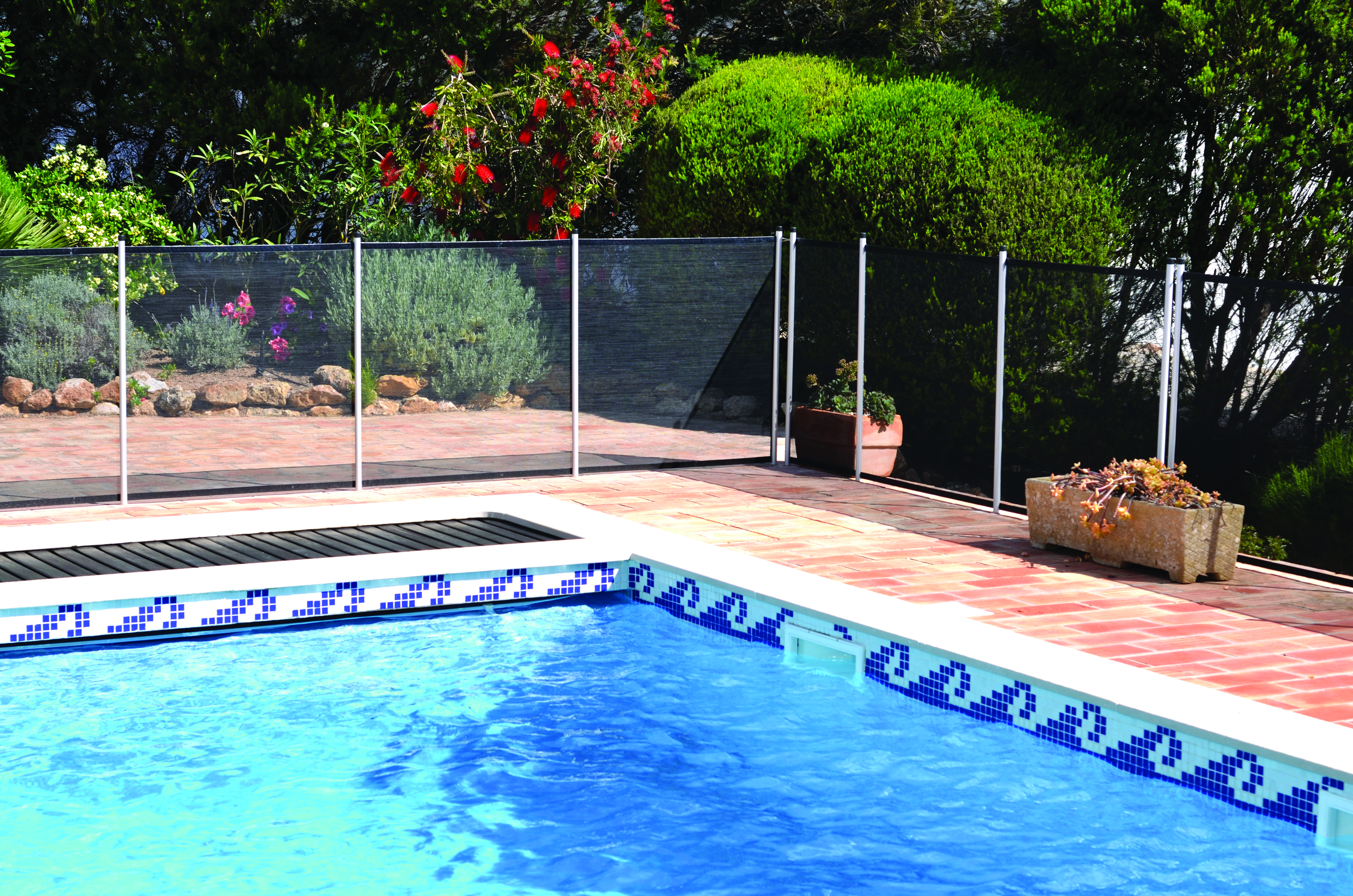
A physical barrier, such as a fence or wall, should be installed around the entire pool. The barrier should be a minimum of four feet in height and should offer no foot- or hand-holds to allow a child to climb over. The gate into the pool area should be self-closing and self-latching, and the latch should be located beyond a child’s reach.
Don’t make the mistake of assuming that because a child isn’t big enough or strong enough to open the pool gate today, he or she won’t be able to open it tomorrow, next week, or next month. Young kids’ capabilities are constantly changing, and you must be prepared to modify your safety measures to accommodate this changing reality.
Sound the alarm
If, as is often the case, the house forms one side of the barrier around the pool, install audible alarms on all doors leading to the pool area. That way, you’ll know immediately if one of the doors opens unexpectedly. Don’t assume you’ll hear a drowning child splashing and calling for help; drownings typically are silent events.
Battery-operated and electrical door alarms are available at most pool-supply stores. Most models are easy to install and are designed so adults can turn them off temporarily with a keypad or switch when they wish to use the pool. As an added line of protection, you can also install a battery-powered in-pool alarm, which will trigger when water displacement is detected.
Install a power safety cover
For an even greater level of safety, a power cover can be installed over the pool. These motor-driven units are designed to exclude children from the pool while opening and closing easily at the behest of adults. Look for a unit that is capable of supporting the weight of two adults and one child so that a rescue can be accomplished in the event that a child falls onto the cover. A very young child can drown in mere inches of water, so the cover should be designed to drain quickly after a rainfall.
Cover the drain
Make sure the pool’s drain is covered and the cover is intact. The suction that the drain produces is strong enough to entrap an adult underwater, let alone a small child. Also, keep in mind that anything that dangles, such as long hair, jewelry, or a loose-fitting bathing suit, can become entrapped in a pool drain or a damaged drain cover. Even when a properly fitted cover is present, kids should be cautioned to avoid playing or swimming near the pool drain.
Teach ‘em to swim!
The best precaution against drowning is to teach kids how to swim. Kids who are comfortable in the water and know how to stay afloat and breathe without the assistance of flotation devices are much less likely to become drowning victims.
Additional pool-safety steps
Along with installing alarms and physical barriers and teaching kids to swim, there are several steps you can take to ensure that your pool never becomes the site of tragedy, including:
• Keep rescue equipment by the pool at all times. If possible, install a telephone by the pool with emergency numbers posted nearby.
• Remove or secure all steps and ladders leading to an aboveground pool when it is not in use.
• Remove toys from in and around the pool when it is not in use so young children aren’t attracted to the pool.
• Never prop open the gate to the pool area.
• Learn CPR, and make sure all babysitters, other caretakers, and siblings know it as well.
• Instruct babysitters about pool hazards and appropriate usage.
• Never, under any circumstances, leave a child unattended near the pool.
• Check the pool first if a child is missing, including the bottom, surface, and surrounding area.
Most important, avoid becoming complacent or lackadaisical about kids and pool safety. Even if kids have had swimming lessons, don’t assume they’re “drownproof,” and never allow flotation devices to substitute for adult supervision.