WHAT IS YOUR definition of “camping”? Does it involve making s’mores, cooking hot dogs on a stick, and gathering around the campfire to sing Kumbaya? Perhaps even sleeping in a tent? Right on the ground! Now, doesn’t that sound like fun?
Actually, for some people it is. But odds are you’re not some people. Like my sisters, you may insist that the Holiday Inn Express is about as rough as it can possibly get. Besides, at a certain age your joints demand a higher level of comfort. When you plan a vacation, your first step is to heed the advice of William Shatner and log on to Priceline.com.
Even so, maybe a spouse coerced you into trying a rental RV just this once to see if you might like it. Now, where do you want to go? Some are inspired by Clark Griswold and believe a cross-country trip with the family would be fun. Plus, it would be educational for the kids to see Mt. Rushmore, Yosemite, and the Grand Canyon on their way to Wally World.
Where should you stay when undertaking such a trip? Popular choices include RV parks and RV resorts. The absolute minimum you should expect in an RV park is full hookups: water, electricity, and sewer. You should also expect to park within 18 inches of your neighbor so when you ask your spouse to pass the salt, your neighbor says, “I’ll be there in a second.” Sometimes it may actually be desirable to have neighbors that close because they could help you figure out how to connect to the water, electricity, and sewer.
An RV resort does not stop at the minimum. No, not by a long, long shot. We met a fellow in Tucson who was touting the advantages of spending the winter in his RV resort. He apparently thought I looked like the kind of guy who would be impressed by a woodworking shop equipped with more power tools than Norm Abram’s. Plus an Olympic swimming pool, 6 tennis courts, a dozen pickleball courts, a couple acres of shuffleboard courts, eight bocce ball courts, and a few dozen horseshoe pits. And a community center with separate rooms for lessons in various arts and crafts, Zumba, yoga, and Tai Chi as well as a space the size of the Palace of Auburn Hills for potluck dinners with your fellow “campers.” Do you detect a disparaging tone in this narrative? Just as there are people who have no interest in “sleeping right on the ground,” there are also people who have no interest in spending even one night in an RV resort. Shirley and I are among these.
We gave up that sleeping-onthe- ground business in 2009 to get out of the weather and bump up the overall level of comfort. When we were tenters, setting up camp usually included stretching a tarp between trees in order to have shelter for cooking on the Coleman stove. But tarps don’t provide much shelter from wind-driven rain or mountain sleet and hail. Folding a tent and tarp after a rain—or during a rain—is a major source of revenue for marriage counselors.
Last spring, for example, we had neighbors at a Corps of Engineers campground on the Natchez Trace who evidently were new at it. The man was having a hard time figuring out how to clip the tent to shock-corded poles. Wife and two kids were “helping,” and the tone of their interactions suggested it would not be advisable for me to butt in. He was already getting all the help he could stand. When light mist evolved into light rain, he suggested they stop helping and head over to the picnic shelter. When we woke up the next morning, they were gone. Eagerly looking forward to their next camping adventure, no doubt.
In 2009, we stepped up from a tent to a Roadtrek, a Class B motorhome built on a Chevy 3500 van chassis. A friend,whosetonesuggestedhethought 20 feet might induce claustrophobia, asked “Are you going to live in that?” To which I responded, “No, we are going to live out of that.” The rig was a place for sleeping in comfort and cooking inside when the weather did not cooperate. Plus it was small and agile enough to drive and park right on the street in cities like Savannah, Charleston, New Orleans, San Antonio, St. Augustine, Phoenix, Tucson, and...well, you get the idea. After a quarter million miles, we replaced the Roadtrek with a Pleasure-Way motorhome, another 20-foot Class B.
Okay, so “motorhome” may be too grandiose a term for either vehicle, but they had everything we need: propane stove; refrigerator that runs on AC, DC, and propane; onboard power generator; microwave; toilet and shower; roof air conditioner for summer; and propane furnace for winter. We sleep in our own bed every night, and our pillows are always My Pillows. Oh, and small flat-screen TVs for the rare occasions when we are within range of a signal. So far, that has been never, so Shirley is lobbying for its removal as we did in the case of the Roadtrek.
Where are these Third World, uncivilized places without TV coverage? You may have heard of some of them: Yellowstone, the Tetons, Zion, Bryce Canyon, Grand Canyon, Denali, Rocky Mountain National Park. The list goes on considerably. Of course, if you absolutely insist on TV, a satellite dish can provide it anywhere those pesky trees don’t get in the way.
With rare exceptions, national park campgrounds do not offer hookups for RVs. Even so, some RVers have found that, if they screw their courage to the sticking place, they can survive short term without all the amenities. Some are tempted to venture even further out of their comfort zone, so to speak, by going where no man has gone before—boondocking.
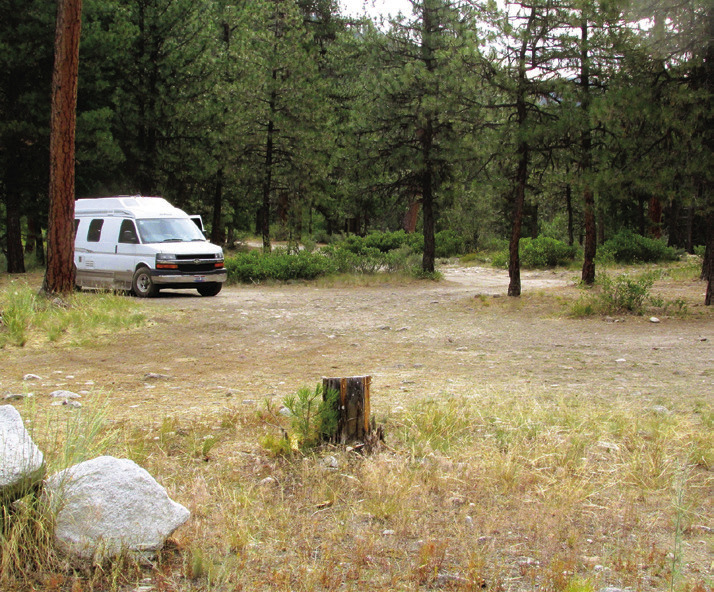
Boondocking is also called dry camping or dispersed camping. For us, it means camping without a campground, but some RVers refer to any place without hookups as boondocking, including nights spent at Walmart or Cracker Barrel while traveling. Either way, you need to be self-contained; that is, have your own water supply, food storage, and a way to cook it.
National forests, BLM properties, wildlife refuges, and other places way out in the boonies may have campgrounds, but they also allow camping almost anywhere you can get safely off the road. So does the entire state of Alaska. There are a few minimalist rules, such as don’t set the world on fire, but official restrictions are mostly unnecessary because of the restrictions imposed by nature. The first rule is, you can only go where you can go. That’s why you typically won’t see many of those really big rigs deep in the woods. Gravel mountain roads with sharp turns and low-hanging branches tend to discourage those concerned about their paintwork and turning radius.
Some RVers find the thought of boondocking rather stressful because they get nervous when they are more than 100 feet from civilization. The sound of things moving around out there at night can be scary. People ask if we see bears. Well, yes we do. Packs of coyotes and rabid wolves? Yep, them too. Venomous snakes? Uhhuh. Even an occasional Sasquatch, though they are usually too shy to come closer than 50 feet and move away quickly. (All of my Sasquatch photos are blurry.) What
did for potential campers. (Cue up the dueling banjos.) A friend in Philadelphia asked if we ever get nervous about muggers in remote mountain locations. Really? More than 500 people were murdered in Philadelphia last year. More people get mugged in Philadelphia every weekend than in an entire year on all the mountain trails in the country combined. We tend to be more comfortable with the devil we know. Security has psychological as well as physical implications.
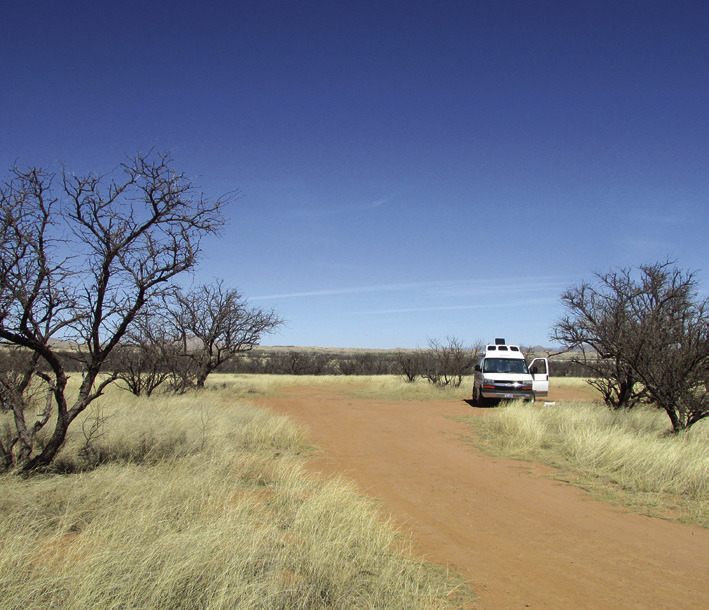
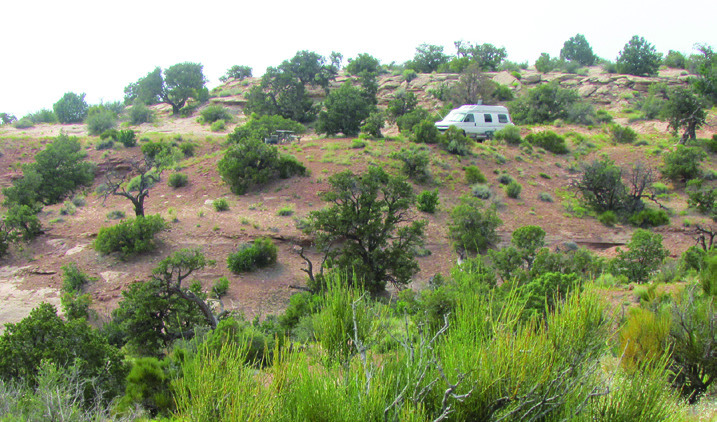
From the boondocker’s perspective, remoteness is a feature, not a bug. Getting far from the madding crowd is one of our chief motivations. I sent my friend Bill a photo from our camp in Buenos Aires Wildlife Refuge in Arizona. “It looks remote,” he said, “and desolate.” Bill is highly social and would find it nearly impossible to last 24 hours without significant human interaction and access to high quality fresh meat and produce. Bill is something of a foodie.
Speaking of human interaction, that is another challenge of boondocking. Extensive sociological research concludes that the average husband can go almost 22 minutes without annoying his wife. Researchers determined that 7% of husbands were able to double that. So, it is not just lack of human interaction that can be daunting; it is also too much of it with the wrong person. (If you have overheard her telling her friends “He’s always under foot,” you are probably not one of the magnificent seven.)
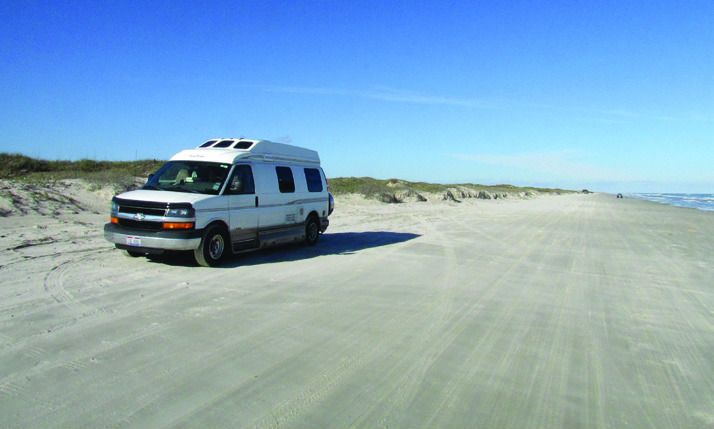
Boondocking, the way we define it, is often free, but money is not the determining factor. National parks campgrounds are an unbelievable bargain in the first place. Even more so after you reach 62 and have a senior pass that provides free admission to all federal recreation sites and half off the camping fees. The first couple of times we visited Padre Island, near Corpus Christi, TX, we stayed at Malaquite Campground and paid a whole $4 with my geezer pass. During one of those government shutdowns, the campground was closed so we parked right on the hard-packed sand beach. Decided it was way better to be lulled to sleep by the sound of surf just a few feet away. We have chosen the beach since then and would stay there even if Malaquite were free and they charged for the beach.
Another reason for boondocking is to actually get a site in one of those overcrowded national parks. We learned this at Zion when the park campgrounds were full even though it was after Labor Day. The ranger suggested that, if we did not mind camping for free, we could go back up the road a couple of miles and park right on the banks of the Virgin River. Magnificent! The next morning, we returned to the park and secured a site with more convenient access to the glories of Zion.
If we are likely to arrive too late in the day to secure a national park campsite or don’t have a reservation, we stay someplace just outside the park. In the Routt National Forest near Rocky Mountains NP, in the BLM just outside Canyonlands, in Bridger-Teton National Forest at the edge of Grand Teton NP, in Shoshone and Gallatin National Forests east and west of Yellowstone.
Sometimes, though, boondocking is not the way to get away from the crowds. For ten months of the year, Quartzite, AZ is a town of about 3,600. In January and February, the population exceeds that of Hong Kong as hordes of RVers descend on the surrounding BLM lands. Many of them are there for rocks—local gem stones they hunt for and trade. Most, though, are there to hang out and party. Your typical boondocker is an antisocial curmudgeon seeking the solitude and quiet of a wilderness experience. Quartzite, on the other hand, attracts those who want the exact opposite. You might think of it as a modern-day version of the rendezvous held by the mountain men and Indians in the early 1800s. A little trading of furs and trinkets. Socializing with Indian women, all of whom look just like Donna Reed dressed up as Sacajawea. After a few drinks, that is. Then a little wild dancing. A little more drinking. A little more socializing. Repeat until you run out of furs and trinkets. And booze.
Most of the year, those mountain menweresolitaryhuntersandtrappers. Boondockers as it were. The point is, boondocking can include both solitude and an occasional lapse into highly ritualized debauchery. No matter which formofboondockingyouchoose,some of us think it’s just a walk in the park.
If you are considering a trip, to the boonies or elsewhere, you might want to see his posts at AnotherWalkInThePark. blogspot.com. ✲