Sponsored by Wood County Park District
WHAT DO YOU REMEMBER about Joyce Kilmer? When I was a kid, we thought he was a she and “Trees” was just about the dorkiest thing we had ever read. Even so, all the boys had a crush on Miss Penny, our gorgeous fifth grade teacher, so we paid attention when she used “Trees” to introduce elements of poetry—rhyme scheme, meter, personification.
Last October, like millions of others, Shirley and I took a color tour to Shenandoah, the Blue Ridge Parkway, and the Smoky Mountains to enjoy the red, orange, yellow, and gold trees. Great Smoky Mountains National Park is an International Biosphere Preserve because of its wide diversity of plant and animal life. Included are at least 130 species of native trees, more than in all of Europe.
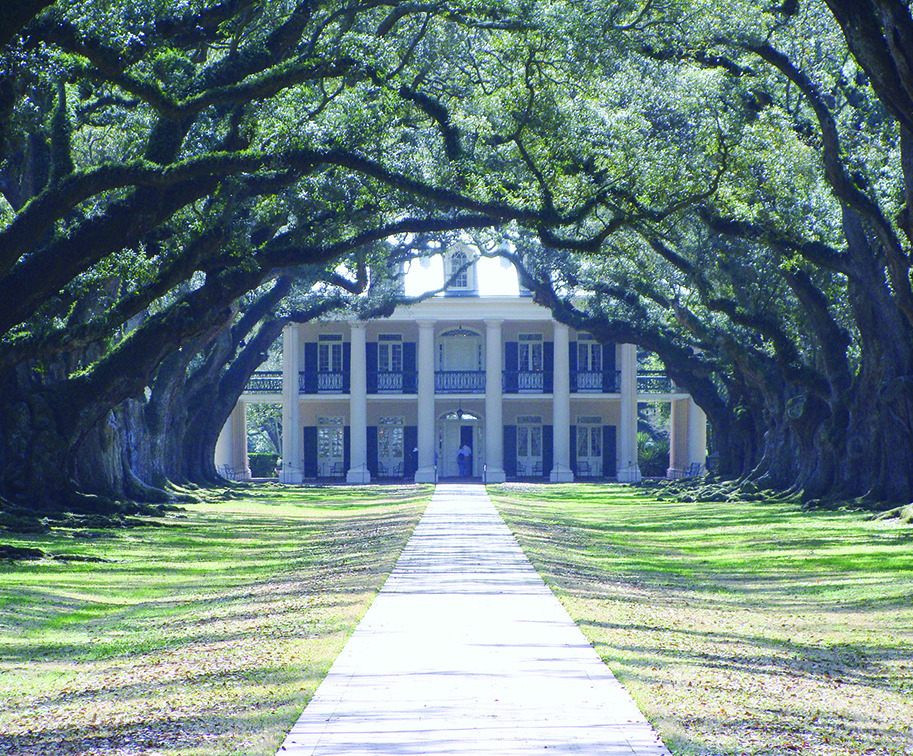
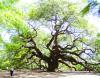
Shirley and I associate particular species with memorable places. Live oaks, for example, grow in the Deep South where they are easy to recognize because of their size and shape. The Angel Oak near Charleston, believed to be the largest east of the Mississippi, is 65 feet high and 25 feet in circumference with a canopy that spreads over 17,000 square feet. That’s three football fields. Live oaks are usually draped with Spanish moss and resurrection fern, so named because it appears dead but comes back to life after a brief shower. Live oak is the quintessential Gone With the Wind tree. Virtually every plantation in the Deep South is approached via a long allee of them—including, of course, the plantation named Oak Alley just up the river from New Orleans.
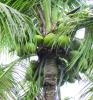
In Lahaina, Maui, Shirley and I bought a selection of tropical fruit from a street vendor and went to eat it at a picnic table on the beach. A local. carrying a long, wicked-looking machete, approached and looked at us for a minute. Then he began to shimmy up a nearby palm. He threw down a couple of coconuts and offered one to us—holding it in his left hand while he split it. One of us had been a little nervous at first because he might have somewhat less hospitable uses for the machete. Shirley was not concerned, of course. The milk was delicious.
When we travel in the West, we sometimes enter fire zones. Because wildfires make the national news, family and friends call to see if we are OK. Usually we are a long way from the actual fire, but on occasion we pass through burned-over places or the area where the smoke eaters have staged their firefighting equipment. Wildfires are much more common in the West than hurricanes in Florida. It just comes with the territory.
Sometimes, though, it is uncommonly horrendous. In 1988, we watched TV news aghast when fires swept through Yellowstone. If it were not for a miraculous last-second shift in the wind, the iconic Old Faithful Inn would have been lost. We took it personally because we had stayed there.
When we returned in 1990, we attended a ranger talk. A visitor asked how they had managed to replant millions of trees in such a short period of time. After all, not much planting can be done during the eight months of winter in Yellowstone. The ranger replied that they had not planted a single tree. The dominant tree in Yellowstone is the lodgepole pine, so named because its slender, straight trunks were used by plains Indians as frames for teepees. The cones of lodgepole pines are glued shut by a natural resin that melts only at high temperatures to release the seeds. Fire also releases organic nutrients that had been bound up in living matter. The increased sunlight in burned areas encourages the growth of wildflowers and shrubs that would otherwise not thrive. Thus, fires that seem destructive are actually the source of forest renewal.
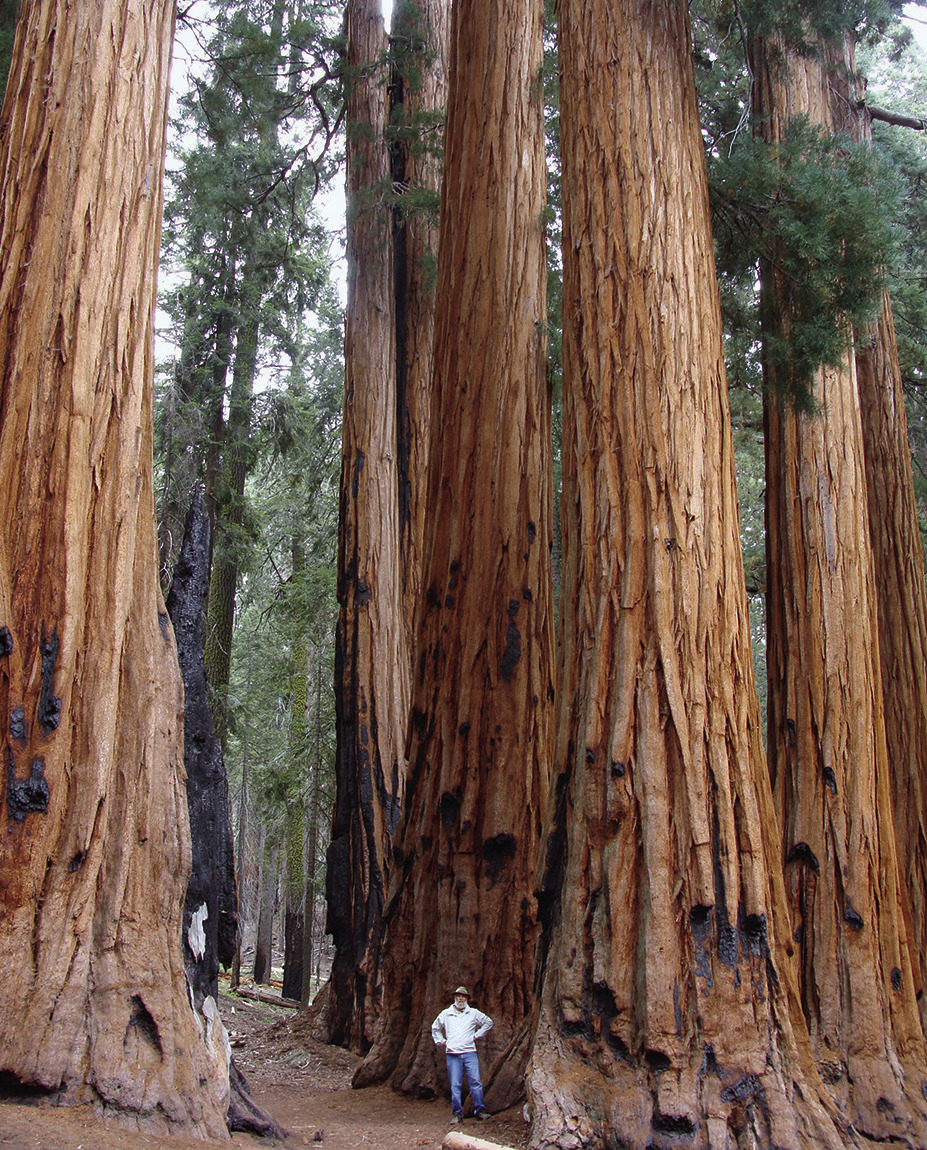
Among other trees that cope with fire this way are the giant Sequoias that appear to do an even better job of it. You probably know that Sequoias are the largest trees in the world based on total size, not just height. The General Sherman Sequoia has been declared “The World’s Largest Living Thing” at 300 feet tall, 52,500 cubic feet, and 56,600 tons. Even its branches are bigger than entire large oak trees. The Sequoias preserved in the national park are amazingly impressive. Photos just can’t do justice. For one thing, there is no place you can stand that will get an entire tree in the picture so you usually have to be content with the lower 50 or 60 feet. And include a person in the photo to provide some sense of scale.
Like lodgepoles, Sequoias have serotinous cones that rely on fire for propagation. Lodgepoles may be consumed in particularly fierce fires but Sequoias are better protected by bark up to three feet thick at the base. The crown and even the lower branches are way, way up there, usually out of reach of the flames. They are not fireproof, but they are fairly fire resistant. Another benefit for the trees is that fire consumes the natural litter on the forest floor so their seeds have bare ground in which to take root.
Redwoods National Park is located in the far northwestern corner of California. The aptly named Big Tree is 345 feet tall, 68 feet in circumference, and 1,500 years old. Like Sequoias, redwoods have thick, fire-resistant bark, but in 2020 there was an unusually intense fire that led scientists to an amazing discovery. The fire reached as high as the canopy and it looked like the defoliated trees would die. The redwoods, however, drew on sugars stored in their trunks to rejuvenate dormant buds, up to 1,000 years old, hidden under the bark. A few months later there was fresh growth, not of new trees but “dead” trees that had come back to life.
But there are threats to redwoods other than fire. Hyperion is the tallest tree in the world at a tad over 380 feet. You can’t go get a selfie with Hyperion because the park service has blocked access out of fear that tourons (tourists who act like morons) might deface or otherwise injury it. We have to take the rangers’ word that it is pretty awesome.
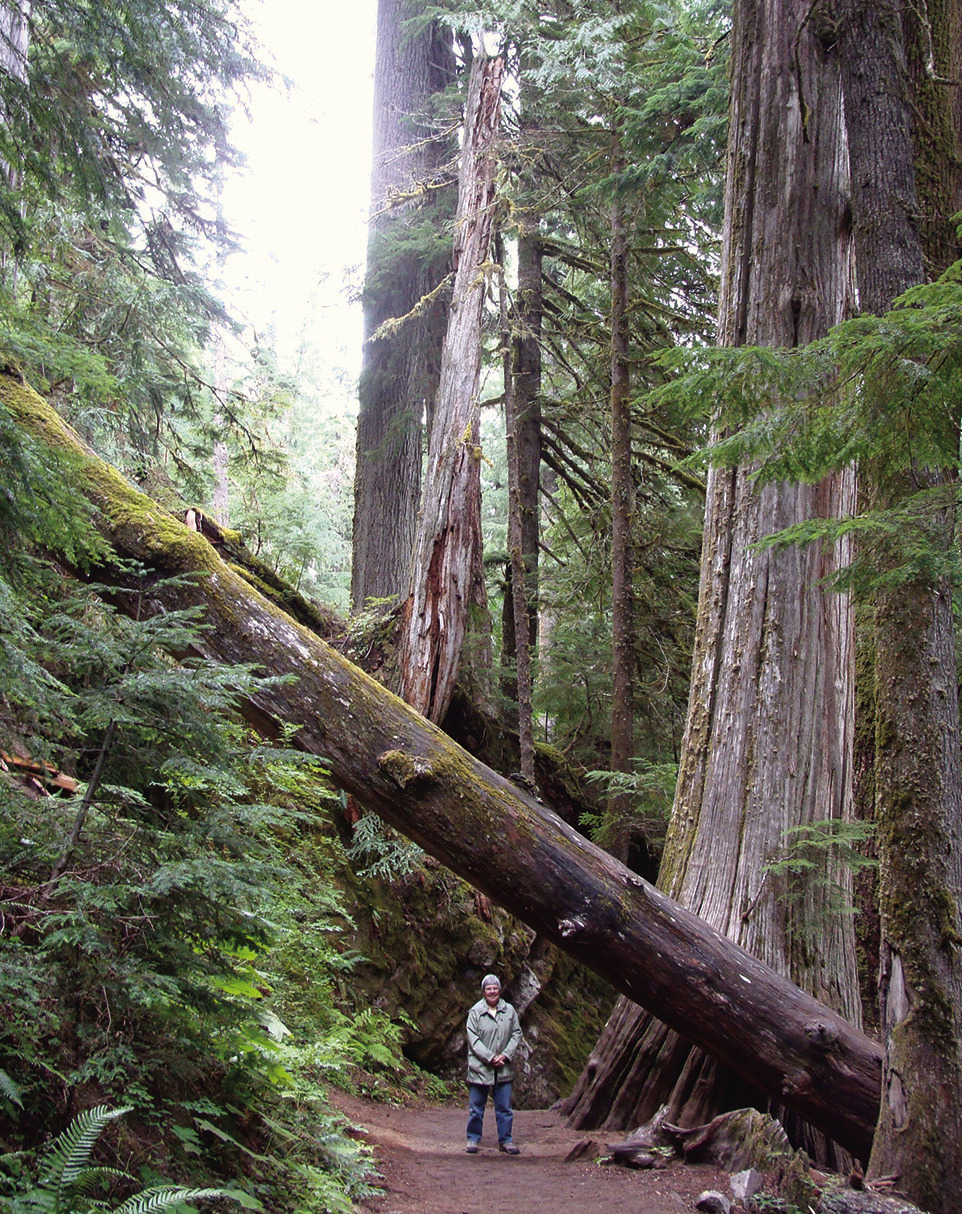
There are trees all over the Pacific Northwest that are pretty awesome because the growing season is longer and wetter. At Mt. Rainier National Park in Washington, we had a nice campsite tucked back among huge Douglas firs. Spent four days there waiting for fog and drizzle to clear. During the wait, we spent time in the park lodge and took the trail out to the Grove of the Patriarchs to admire some more big trees. The tree canopy sheltered us from the drizzle until it turned to a heavy downpour. Shirley finally convinced me to move around to the other side of the mountain where it might be clear. As you may know, it can be easier to live with a little dampness than with a spouse who is right.
From Rainier, we continued to Olympic National Park, which occupies about half of the Olympic Peninsula of Washington. Most of the other half is Olympic National Forest. We had planned to camp at Heart O’ the Hills, but the Hurricane Ridge Road was closed by a landslide. The weather there is influenced by a phenomenon called the Pineapple Express, an atmospheric river that brings warm air holding a lot of moisture. As air is forced to rise by the mountains, moisture condenses as rain and, on Mt. Olympus, about 50 feet of snow. The valleys on the west side of the mountains, in the Hoh Rain Forest, are the wettest place in the continental U.S. Landslides are associated with the deluge.
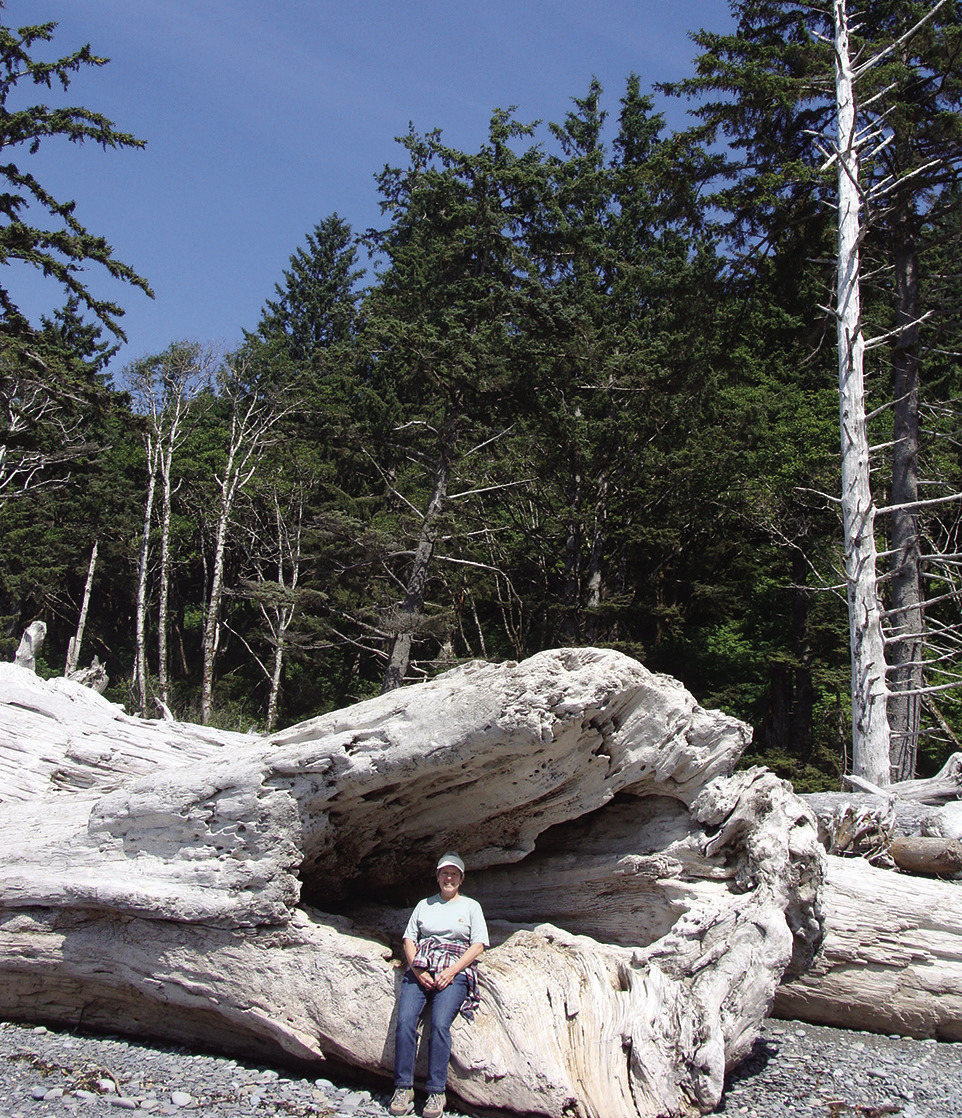
Coastal Washington is scenic, rugged country with sea stacks just offshore and what appears to be impenetrable forest on the east side of Pacific Coast Highway. Visitors are cautioned to stay away from driftwood strewn along the gravel beaches when the tide is rising. It can be fatal. We are not talking about the kind of driftwood used for artsy-craftsy projects. Landslides resulting from powerful Pacific storms can uproot even massive trees. Two-hundred-foot Pacific silver fir, Douglas fir, and western hemlocks are carried to the ocean by swollen rivers. The incoming tide can unexpectedly lift these fallen giants from their resting places on the beach. The prospect of getting pinched between a few hundred tons is worthy of your attention.
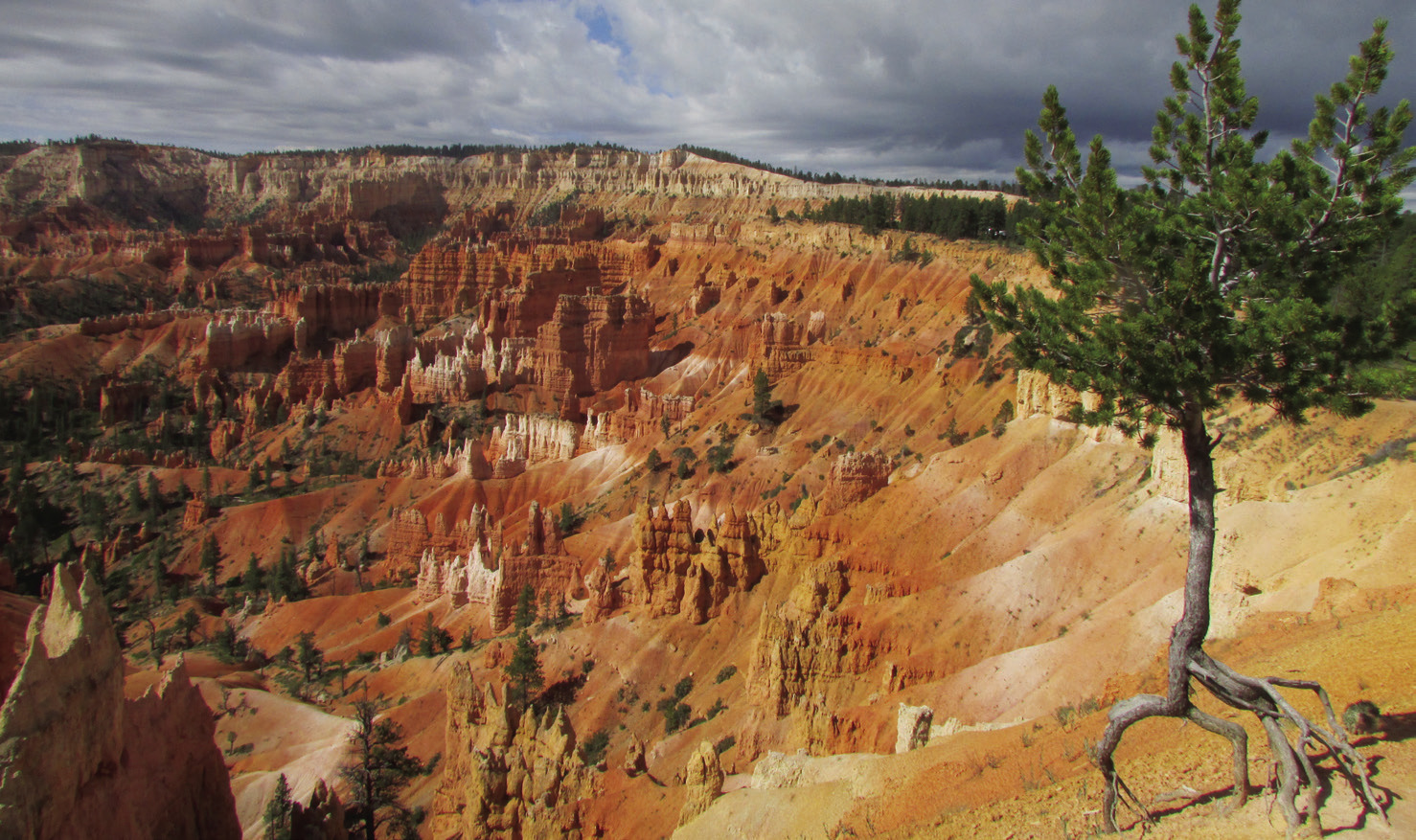
Also worthy of your attention are trees in the contrasting environment of the Desert Southwest. At the far end of the road in Bryce Canyon National Park is a grove of bristlecone pines, the world’s oldest trees. Methusela, the current oldest tree, is approaching his 4,800th birthday. Prometheus, his predecessor, reached 4,900 years. But, remember Hyperion the redwood in a secret location? The location of Methusela is also a secret because Prometheus was cut down by a graduate student doing research on climate change.
Joyce Kilmer’s poem ends with “Only God can make a tree.” Fortunately, in most cases we can still admire His handiwork by taking a little walk in the park.
LeMoyne Mercer is the travel editor for Healthy Living News. You might want to see more of his stories and photos at AnotherWalkinthePark.blogspot.com.