
Sponsored by Wood County Park District
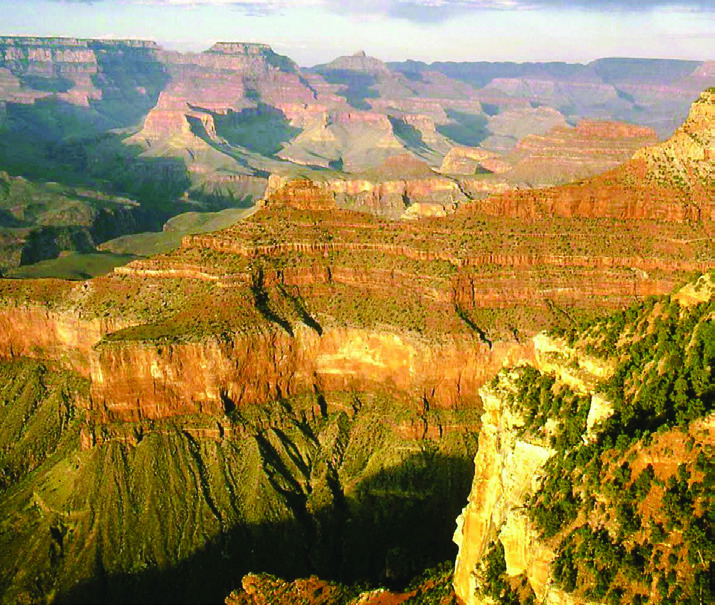
AS MOST READERS KNOW BY NOW, Shirley and I are big fans of our magnificent national parks. They are repositories of scenic splendor of all kinds and home to countless animals and birds we look forward to seeing. I have been asked several times how many parks we have visited since we started with the Smoky Mountains in 1975. I continue to avoid counting, though it is probably in the 40-50 range, because checking them off a list was never the point.
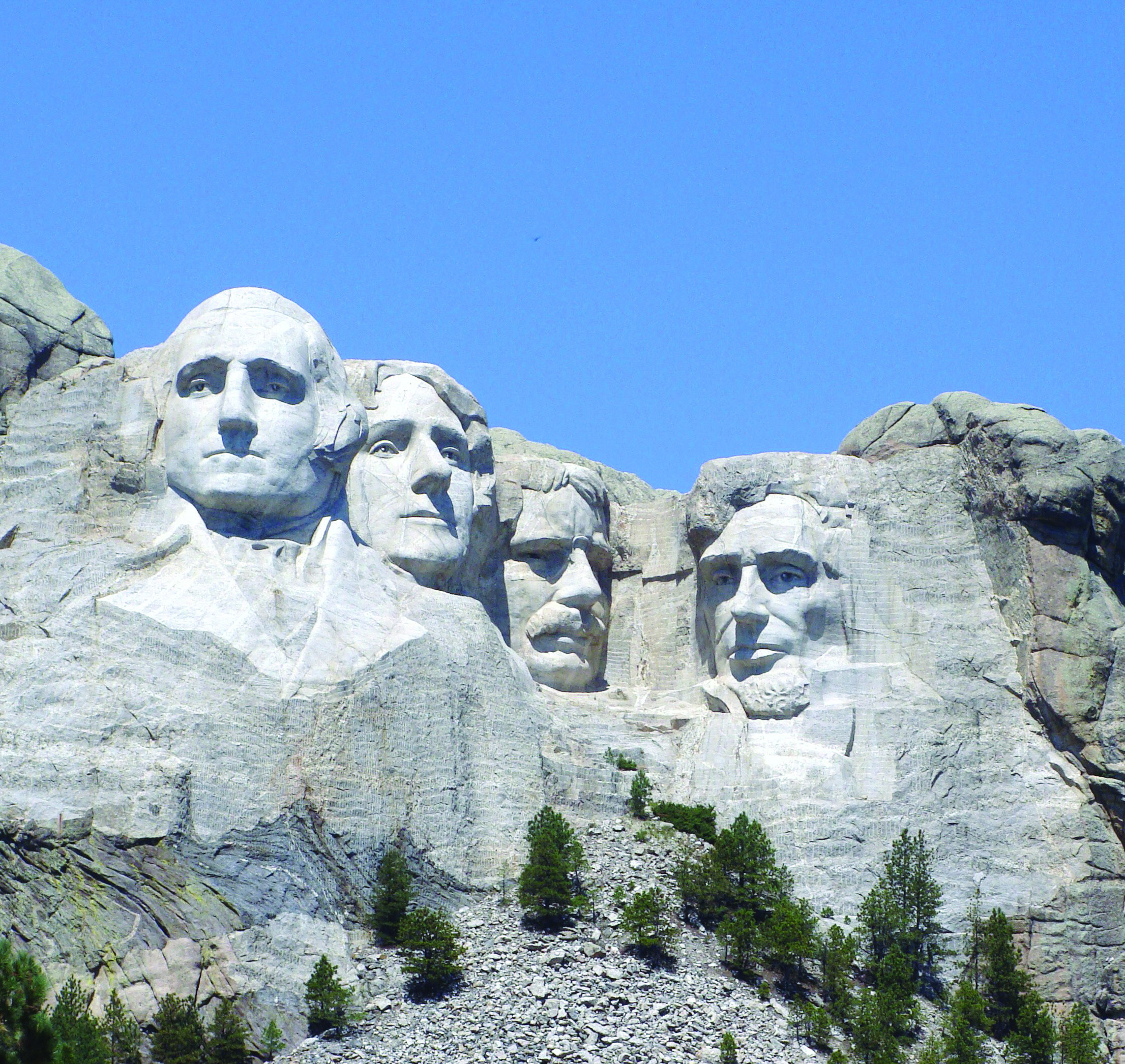
In retirement, our preference is to be someplace warm in the winter and someplace in the mountains in the summer. Along the way to and from the national parks, there have been literally hundreds of other places you have probably never heard of. But the list also includes places like Mt. Rushmore, which is definitely worth a visit but, perhaps, not worth driving to far western South Dakota for its own sake.
When traveling to the national parks, we have often stayed for a night or more in national forests just outside the parks and therefore in similar environments. But the forests are dramatically different in some significant ways. National parks are operated by the Department of the Interior with a mandate to protect and preserve natural features and wildlife. National forests are operated by the Department of Agriculture to provide for multiple use. Many people are confused by the difference between “preserve” and “use.” Forest implies trees, of course, but the trees in national forests are treated as natural resources that are subject to harvesting. That can mean logging by lumber companies or wood for personal use by individuals who have secured a permit to collect firewood or even a Christmas tree. Animals in national parks are protected except when the population exceeds the carrying capacity of the environment. In national forests, wild animals may be hunted during the season. In addition, domestic animals may graze provided there is a permit and fee paid. In the West, that typically means horses, cows, sheep, and goats.
For 45 out of our 50 years (that is, before COVID), we chose to camp in a forest just outside the park in order to get in the park registration line early. At Mammoth Campground in Yellowstone, for example, opening time was 8:00 a.m. but a line formed about 6:30. We camped for free right on the banks of the Yellowstone River in the aptly named Paradise Valley. In the West, the national forests usually permit camping just about anywhere you can get safely off the road. Also, when coming down from Glacier NP, we have camped in a couple of the established campgrounds in Gallatin NF and entered via West Yellowstone, MT.
When arriving via the East Gate, we have stayed in Wapiti and Rex Hale campgrounds in the Shoshone NF. We never visit Yellowstone without including Grand Teton NP, its close neighbor just a few miles south. Sometimes we go to the Tetons first. When Gros Ventre, our favorite campground, was full, we drove up the NF road behind Kelly to boondock in Bridger-Tetons NF.
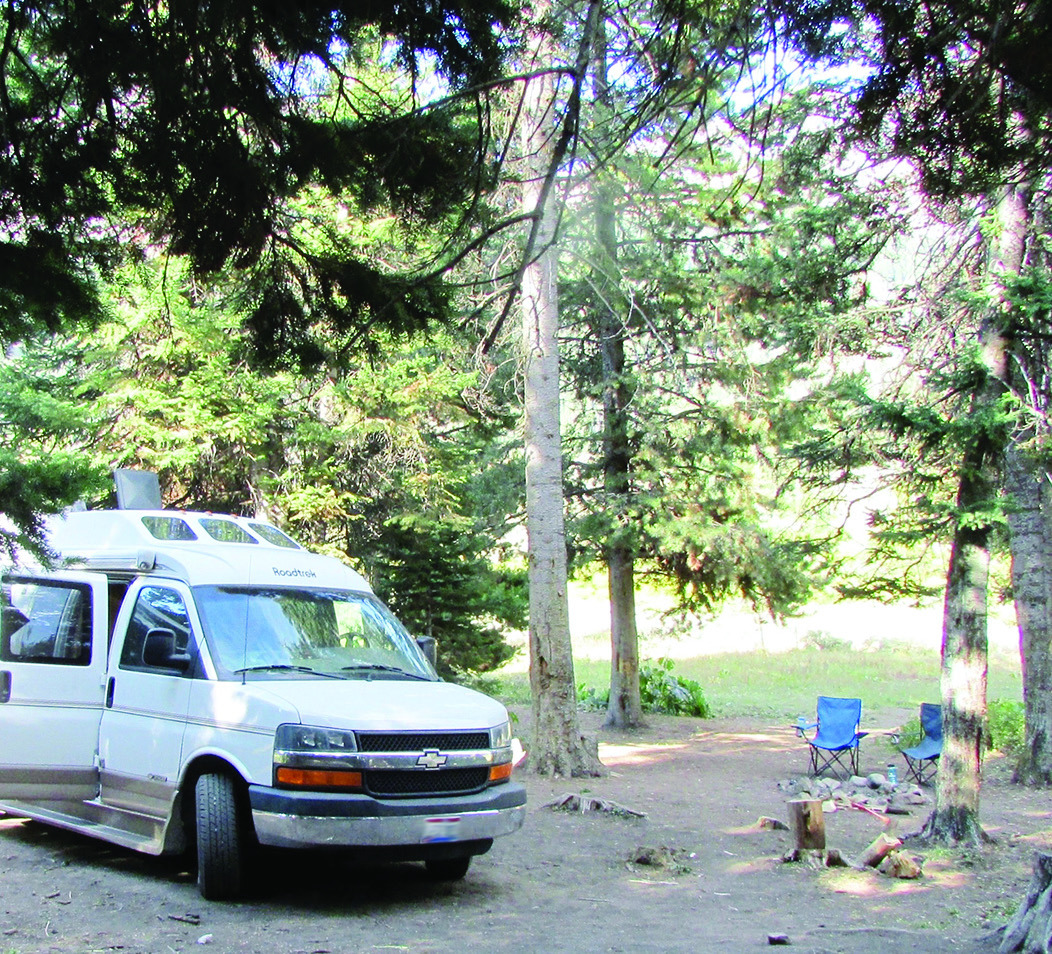
Boondocking, by the way, is camping without a campground. Virtually all the national forests in the West permit camping just about anywhere you can get safely off the road. It is usually easy to spot a clearing in the woods where someone has piled up rocks for a fire-ring. It is considered good practice to use an existing spot. In addition to camping for free in this manner, there are established forest service campgrounds with a range of facilities. First level is a campground with clearly designated and numbered sites and a vault toilet. There will be no running water at the sites but usually a faucet or hand pump from which you can fill your containers. Or, if you have a self-contained RV, you don’t care. Some campgrounds have more civilized restrooms, referred to as comfort stations, with flush toilets, sinks, and even showers plus a dump station for RV waste water. The rarest of NF campgrounds have full hookups for RVs—water, electricity, and sewer. This column is being composed at Salt Springs Campground in Ocala National Forest north of Orlando, FL. It is mostly snowbirds in big rigs here in well-manicured and maintained sites, but there is a tents-only area down a short dirt road.
Dirt and/or gravel roads are typical of national forests in the Mountain West. That is one of several considerations if you are thinking about giving it a try. In addition to being unpaved and sometimes rutted and potholed, the roads may also be onelane in places with no way to pass oncoming traffic. Somebody has to back up. This can be a challenge where there is a sheer drop off on one side and a rock wall on the other. Nearly impossible if you are in a big Class A rig or pulling a 30ft. fifth-wheel. Which is why back-county campsites are favored by tent campers, truck campers, small Class Bs and Cs, and folks with compact trailers.
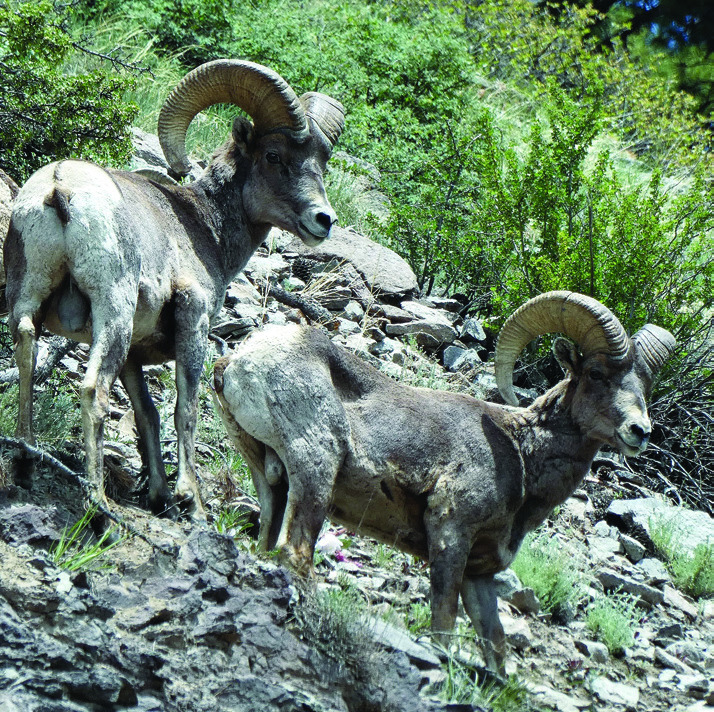
When we are headed into unfamiliar territory, as was the case last year near Monte Vista, CO, we stop at the ranger station to ask about road conditions. The ranger took a look at our rig and said, “Oh, yeah, you can handle it.” This turned out to be literally true. We could “handle it,” but that was not the kind of detailed assessment I should have insisted on. Still, the highlight of the drive back in there was a herd of bighorn sheep that came down the cliff face to meet us right next to the road.
At the small campground, we met a couple from Germany who had been looking forward to touring the great national parks of the West. When they arrived in the US, they discovered that they should have made reservations well before leaving home. Post-COVID, reservations are required at all the parks so you don’t need to worry about getting in line at 6:30. But you do have to know exactly where you want to be six months in advance. The Germans were indignant. “How are we supposed to know where we will be that far ahead?”
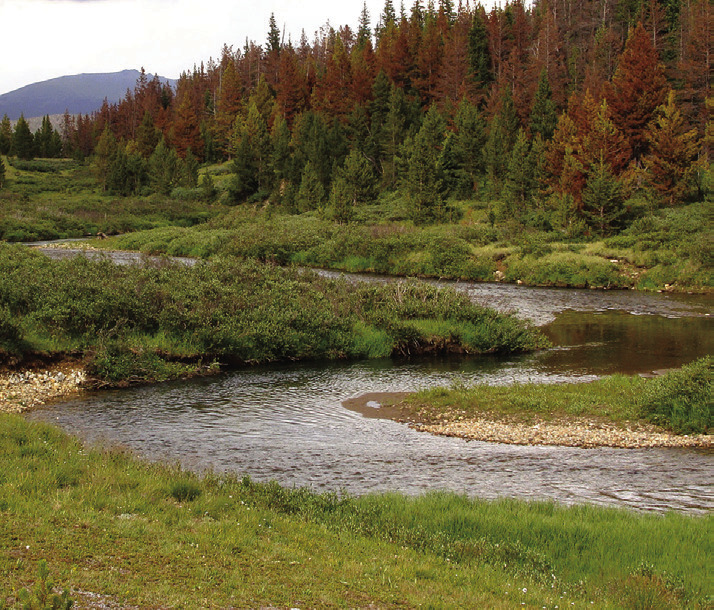
Shirley and I were at that campground because we had deliberately chosen to focus on the camping and fishing in the national forest campgrounds of southern Colorado. They are all along Rt. 160 between Great Sand Dunes NP near Walsenburg and Mesa Verde NP near Durango. We have considerable experience in the national forests all over Colorado: San Juan, Gunnison, Arapaho, Rio Grande, White River, and Roosevelt. In 1999, Shirley learned to flyfish in Hermosa Creek in San Juan NF just north of Durango. For years she insisted, because she is modest beyond all reason, that she was “just a beginner.” Finally I told her, “After your first thousand or so trout you’re not allowed to say that.”
On two occasions, from the Tetons in Wyoming we continued west to fish the rivers of Idaho. Spent a few days in both established campgrounds and boondocking in Sawtooth National Forest near Ketchum and the resort town of Sun Valley. There we attended the very first symphony concert in their brand-new tent-shaped performance center. Then it was over the pass to the headwaters of the Salmon River to compete with the ospreys for trout. More than once, the ospreys ate their catch in a tree near our site so they could gloat about it. We didn’t mind. Shirley and I are catch-and-release fishers.
From Salmon, ID, it is a straight shot north to Missoula, MT and the Lolo Pass. The Pass is where Lewis and Clark stood when making their most disappointing discovery. They thought that, from the crest of the Rockies (or Stoney Mts. as they called them) it was any easy descent downhill all the way to the Pacific coast. What they saw was an endless series of ridges stretching as far as they could see.
Our plan was to fish the Lochsa River, hiking literally on the path they took down the north bank. When we went to the ranger station in Bitterroot NF to buy licenses, he said there was a big fishing club arriving for their annual trout derby. We decided that we didn’t want to contend with that so, after only two days, we continued downstream to where the Lochsa joins the Snake at Hells Canyon and then the Snake flows into the Columbia in Washington.
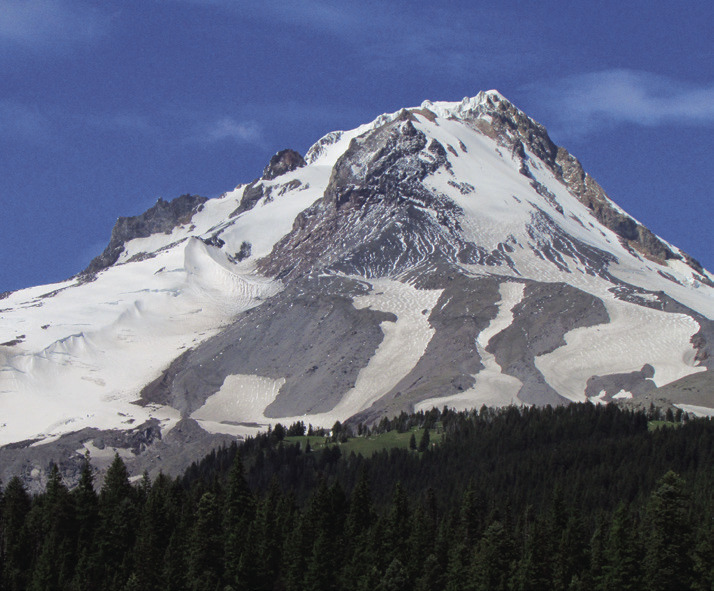
The Columbia Gorge is one of the great wonders of the world as the river makes its way to the sea. (Which, by the way, is now site of the reconstructed Ft. Clatsop where Lewis and Clark spent the winter of 1805-06.) In the Gorge are high cliffs festooned with impressive waterfalls on the Oregon side. On the Washington side, numerous wineries offer tours and tastings. We stayed on the banks of the Hood River in Mt. Hood NF. You can probably guess what dominated the skyline.
There is an Oregon State Park on the beach every eight miles or so along Rt. 101, the Pacific Coast Highway. You would expect there would be plenty of campsites available. But, like us, you would be wrong. Oregonians love their parks. Fortunately, directly across the highway is Siuslaw NF where Blackberry CG lived up to its name by providing the freshest possible berries for our sourdough French toast. All along Rt. 101 there is access to more lighthouses than you are likely to tour and sea stacks and other scenic obstacles to navigation. Thousands of seals, sea lions, and, in the distance, an occasional spouting whale. Tide pools are filled with sea anemones, starfish, clams, and lots of what the kids used to call yucky stuff.
Perhaps traveling like this sounds appealing to you. Maybe not. There are several things to consider before deciding national forest camping is a good idea. Some issues are mechanical, others are attitudinal. My theory is there is nothing either good or bad but thinking makes it so.
The mechanical issues start with the ability of your vehicle to access forest service roads. Some are paved, as here in Ocala NF, and many are carefully maintained gravel. Regardless, don’t go back in there unless you know what you will encounter. Sometimes the traffic you see entering or leaving is a clue to what you can expect. Also consider the specific condition of your vehicle. Is there anything you have been putting off getting serviced that might cause problems a long way from help? Somebody might stop to help. Somebody might not. How do you summon help if there is no cell service? Not trying to scare you. Just recommending prudence.
National parks, state parks, and commercial campgrounds have all kinds of visitor services, including cell and Wi-fi service, that are not available in the forests. Many people prefer commercial RV parks and RV resorts that try to think of absolutely every amenity that you might want: tennis and pickle ball, boccie ball and shuffleboard, basketball hoops, rec halls for potlucks and dancing, swimming pools, playgrounds for the kids, a store for supplies and groceries, carryout food, or even a sit-down restaurant. We have now entered the realm of the attitudinal issues.
Do you insist on constant access to social interaction? Is peaceful solitude something you look forward to, or does it produce immediate boredom? How do you feel about staying far back in the woods where there are unfamiliar noises made by ghoulies and ghosties and long-leggedy beasties and things that go bump in the night? Is that a bear snuffling around out in the woods or just a raccoon? Is that a venomous snake? Does it matter one way or the other?
On the other hand, you might look forward to meeting those bighorns or seeing otters, beavers, deer, elk, and moose—maybe even a bear, black or grizzly. How about eagles, hawks, ospreys, owls, and dozens of other kinds of birds that you are not likely to see in Ohio? Fifty years ago, wild turkeys were rare, but now we see them on virtually every trip.
In the national forests, hunting is one of the multi-uses. On visits to Natchez, MS we have stayed just east at Clear Springs Campground in Homochito NF. One evening we were visited by neighbors from New Hampshire who were troubled because their neighbors on the other side were “sitting around the campfire cleaning their shotguns.” I pointed out that wild turkey season had just opened and the two families over there were nice people. We had bought some chocolate bars from the kids to support their school. Body language said the New Englanders were not convinced. Early the next morning they were gone even though their site tag indicated they had registered for several more days.
There are national forests with a wide range of services and attractions all over the country, but they are not for everyone. Still, with the right equipment and attitude, you could fill up your senses with a night in the forest. It might even turn out to be just a walk in the park.
You might want to see more of his stories and photos at AnotherWalkinthePark.blogspot.com.
✲