
WHEN THIS ISSUE was coming off the press, Shirley and I were at Fort Pickens Campground in Gulf Islands National Seashore. That’s a couple long bridges from Pensacola, FL. We made reservations for Ft. Pickens on July 5 because, since COVID, they are required at national parks far ahead of time. Even six months may not guarantee you anything.
Last October, for example, we had reservations for our fall color trip to Shenandoah and down the Blue Ridge Parkway to the Smokies. But Hurricane Helene intervened. Recreation. gov canceled our reservations because the storm wiped out roads and destroyed whole communities along the Blue Ridge. On December 7, as I am writing this, many of the victims in the mountains of Eastern Tennessee and Western North Carolina are still living in tents—and that is not because they are hardy campers.
Those who escaped total destruction in September continue to struggle with recovering their lost livelihoods and putting their lives back together. Tourists will be welcome this spring just about anywhere the roads are passable. The locals would love to see you. Even those not directly dependent on tourism are affected.
It is more important than ever to plan carefully for your springtime on the Blue Ridge. Here are some reasons to consider it.
In addition to the scenic beauty, you'll find wildlife, history, and other attractions. We usually make a loop drive that includes 105 miles of Skyline Drive through Shenandoah National Park, 469 miles of the Blue Ridge Parkway National Park, and on through Great Smoky Mountains National Park. We go north to south or south to north depending on the season. The loop is formed by adding 500 miles to reach the beginning of either end of that drive. In the fall of 2023, that amounted to 1,793 miles total.
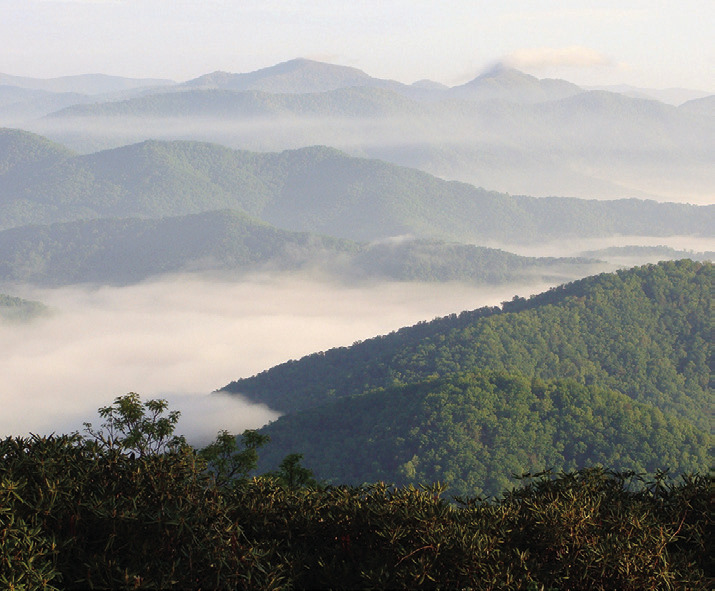
Many travelers are not enthusiastic about what some of our friends describe as “driving all that way.” Before retirement provided more time and flexibility, our Blue Ridge trips were limited to either Shenandoah or the Smokies. Now we have the option to connect the two via the Blue Ridge Parkway. We do not consider an average of about 100 miles a day to be excessive. The trip itself is the attraction. The good news is, you can have a marvelous experience with whatever portion you are comfortable with. Most of the route runs on or near the crest of the mountains so there are gorgeous vistas everywhere.
As RVers, Shirley and I prefer to stay in national park campgrounds. There are also national forests, state parks, and numerous commercial campgrounds just outside any of the three national parks. Some RVers insist on amenities such as full hookups (water, electricity, sewer), swimming pools, and recreation halls. If you don’t camp, there are park lodges and cabins as well as hotels and motels in neighboring communities. Gatlinburg attracts hordes of people who want shopping, restaurants, live entertainment, sight-seeing helicopter rides, and Dollywood. We know people who went there several times and rented a mountain-side cabin with deck and hot tub. Never once went into Great Smoky Mountains NP that sits right smack there. In high school, Miss Burton taught us De gustibus non est disputandum— there is no arguing about taste.
I mention Gatlinburg first because spring arrives just a little sooner 500 miles south. I think it makes more sense to do spring on the Blue Ridge north to south. Fall arrives earlier in the north so we are inclined to go north to south for fall color. The change of seasons is also greatly influenced by elevation. Valleys may be lush and green in the spring while the ridge tops are still bare. You need to be prepared for a wide fluctuation. Conversely, winter can arrive when you think it is still autumn. On October 16, 2023, we were snowed on near Mt. Mitchell, at 6.684 ft. the highest point east of the Mississippi. The lowest point on the BRP is where it crosses the James River at 649 ft. More than a mile of vertical ascent or descent can have a big influence on the weather you encounter regardless of season.
The south-north version of the Blue Ridge trip begins in the Smokies. Or you might be content for the entire trip to be focused on the Smokies. Shirley’s father, a flatland farmer, said “If you’ve seen one mountain, you’ve seen them all.” Plus its corollary:
Smokies, the southern terminus of the Blue Ridge Parkway is right at the edge of the park near Cherokee, NC. The town is on the Indian reservation where there are casinos and other tourist attractions. You might also consider a visit to the Biltmore Estate northeast just off the BRP at MP 390 in Asheville, NC. Helene made a mess of the 8,000 acres, so check online to verify the extent to which they have recovered.
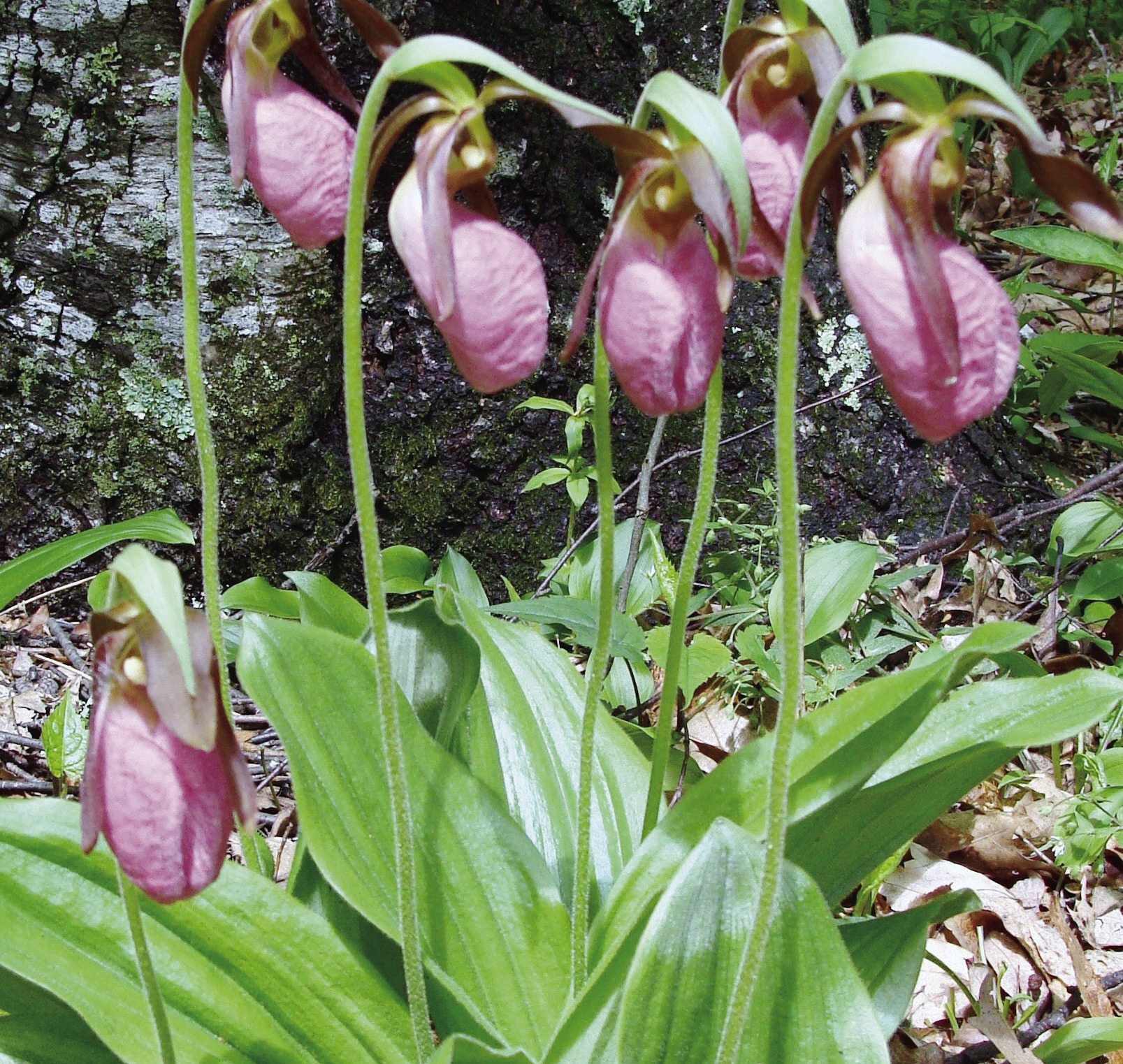
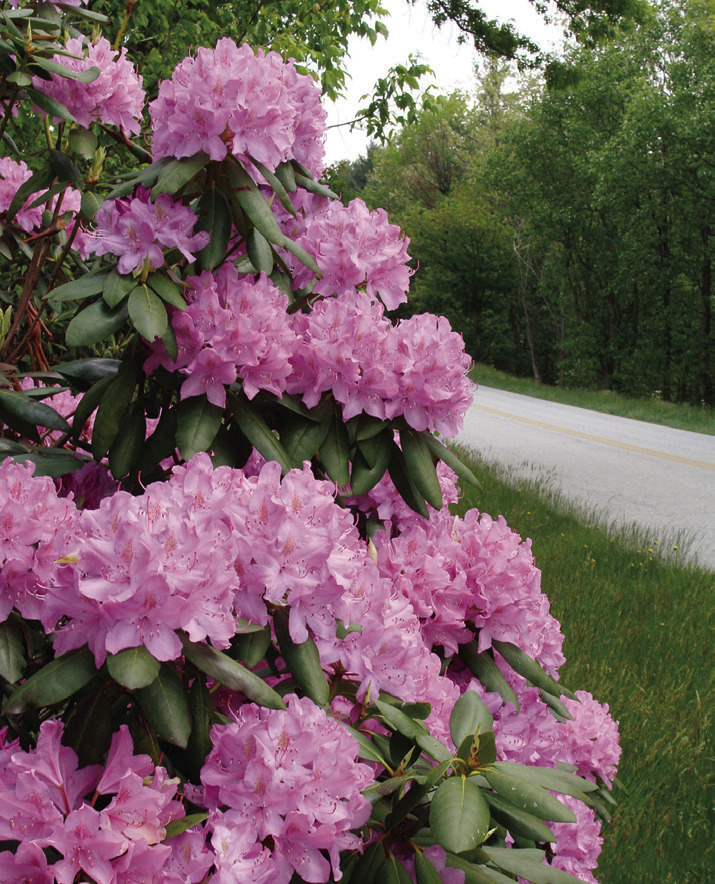
As you would expect, the reason to do the Blue Ridge in the spring is to enjoy the wildflowers and flowering trees. Deer with fawns are active. So are bears with cubs. Be watchful whether you are driving or hiking. Birdsong fills the air along with the heady aroma of the black locust trees. Even when you can’t see them, the intensely fragrant creamy-white blossoms of black locusts perfume the air for a considerable distance.
The winter snow melt and spring rains recharge all the springs and waterfalls in the mountains. In the Smokies, we are particularly fond of Abrams Falls out in Cades Cove, which requires a five-mile-round-trip hike. Several others such as Laurel Falls are along or close to the park roads. The Roaring Fork Motor Nature Trail, a loop road that starts in Gatlinburg, features four beautiful waterfalls: Rainbow, Grotto, Baskin Creek, and Place of a Thousand Drips. The Drips can be viewed right from your vehicle. The biggest obstacle you will usually face wherever you go is finding a parking place. Considerable extra parking has been added in recent years, but you will need a permit that costs $5/day or $15/week.
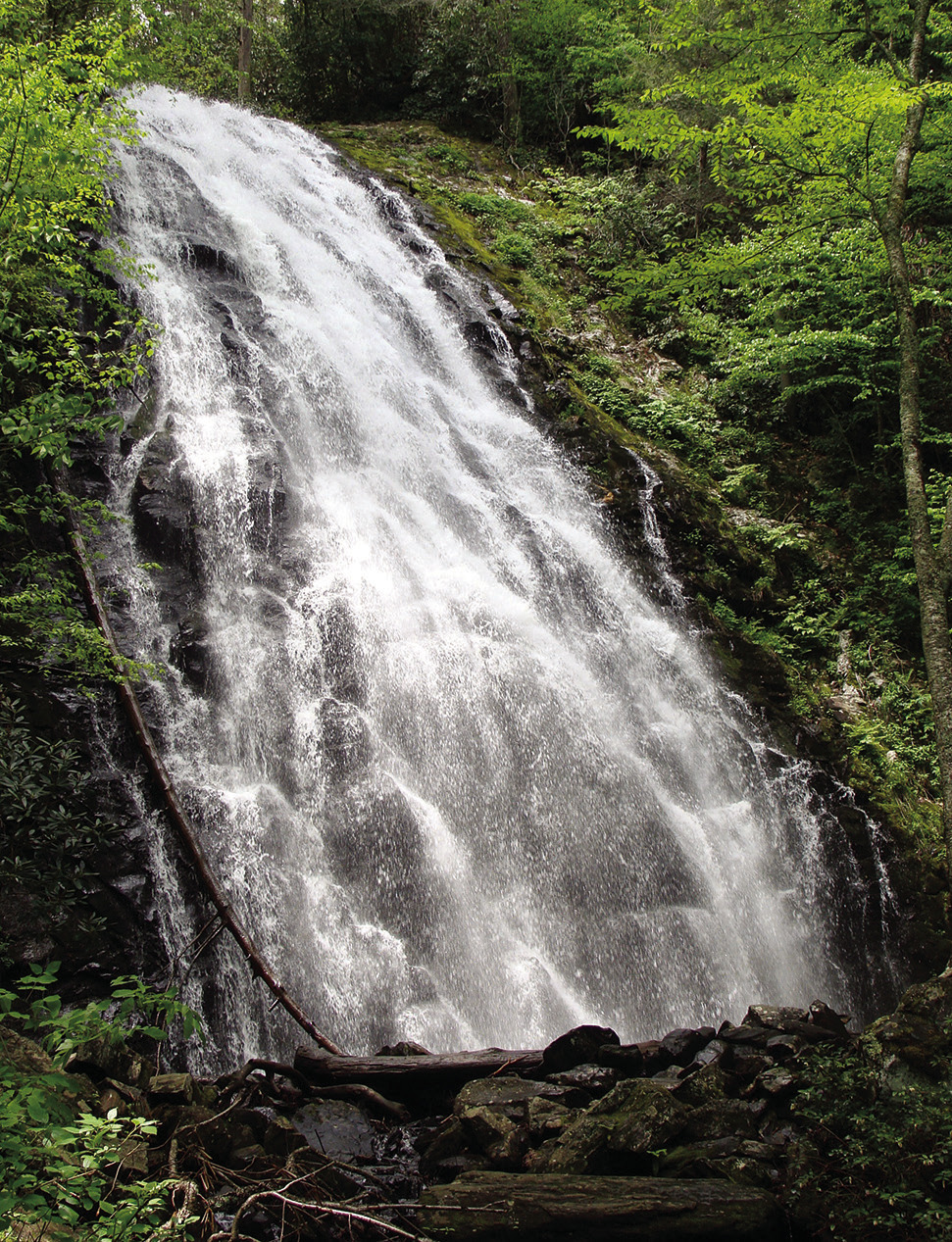
Our favorite waterfalls along the BRP include Crabtree, Linville, and Wigwam Falls. The first two are reached by trails lined by gorgeous wildflowers and ferns. Wigwam is only a few yards off the Parkway near MP 34. It is hidden in the trees just across an abandoned narrow-gauge logging railroad line. Anticipate the pullout or you are likely to cruise right on past. Stop to stretch your legs and take some pictures.
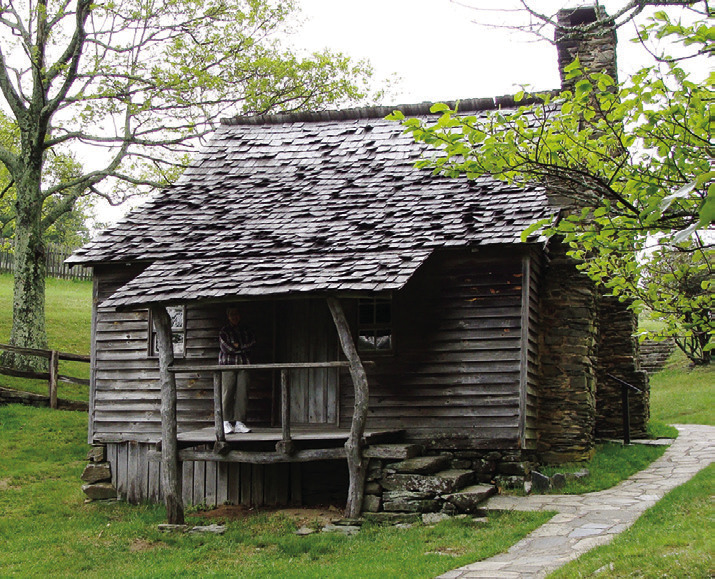
All three national parks were created from private land. When the Park Service acquired the land, their policy was to allow it to return to its natural state. Mostly. Some historic log cabins and private residences were preserved or restored. In the Smokies, the best examples are in Cades Cove, Daisy Town at Elkmont, and the Oconaluftee Mountain Farm Museum. There are usually rangers and volunteer docents on hand to talk to visitors about what life was like for the early settlers and their descendants. There are cemeteries that are still actively used, so to speak, by those descendants. The old churches are worth visiting as well.
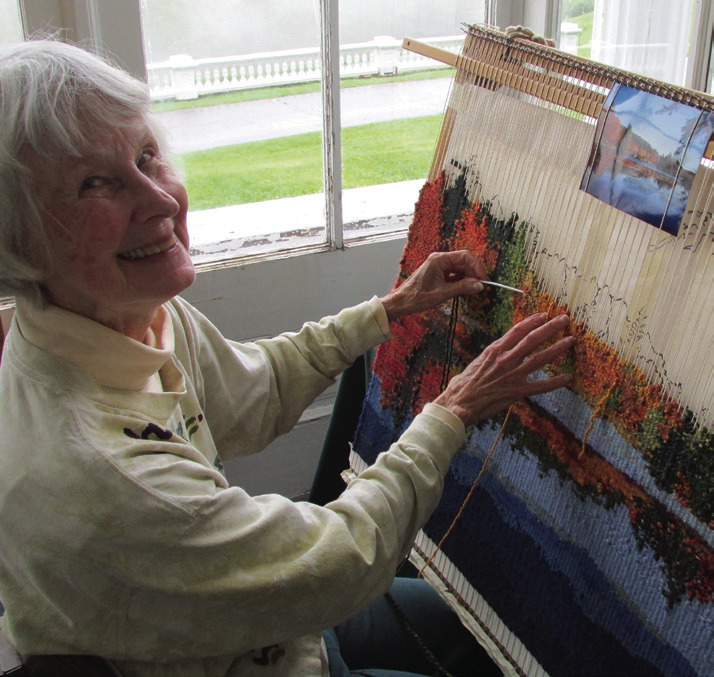
More of our cultural heritage is preserved on the BRP. We recommend the Folk Art Center at MP 382. There are displays of exceptionally high-quality pottery, needle craft and quilts, as well as leather, metal, and wood work created by the 700 members of the Southern Highland Handicraft Guild. Some of the arts and crafts are for sale in the gift shop. These are not mass-produced touristy trinkets and are priced accordingly.
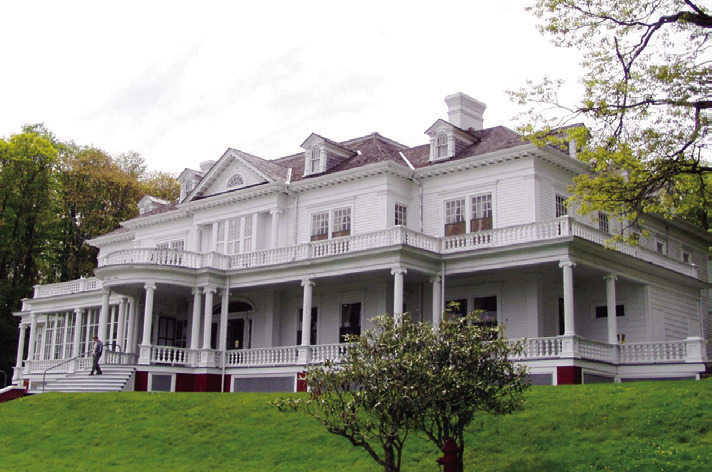
Despite stereotypes, not everyone who lived in the mountains was a “poor hillbilly.” The 3,500-acre Moses Cone Estate features the stately colonial-revival-style Flat Top Manor.
The house now includes a craft center where members of the Handicraft Guild are sometimes demonstrating their skills. The mansion looks out over a lake that is lined by the remnants of extensive apple orchards. Cone planted 32,000 trees that produced 80 varieties of what we would now call heirloom varieties. There are 25 miles of lanes that wind through fields and forests for those who would like to see the estate in a horse-drawn carriage.
Another way the Park Service preserves the heritage of the mountains is at the Blue Ridge Music Center, MP 213. There is a small museum dedicated to displays of traditional instruments and noteworthy musicians. There are scheduled concerts as well as jam sessions open to anyone who wants to sit in. You should know that Mountain Music is most definitely not the same as the other two kinds of music—Country and Western.
Some travelers are fascinated by the demonstrations at historic water- driven grist mills, which grind wheat and corn into flour and grits or meal. In the Smokies, the Cable Mill is in Cades Cove and Mingus Mill is just across from the Oconaluftee Farm near Cherokee. Our favorite, though, is Mabry Mill at MP 175 on the Parkway. It is said to be the most photographed site in the park. There is a popular home-style restaurant there as well.
One of the most popular activities in the parks is hiking. There are nearly 2,000 miles of trails in the three national parks. The most famous is the stretch of the Appalachian Trail through all of them on its way from Springer Mountain, Georgia to Mount Katahdin, Maine. There are numerous access points from which you can do as much or as little as you choose. Get a selfie at an AT trailhead sign so you can impress the folks back home with the claim you hiked the AT. You can also plan a loop hike within each park by studying how trails interconnect.
It is important, though, to consult a topographical map that shows elevation gain as well as distance. In 1975, when I was considerably younger and dumber, we set out on an easy five-mile walk in the Smokies. Turns out the trail went steadily uphill—in both directions. Later, on a backpacking trip on the AT, Shirley and the girls were glad that we were going down at last. Until I burst their bubble. Going downhill is not a good thing if the AT trail hut you are headed for is quite a bit higher. Every step down is a step that has to be climbed back up—and then some.
At a certain age, most of us find that knees and hip joints tend to object whether we are ascending or descending. Hence my reassurances that you can have a great time without a great deal of effort. On rainy days, we have even been known to seek out the Shenandoah lodges at Big Meadows or Skyland to just sit and read in the rustic lounges. But that does not happen often.
Among the historic attractions in Shenandoah is Hoover Camp, the personal fishing cabin of President Herbert Hoover. He built additional cabins so high government officials and foreign dignitaries could join him there to conduct quiet business and relax away from the hubbub of Washington. Hoover donated his camp when the park was established. There are tours when the facility is not in use by government officials.
There is also flyfishing right out Hoover’s back door. They are tiny but colorful wild, native brook trout. A “trophy” catch is about as big as the stretch between your extended thumb and pinky. Catch and release of course. Flyfishers will find several pleasant streams in Shenandoah and the Smokies. We have never fished along the Parkway.
For history buffs, within an easy drive of Shenandoah are several Civil War battlefields. Near Charlottesville are the homes of Jefferson, Madison, and Monroe. Monticello and Montpelier have classic mansions and gardens. Monroe’s Highland is surprisingly modest in comparison. Also somewhat surprising is that the third, fourth, and fifth US presidents lived so close to each other.
If any of this sounds intriguing, you will need to be patient for just a little while longer. Shelley’s “Ode to the West Wind” was right, of course. Oh, Wind, if Winter comes, can Spring be far behind? Planning for spring on the Blue Ridge will require a little extra effort this year, but the experience itself is still just a walk in the park.
LeMoyne Mercer is the travel editor for Healthy Living News. You might want to see more of his stories and photos at AnotherWalkinthePark.blogspot.com. ✲
