IN THE 1990S AND EARLY 2000S, Shirley and I fished in Great Smoky Mountains National Park. The streams are small with a canopy of trees that makes waving a fly rod a challenge, and the fish are sized to fit the streams. The little brook trout are beautifully colorful with bright-orange bellies though they are far, far from what anyone would consider trophies. The joy was in the experience not in bragging rights.
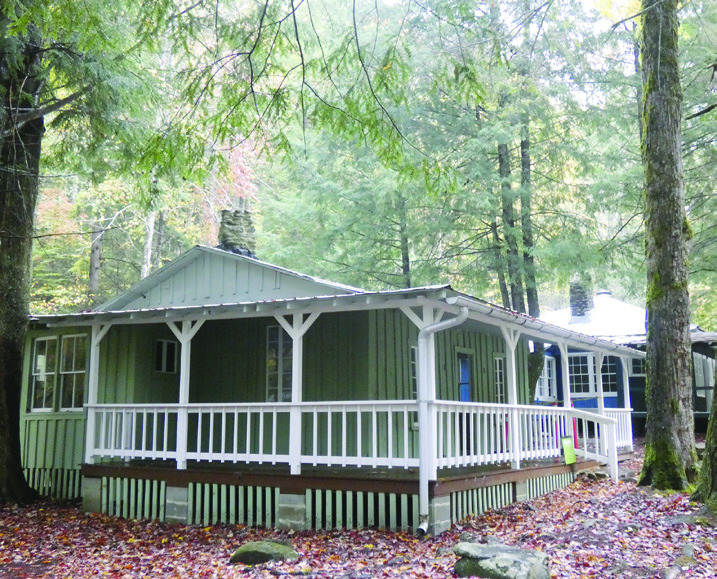
One morning we were walking up the Little River near Elkmont searching for a likely place to drop a fly. We came upon an area cordoned off by fluorescent orange plastic netting that enclosed some fallen down cabins. Walls caving in. Trees growing up through the roofs. An occasional brick or stone chimney remaining erect. Or nearly erect. Signs warning to stay out because of the hazards—including a resident population of rattlesnakes. So, we went about our business.
Later, a ranger explained that the policy of the National Park Service was to let nature take its course. Those tumbled-down buildings had been the summer cottages of prosperous families from the Knoxville area who built there before the national park was established in 1934.
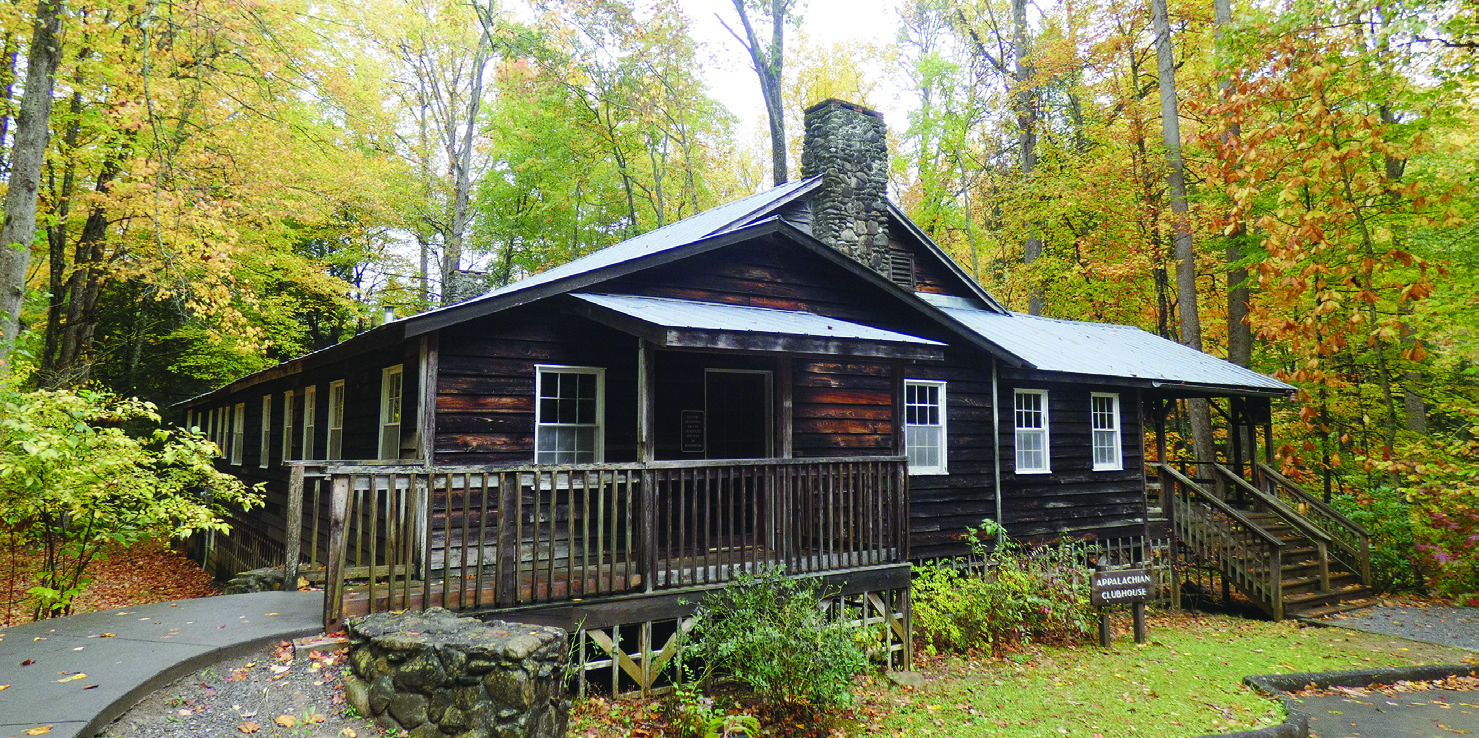
The Great Smoky Mountains are a temperate zone rainforest with 130 species of trees. In the 1800s, logging companies began harvesting that timber. In the early 1900s, a railroad built to transport logs began taking passengers back into the mountains for recreational purposes. In 1910, the Little River Lumber Co. sold 50 acres of cleared land to a Knoxville businessmen’s hunting and fishing club that established the Appalachian Clubhouse. Before long, members began building cottages for their families along a narrow lane leading to the club. By the 1920s, the small community of summer residents had evolved into Daisy Town and the Appalachian Clubhouse became the venue for dances and other social events—a country club that actually was way out in the country.
When Great Smoky Mountains National Park was created, most residents on park land were relocated. Typically, they were descendants of people who had settled the area a hundred years before. In Cades Cove, at the western end of the park, you can visit log cabins that were home to some of them. Those cabins are preserved as part of our cultural heritage. Residents of Daisy Town were both wealthier and better connected. The Park Service cut them a deal by which they were allowed to stay and given lifetime leases.
Which brings us to a side note. At the Oconaluftee Visitor Center there is display of historical artifacts, one of which attracted my attention. It is a green glass Coca Cola bottle. I asked a ranger how in the world a Coke bottle qualified for space in the display. He responded with a rhetorical question: “What is the difference between garbage and a historical artifact? Fifty years.” It turns out that the bottle had been found among the discarded detritus of the boys in the Civilian Conservation Corps who built the park. Paraphrasing the ranger, the Park Service acknowledges that one man’s trash is another man’s treasure. You just have to wait long enough.
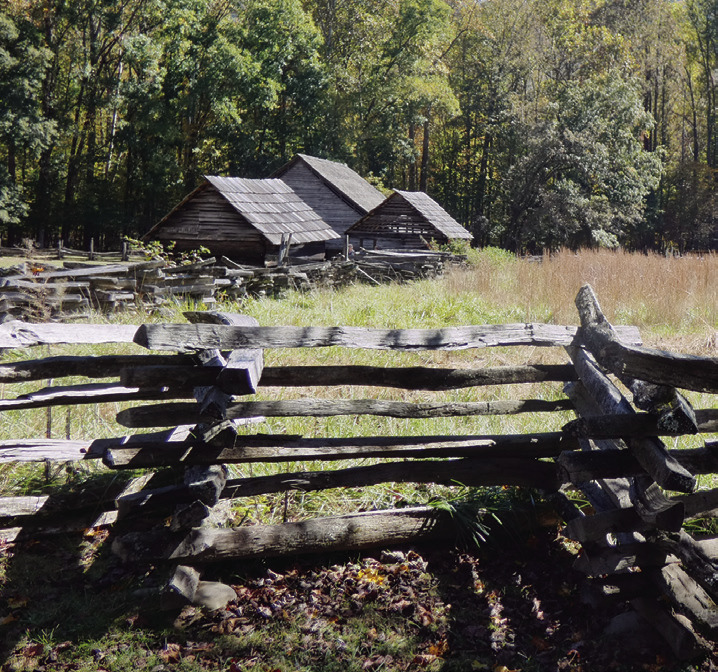
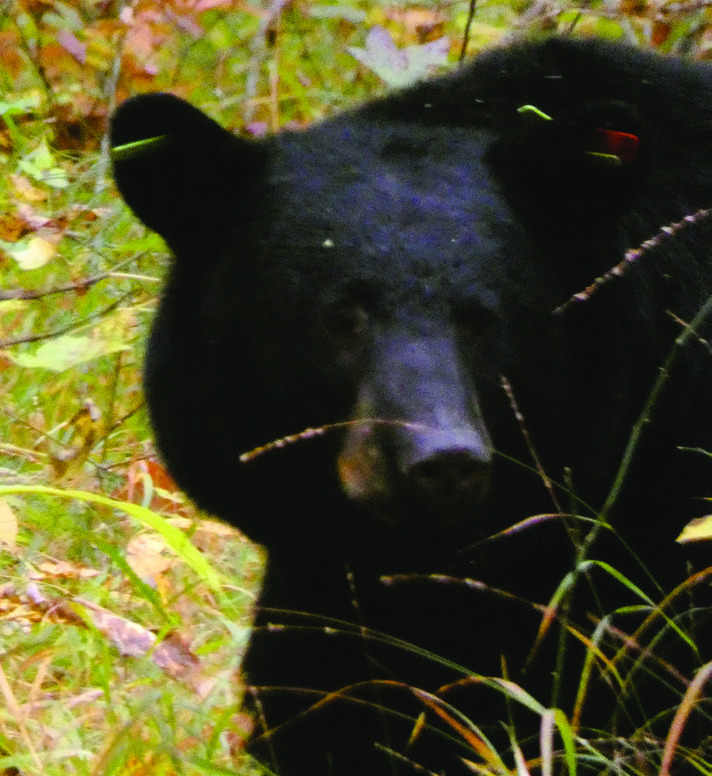
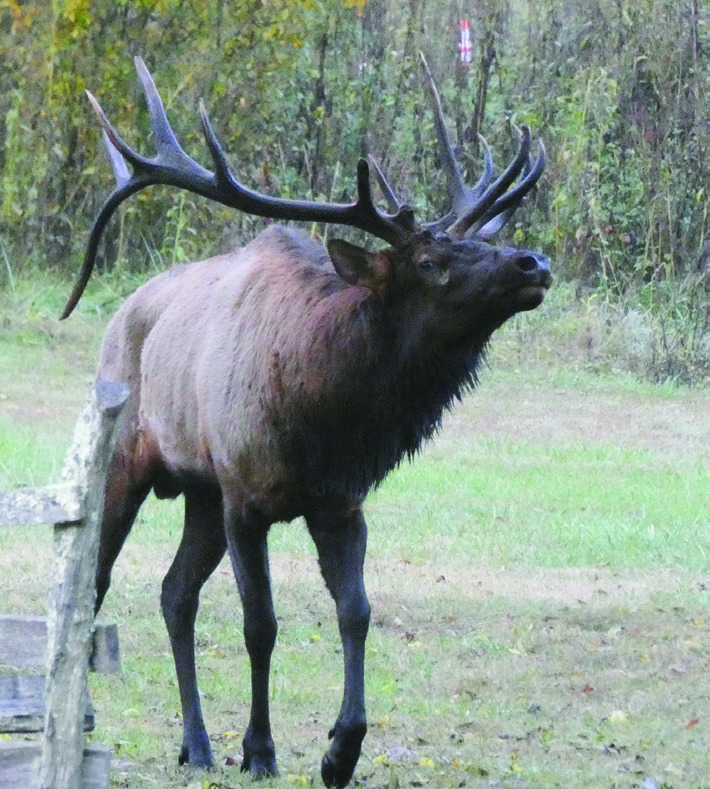
Oconaluftee itself includes the Mountain Farm Museum with log cabin, barn, and other outbuildings where there are occasional live demonstrations of pioneer skills. Across the road is the historic Mingus Grist Mill where corn was turned into meal and grits as it still is when the park’s miller is on duty. The area is also home to a sizable herd of elk that are descended from a few scraggly looking ones that were reintroduced in 2001. All of this is part of the preservation and restoration mandate of the Park Service. Bears and wild turkeys, for example, have grown increasingly plentiful since we started visiting in 1975. Red wolves, reintroduced in 1991, failed to make it. We were lucky to see a total of one before they went extinct again.
The support for preserving old bottles and pioneer homesteads was extended to the cottages in Daisy Town as well—but not without considerable hand wringing. Environmental groups supported letting nature take its course while historic preservationists, especially those whose families had property there, looked at things from the cultural heritage point of view. Initially, the Park Service sided with the environmentalists, but after decay and demolition were well along, they tried to reconcile these differences. As with any bureaucracy, there were conflicting objectives and regulations depending who was reading and interpreting the rules. In 1952, those “lifetime” leases were reduced to 20 years. Then they were re-extended. In 1992, the last residents were finally evicted and the decay resumed.
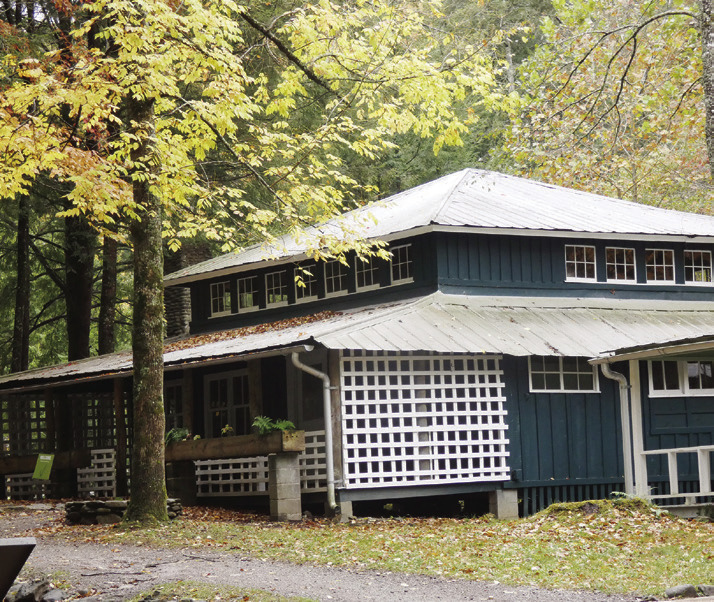
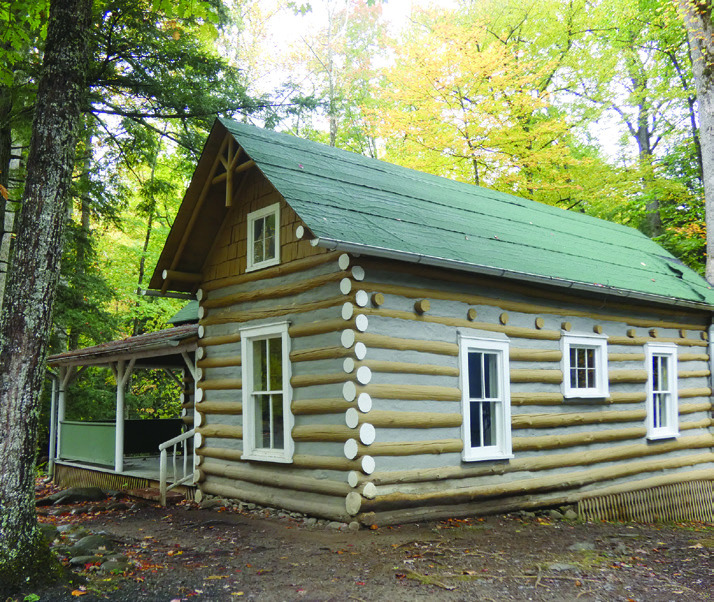
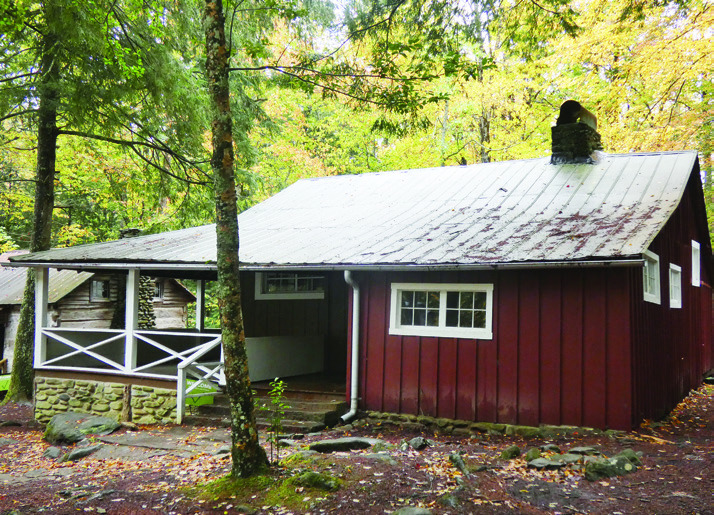
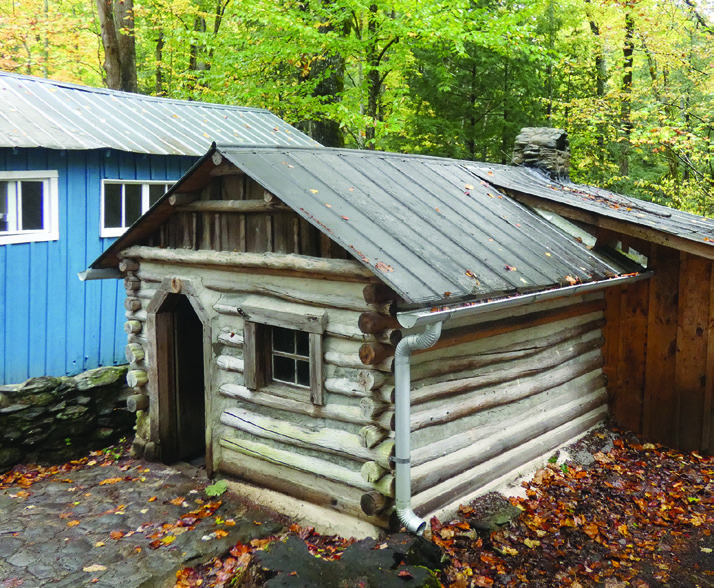
Even then the preservationists refused to go quietly and succeeded in getting the area designated a National Historic District. There had been 70 cottages in Daisy Town, most of which were well past their best-by date and had turned to dust. Even so, there were still 19 salvageable buildings that are now scheduled for renovation by 2025. The Park Service hired architectural historians to do a highly detailed analysis with documenting historic photographs and architectural renderings, recommendations for treatment, and consultation with the park archaeologist about how to remove debris without disturbing too many plants and animals.
In October 2022, Shirley and I were again in Elkmont Campground. We learned that the plastic netting was down and Daisy Town was open to park visitors, so we went to have a look. There were placards and other signage explaining who had owned the properties, complete with ancient black-and-white photos donated by family members showing what the cottages and residents looked like back in the day. Those photos were critical to the renovation, and the history of the owners was fascinating. Even original paint colors were determined by a microscopic examination of chips so that craftsmen could restore things as authentically as possible. Period window glass with all its wavy imperfections was installed. It was clear from the rather haphazard floor plans that the cottages had been expanded over the decades as residents added rooms and decks. The limited space between neighbors and the edge of the ravine eventually prevented further expansion. At the end of the lane, the rustic Appalachian Clubhouse has been renovated and now serves as an events center. While we were there, the peace of the forest was disrupted by the bang, bang, bang of black walnuts raining down on the metal roof.
This October, we repeated our fall color tour to Shenandoah National Park and down the Blue Ridge Parkway to the Smokies. On our way to Cades Cove, we stopped again at Daisy Town. There were no apparent indications of further restoration as the projected 2025 completion date draws ever nearer. We did notice, though, that all the identifying signage was missing. A volunteer couple told us that the Park Service had removed it because the signage provided by the Historical Society did not conform to NPS standards and format. Which I find somewhat amusing. The signage at the head of the park road said “Daisy Town” with an arrow pointing left. It looked like one of those homemade yard sale signs. Wait until the boys in Washington find out about that.
So far, the restoration project appears limited to the structures themselves and the interiors remain totally vacant. We have toured any number of historic homes dating back as far as that of John Rolfe and Pocahontas after their marriage in 1614. Colonial and antebellum mansions typically include original furnishings or what is authentically representative of the era.
The departing residents of Daisy Town undoubtedly took their personal, movable property with them. Still, early 20th century furnishings are still readily available. Every Cracker Barrel restaurant has an extensive collection. For that matter, your home or your parents’ home could probably contribute a piece or two. A high percentage of everything Shirley and I own could be classified as antique, not even counting the things that belonged to my great grandmother. A careful shopper representing the National Park Service could refurnish all of Daisy Town by visiting a Goodwill store with $300 or $400. But, what am I thinking? A request for that amount of government funding would be totally out of the question. Any clerk in Washington would immediately conclude that at least six zeros must have been left out of the request and it would be sent back through channels for more supporting documentation and signatures. Our plan is to continue visiting Daisy Town when we are in the Smokies just to see how things are coming along. Whether or not they get around to furnishing interiors or even the approval of signage, there are a hundred other reasons that a trip to the Smokies is still just a walk in the park.
You might want to see more of his stories and photos at AnotherWalkinthePark.blogspot.com. ✲