Most pumpkins sold in the US wind up as Halloween Jack-O’-Lanterns —hollowed out, carved into a fiendish countenance, and then illuminated with a candle or chemical glow stick. Beyond Jack-O’-Lanterns, many of us enjoy eating pumpkin pie, pumpkin bread, and, perhaps, baked pumpkin seeds, but that’s approximately where the culinary experimentation with this gourd ends for most people.
That’s unfortunate because pumpkin has so much more to offer us from the standpoint of cooking versatility and nutrition. For instance, fresh pumpkin makes a delicious substitute for winter squash or sweet potatoes in any recipe that calls for these ingredients. If you’re bored with having pumpkin pie for that holiday dessert, think pumpkin pudding, cheesecake, crème brulee, or even pumpkin baked Alaska. Or how about a soup, casserole, or smoothie made with pumpkin?
Nutritionally, pumpkin is a real powerhouse. As you might intuit from this gourd’s gorgeous orange color, it’s a great source of beta-carotene, an important antioxidant that, studies suggest, helps protect against heart disease, certain forms of cancer, and other diseases. One cup of pumpkin puree has zero cholesterol, less than one gram of fat, 310% of your RDA of Vitamin A, 20% of your RDA of Vitamin C, and only 80 calories.
Selection
When choosing a pumpkin for use in cooking, your best bet is to avoid the bigger ones sold for carving as the flesh of these pumpkins tends to be tough, fibrous, watery, and bland. Instead, choose the smaller culinary pumpkins— typically sold as “pie pumpkins”—as they have a sweeter, less stringy flesh. A cooking pumpkin should feel firm and heavy for its size. If you heft a pumpkin and it feels too light for its size, you can assume there’s a large open space in the middle. Also, make sure there are no blemishes or soft spots on the rind and that the stem is firmly attached.
Storage
Whole, uncut pumpkins can be stored in a cool (50 to 60 degrees Fahrenheit), dry, dark place for two months or even longer. However, once the pumpkin has been cut (or if the pumpkin’s rind is bruised, cracked, broken, or soft in spots), it will mold quickly and, so, should be used within a couple days. After cooking, pumpkin can be stored in the refrigerator for four to five days. Cooked whole chunks and pumpkin puree can be frozen for long-term storage and later use.
If you’re looking for ways to expand your pumpkin cooking repertoire beyond pumpkin pie and pumpkin bread, try these delicious recipes:
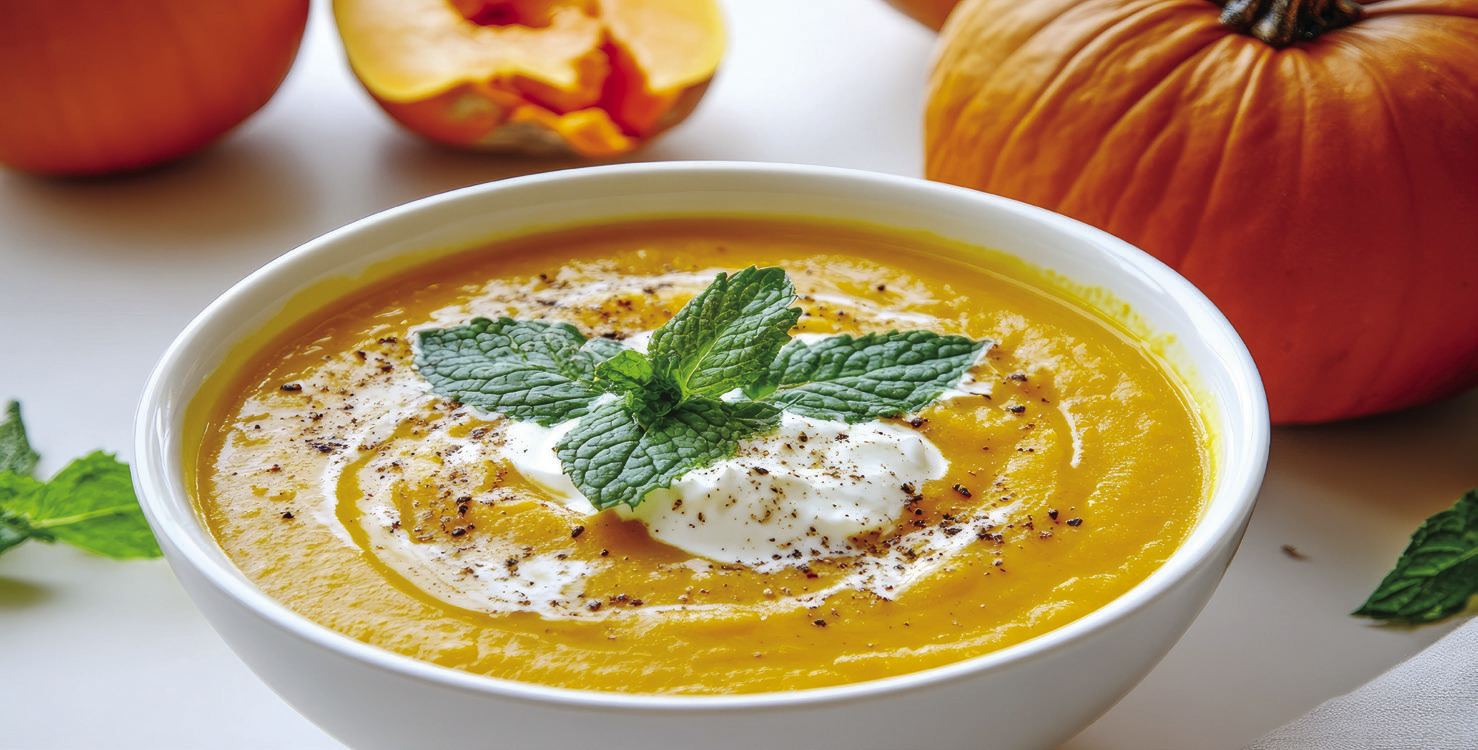
Ginger pumpkin bisque
2 Tbs. olive oil
3/4 cup chopped shallots
1/2 cup chopped onion
2 tsp. grated fresh ginger
1/4 cup all-purpose flour
4 cups chicken broth
1/2 cup apple cider
1 (15- or 16-ounce) can pumpkin
1/3 cup pure maple syrup
2 bay leaves
1/4 tsp. dried thyme, crushed
1/4 tsp. ground cinnamon
1/4 tsp. pepper
1/8 tsp. ground cloves
1/2 cup half-and-half or whipping cream
1/2 tsp. vanilla
Whipping cream (optional)
Fresh thyme (optional)
In a 3-quart saucepan, heat oil over medium heat. Add the shallots, onion, and ginger; cook until tender. Stir in the flour. Carefully add the chicken broth and cider all at once. Cook and stir over medium heat until thickened and bubbly. Stir in the pumpkin, maple syrup, bay leaves, dried thyme, cinnamon, pepper, and cloves. Bring to boiling; reduce heat. Simmer, covered, for 20 minutes.
Remove from heat. Discard bay leaves. Cool slightly. Pour one-fourth to one-third of mixture into a blender container or food processor bowl. Cover and blend or process until smooth. Pour into a bowl. Repeat with remaining mixture until all is processed. Return the mixture to the saucepan. Stir in the 1 cup half-and-half or whipping cream and the vanilla. Heat through, but do not boil. Ladle into soup bowls. If desired, swirl a little whipping cream into each serving; garnish with fresh thyme. Makes 8 to 10 servings.
Pumpkin crème brulee
3 cups milk
1 1/2 cup pumpkin puree, canned, frozen or freshly prepared
1 cup light brown sugar, packed
5 eggs, lightly beaten
3 Tbs. unsalted butter or margarine, melted
1 1/2 tsp. pumpkin pie spice
1/2 tsp. vanilla extract
1/2 cup sugar, divided
Preheat oven to 350 degrees. In a small saucepan, heat milk to just below boiling. Bubbles will form all over the surface (scalded milk is heated to 180 to 185ºF). In a medium bowl, lightly beat eggs with a wire whisk. Add pumpkin, brown sugar, butter, spice, and vanilla. Mix until well blended. Gradually whisk in hot milk. Mix well until all ingredients are combined.
Evenly divide pumpkin mixture among 12 six-ounce custard cups. Place cups in two 9x13-inch baking pans. Place pans on oven rack and add hot tap water to the pans until the water is halfway up sides of cups. Bake 35-40 minutes. Check after 35 minutes. Custard centers should be slightly wobbly. Remove custard from oven and allow to cool in water bath. Cover with plastic wrap and refrigerate.
Just before serving, preheat oven broiler. Sprinkle 2 teaspoons sugar on each custard. Arrange on a baking sheet and place under hot broiler. Broil until sugar melts and bubbles. Watch closely to prevent burning. Sugar should be lightly brown and caramelized. Or hold a propane kitchen torch (also called a salamander) about 2 inches from custard tops to caramelize sugar. Serve at once. Refrigerate leftovers for up to 5 days. Makes 12 servings.
Pumpkin sage risotto
1 small (approx. 1 3/4 pounds) pumpkin, peeled, seeded, and cut into 1-inch cubes
2 Tbs. extra-virgin olive oil
Salt and freshly ground black pepper
6 cups chicken broth or canned low-sodium broth, as needed
2 Tbs. unsalted butter
1/3 cup chopped shallots
1 garlic clove, finely chopped
2 cups rice for risotto
1 cup dry white wine
1/2 cup freshly grated Parmesan cheese, plus more for serving
2 Tbs. chopped fresh sage
Position a rack in the top third of the oven and preheat to 400°F. Spread the squash on a baking sheet and toss with one tablespoon of the oil. Season lightly with salt and pepper. Bake until tender, about 35 minutes. Remove from the oven and cover with aluminum foil to keep warm.
Bring the broth to a boil in a medium saucepan over high heat. Turn off the heat but leave the saucepan on the stove.
Melt the butter and the remaining tablespoon of oil in a heavy-bottomed Dutch oven or flameproof casserole. Add the shallots and garlic and cook until softened, about 2 minutes. Add the rice and cook, stirring often, until it turns from translucent to opaque (do not brown), about 2 minutes. Add the wine and cook until almost evaporated, about 2 minutes.
Stir the hot broth into the rice, one cup at a time. Cook, stirring almost constantly, until the rice absorbs almost all of the broth, about 3 minutes. Stir in another cup of broth, and stir until it is almost absorbed. Repeat, keeping the risotto at a steady simmer and adding more broth as it is absorbed, until you use all the broth and the rice is barely tender, about 20 minutes total. If you run out of broth and the rice isn’t tender, use hot water.
Add the squash and cook until heated through, about 1 minute. Remove from the heat and stir in the cheese. Season to taste with the salt and pepper. Serve immediately, spooned into bowls and sprinkled with the sage. Pass a bowl of Parmesan cheese on the side. Makes 6 servings.