CLINICAL COUNSELOR SAMANTHA STRAUB said, “And above all, explicitly focus on the positive aspects of your lives. Gratitude for our values, strengths and relationships can go a long way to take our minds away from the illusory pursuit of perfection.”
That illusion of perfection in the mid-2000s turned into a negative perspective on appearances. This came in effect with the straight-hair trend in the mid-2000s. Anything else by older generations’ standard was considered unruly, unprofessional or unkempt. As someone with curly hair, I needed to learn how to “tame the mane,” not hide or alter it. I felt like my hair was compared to my peers by parental figures and other respected adults to look a certain way to fit in, when in reality they didn’t know how to maintain curly hair.
The act of straightening hair was a solution to the appearance of imperfection and not having the foreknowledge or products to learn how to deal with curly hair.
Other people speak on this trend with similar experiences on Reddit.
A millennial, in her early 30s, said she got her hair straightened regularly in middle school and damaged her hair as much as she straightened it in high school and college. Now she loves to wear her hair naturally. She said, “I teach high school students, and I love seeing girls of all races embrace their curly hair! It definitely helps that curly hair products and haircare information are more widely available now.”
And she commented about her mom, who is borderline Boomer/Gen X. She said, “My mom has straight and fine hair and had no idea what to do with my hair other than make it straight. She also thinks my curls are unprofessional, but she knows she’s lost that battle with all three of her curly-haired children.”
Someone else said, “By high school, I realized there were other girls who actually did have curly hair, they just straightened it every day, which was shocking to me. Now I see so many women with curly hair/natural hair at work, and I love that they’re not feeling pressure to alter it!”
Another older Gen Z, who straightened her hair in middle school, said, “A lot of my peers would tell me I looked better with straight hair when I would straighten it.”
These comments highlight what is called Social Comparison. Leon Festinger was the first social psychologist to use the phrase 'Social Comparison,' when he created the Social Comparison theory, which was first published in 1954 in The Journal of Human Relations.
Social Comparison is, based on a study published in Frontiers in Psychology, “the motivation for individuals to compare themselves with others in order to judge the correctness of their opinions.” Engaging in comparison can lead to feelings of inadequacy and decreased self-worth, particularly when individuals perceive the comparison of others as vastly superior to themselves because of highlighted deficiencies instead of strengths.
The Social Comparison theory proposed by Festinger is that individuals determine their own social and personal worth based on how they stack up against others.
According to the study, parents' influence plays a crucial role in how children come to understand and engage with their social world and this can significantly impact the selfesteem of adolescence.
The negative impact of comparing in unfavorable terms can lead to a decrease in self-esteem that causes children to perceive themselves as less competent and can lead to depression, self-doubt and other mental health issues.
Although the straight-hair trend was an attempt at improving appearance, it points to broader issues of expectations and comparison.
Natural hair was not ideal according to older generations, which led the younger generation to hide or alter their natural beauty.
Among peers, it fostered self-esteem on the condition of keeping up with the illusion of perfection. This philosophy encouraged the negative message that you are not as beautiful compared to your peers if you don’t appear this way. As a commentator pointed out, we can celebrate the younger generations' natural beauty.
Today, we have the knowledge, accessibility and products to help maintain curly hair and natural beauty. Perhaps older generations wanted to point out the need for hair maintenance, but did not find the optimism or tools to get there.
Now we have found optimism that is taking the place of any comparison.
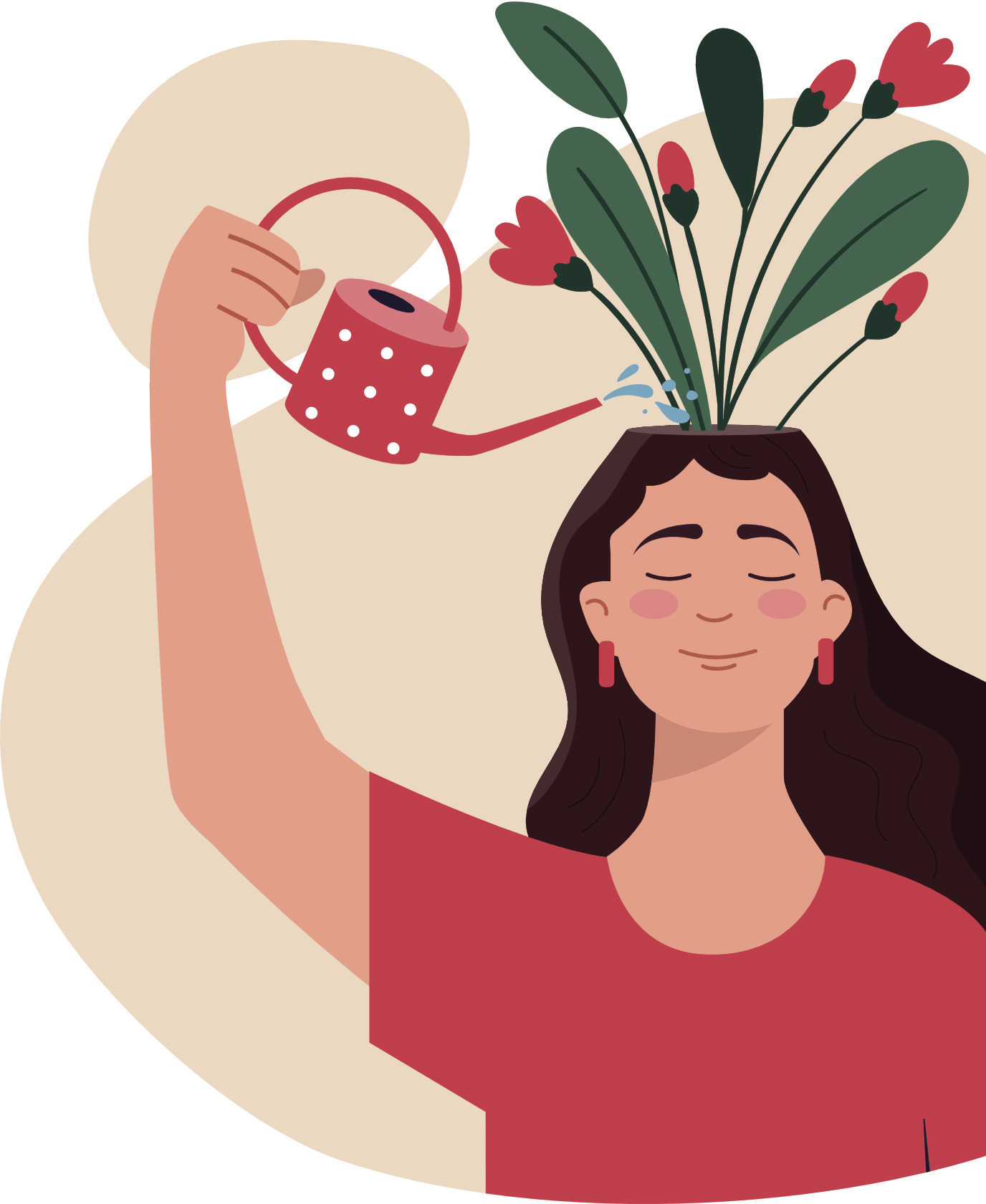
Optimism is an antidote that keeps our minds away from the illusion of perfection.
Optimism is the general expectation that good things will happen. It can be used to moderate the effects of social comparison on self- esteem.
•Optimism can be used to buffer the effects of stressful situations, enhance coping strategies in stressful situations and produce positive outlooks on life, dealing with hardship and disappointment and encourage adaptive coping strategies.
Optimism can be seen as a protective factor that buffers the adverse effects of social comparison. ✲