by Sister Karen Zielinski, OSF
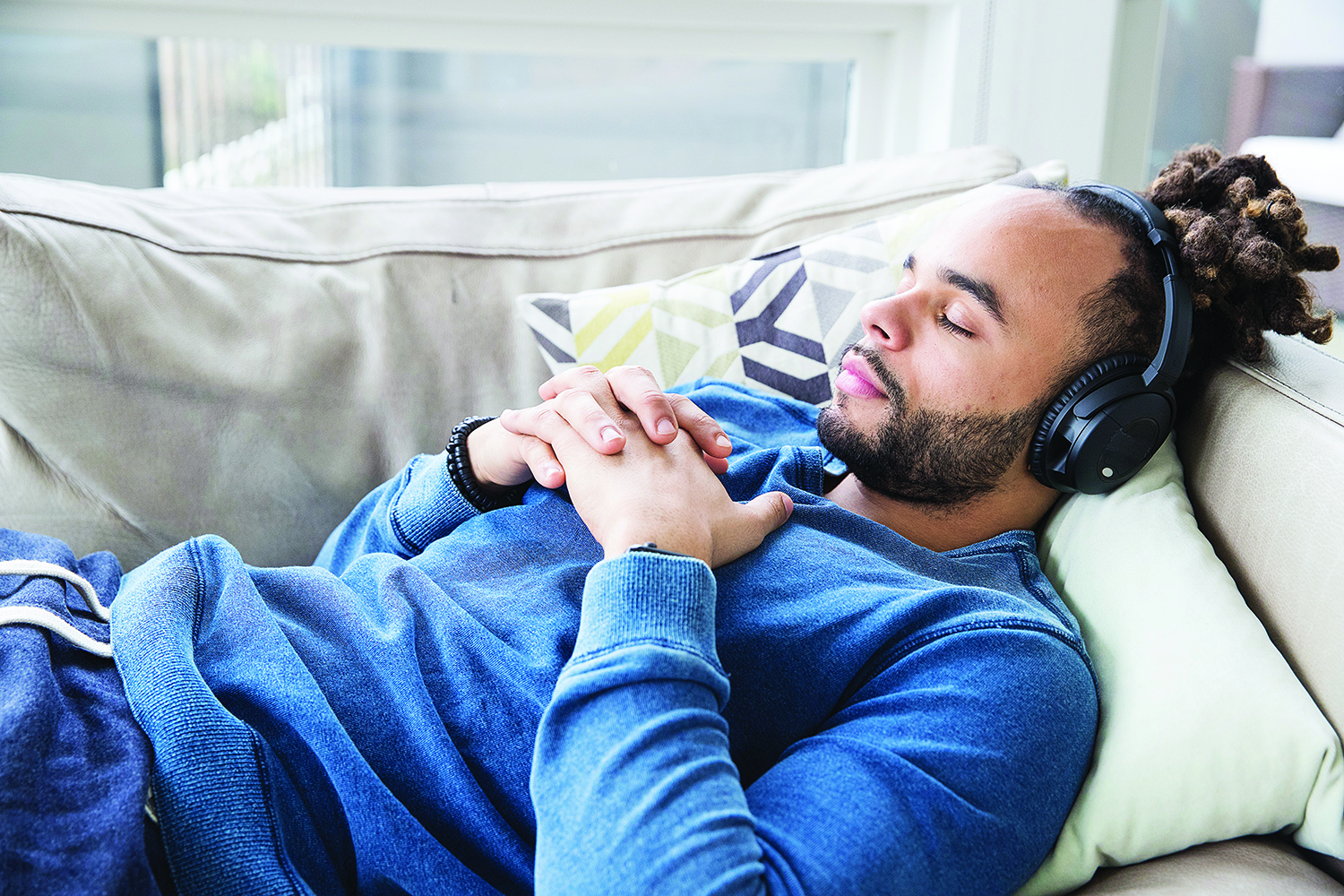
Listening to a few of my favorite songs does more for my health than taking another pill!
Well, almost. I know that medications are important in my wellness regime since they help my body heal, control pain, or manage symptoms. But sometimes playing a favorite song or relaxing album really makes me feel better.
Whenever I get home from a doctor’s office or medical test, I am often a bit anxious about upcoming test results or a new medicine or therapy my doctor will prescribe. I eat something and decide to relax. To feel normal again, I play a favorite album (actually, I ask Alexa to play The Standing Stones of Callanish by Jon Marks.) This music relaxes me. I always bring it to my MRI test, and it plays during the test. Now, the MRI is noisy, with magnets clanging throughout the test, but my technician plays it. Believe it or not, I hear it during the clanging, and for some reason, I lie still during the test. It is meditative and calms me during this test, which is painless but feels like my body is inside a tuna can for 45 minutes.
Music helps me heal. Just like the power scents and aromatherapy have in healing, over the years, there has been little scientific evidence about these other healing areas—but many of us know from experience that music or scents truly help us. Besides traditional medicine, complementary medicine—things like aromatherapy, music, massage, and other things, this area is growing in acceptance and popularity. What is growing, too, is the research or “science” that supports the fact that it helps in our overall healing when added to our traditional medical regime.
The National Center for Complementary and Integrative Health (NCCIH), a division of the National Institutes of Health (NIH), reports that a growing body of research finds that listening to or making music affects the brain in ways that may help promote health and manage disease symptoms. Performing or listening to music activates a variety of structures in the brain that are involved in thinking, sensation, movement, and emotion.
The NCCIH shares that increasing evidence suggests that music-based interventions may be helpful for health conditions that occur during childhood, adulthood, or aging. However, because much of the research on music-based interventions is preliminary, few definite conclusions about their effects have been reached. The preliminary research that has been done so far suggests that music-based interventions may be helpful for anxiety, depressive symptoms, and pain associated with a variety of health conditions, as well as for some other symptoms associated with dementia, multiple sclerosis, Parkinson’s disease, and other conditions.
Even if we cannot explain the science of how music helps in our health, we know that it is therapeutic. We are comforted or relaxed when we hear hymns or sacred songs in our places of worship. Playing music in our cars may relax us as we drive to work. Playing favorite songs from our years in high school or college, or even the fight song from our favorite football team (like The Victors, Go Blue!), can pump us up and make our overall attitude and body feel uplifted and less imbedded in discomfort or fear about our health.
It is exciting to see that research on the complementary area of music and health is growing thanks to the National Institutes of Health’s Center for Complementary and Integrative Health.
Maybe soon our doctors’ prescriptions will come with an order for some complementary music therapy. It may be coming!
Sister Karen Zielinski is the Director of Canticle Studio. Canticle Studio is a part of the Sisters of St. Francis of Sylvania, OH’s overall advancement effort and has a mission of being a creative center where artists generate works, products, and services in harmony with the mission of the Sisters St. Francis. She can be reached at kzielins@sistersosf.org or 419-824-3543.