What’s wrong with the way I look?
“EXCUSE ME! Why did you do that? Did I do something to you? And then you made that bizarre grunting noise at me. That was mean and hurtful. Why?”
It was late Friday afternoon and I had just finished shopping after work. I stopped to get a few things I needed for the weekend. I was heading to my van to put my groceries in the back, and a young guy and girl walked past my van. I was about to smile and say “hi” when the guy turned around, placed his thumbs in his ears, wiggled his fingers and made a grunting or animal noise looking at me. I finished putting my things in my
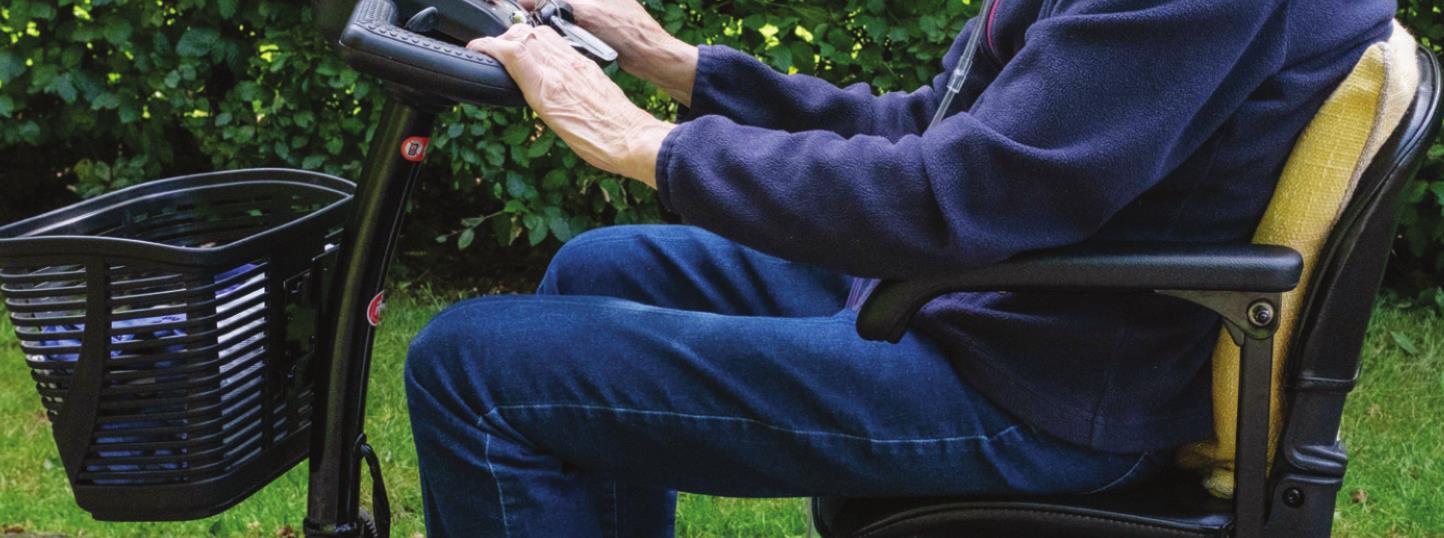
I finished putting my things in my van, when he turned around and made another. He and the girl, who were about 13 or 14 years old, were walking to the door of the garden center entrance. I park in garden centers of stores so my ramp that deploys for my electric cart doesn’t get blocked. Often, shoppers park in the blue striped aisle near the actual parking space, and I cannot lower my ramp.
Maybe it was that I was Friday-tired, hungry and cold, or that the store was out of many of the groceries I was looking for, but I followed these kids. I wondered what prompted his inane behavior. I think I look normal (whatever that is), but deep down, I felt he was making fun of me and my cart. I was different. Since it was still light out, and there was a cashier at the outdoor register, I followed him. I felt it was safe for me to challenge this bully. I really think it was the What would you do? television show that inspired me, too.
That TV show sets up encounters in public places where people might be bullied, cheated on, etc. The host of the show sees how the people present react to the situation. Do they speak up?
I said, “shame on you for making those faces and noises at me. You were bullying me. I might not walk well, but you do not know what anyone is going through and how hard stuff is for them. Your behavior was rude, and you made fun of me as a person for my physical ability. That was terrible! I hope you stop doing things like that to anyone you meet. I wish you good health, and I hope you remember this experience in your life so that you do not do it again.”
I felt better after I said that, and was proud that my tone was firm, and not angry or hysterical. I remember some great advice my principal gave me my first year teaching. Always talk to a student as if their parents were present.
It had to be said. I believe that sometimes we all feel strongly about a topic or some questionable human behavior, but we are nervous about getting involved for many reasons. We might be afraid of imparting our values, but my feelings were so strong about this event that I had to challenge him. I hope that this young man will think about what I said to him. Maybe he will still make nasty sounds and gestures to others, but I feel I tried to show him how people feel when he acts that way. The ball is in his court.
Lookism is something I experienced, and believed existed, but never knew there was an actual word for it. Miriam Webster explains, “People first used the word in the late 1970s in reference to how people were viewing others who were heavier set. Today the panorama of lookism extends from the ‘overly’ beautiful actor or actress to the homely child. Economists, sociologists, and psychologists alike pay close attention to the lookism that occurs in everyday life and examine how it affects people and society as a whole.”
I didn’t know lookism was a reality, but every time I saw someone in the media who was an amputee, a performer who was dressed—according to my values—scantily, or even someone with super white teeth (like that is natural), I felt that society was manipulating us on what we should look like. It bothered me immensely.
As I approached my van to leave, I noticed a car and the orange pylons set up across the parking lot. A young person was practicing their maneuverability skills for their driver’s license test. Maybe it was my pay-it-forward urge, but I went over and spoke with her and her mom. The teenage driver was nervous, sometimes hitting the cones, and other times driving through them flawlessly.
“You can do it,” I told her. “I did my first test years ago, in high school. About ten years ago, I passed as an adult learning how to drive with hand controls. I passed, and you will, too.” She and her mom nodded and smiled.
So, let’s examine how we see people who look different than we do, or just ask ourselves, “Do I judge people on the way they look?” We can all bully at any age and for any reason.
Sister Karen Zielinski is the Director of Canticle Studio. Canticle Studio is a part of the Sisters of St. Francis of Sylvania, OH’s overall advancement effort and has a mission of being a creative center where artists generate works, products, and services in harmony with the mission of the Sisters St. Francis. She can be reached at kzielins@sistersosf.org or 419-824-3543. ✲