
ANYONE WHO HAS WORKED for more than a few seasons in a nursery or garden center develops a pretty good sense of the weeds, pests, and plant diseases that customers will be asking about in the near future.
For example, shortly after the forsythia shrubs have gone out of bloom in the spring, they know to anticipate lots of questions about crabgrass control. In late June to early July, when adult Japanese beetles emerge from the ground and begin gorging themselves on prized ornamentals, they’ll soon be inundated with questions about how to control these voracious pests. After a prolonged stretch of rainy weather, questions about powdery mildew, leaf spots, and other fungus problems will crop up.
But far and away, the question most frequently asked of garden center employees is some variation upon “Whatta you got that’ll kill that?”
“I’ve got dandelions growing in the cracks of my driveway. Whatta you got that’ll kill that?”’
“Ground ivy is overrunning my lawn. Whatta you got that’ll kill that?”
“Earwigs are running rampant in my planting beds. Whatta you got that’ll kill that?”
“Chipmunks are digging up all my bulbs and eating my flowers. Whatta you got that’ll kill that?”
It’s human nature. Whenever we decide that an organism is unwelcome in our yard or garden, we want something that will kill it—and quickly.
Oftentimes, the “something” we’re looking for to eradicate an undesirable organism is some type of chemical. We want to solve the problem immediately and with the least amount of effort, so we seek out a product that we can spray or spread on the problem to make it go away.
When used judiciously, lawn and garden chemicals can be a useful complement to sound horticultural practices. However, when not used appropriately—e.g., if we fail to read the manufacturer’s instructions pertaining to proper, safe application; we double up on the recommend ed concentration because “If a little is good, more is better”; or we decide to dispose of unused chemicals in a ditch or down a storm drain—they can do a great deal more harm than good.
A healthy lawn or garden is a biologically diverse environment where the “good guys” (the desirable plants and beneficial insects and microorganisms) are more or less in balance with the “bad guys” (weeds, disease-causing microorganisms, and plant-munching pests). When you indiscriminately spread a chemical pesticide or herbicide over the entire lawn or garden to get at the bad guys, you may end up taking out the good guys, too. Then, the bad guys, which tend to be more opportunistic and adaptable than the good guys, come back with a vengeance—only now, there are no competitors standing in their way.
What about ants, earwigs, and other insect pests that make their way from the landscape into the house? Shouldn’t they be eradicated with a pesticide? Perhaps, but a better initial strategy is to seal any cracks or crevices in your home’s foundation, prune back branches from trees and shrubs so they don’t touch the house, and create a “dry border” (a space with no mulch or other decaying organic material) around your home’s perimeter. If these measures aren’t effective at keeping the critters at bay, the use of a pesticide may be warranted, but that doesn’t mean you have to spread it over your entire lawn. Oftentimes, a band of pesticide applied just around the perimeter of the house is all that’s needed to prevent these nasty little intruders from coming indoors.
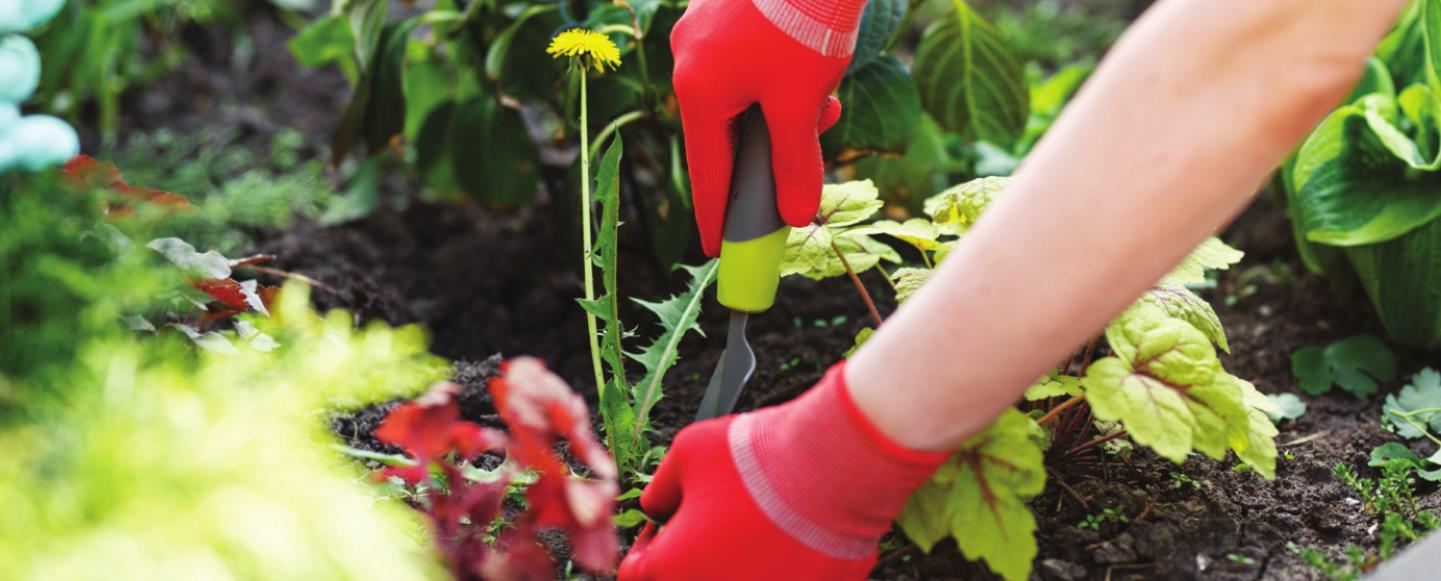
When it comes to weeds, pests, and plant disease, perhaps, instead of “Whatta you got that’ll kill that?” the question we should be asking is, “How can I live with that?” And the best answer to that question is: use sound horticultural practices to prevent them from getting out of control in the first place. For instance, if you avoid cutting your lawn too short and overseed each year to encourage dense growth, your turf grass will shade out most of the weeds that are trying to gain a foothold. The few that do emerge can be removed through mechanical means (yep, the old-fashioned dandelion digger) before they go to seed to prevent them from spreading. If you must use a herbicide, spot spray the chemical only on the affected portions of your lawn. Broadleaf weed killers don’t prevent weeds from emerging; they only work on weeds that are actively growing, so there’s no point in applying them to parts of the lawn that are weed-free.
Weeds in planting beds can be kept to a minimum by applying a good layer of mulch and by watering the individual plants rather than the entire bed. Sure, some weeds will pop through the mulch from time to time, but they’ll tend to be spindly and weak and will usually be easy to pull.
Sound horticultural practices can also help to prevent many of the fungus problems that plague our plants when conditions are excessively moist. You can’t control the amount of rain that falls during the growing season, but you can certainly give your plants sufficient space and prune them correctly to improve airflow and light penetration. It’s also a good practice to water at the base of each plant rather than over the foliage to avoid creating conditions that are conducive to the spread of fungus. In addition, pruning out dead or damaged branches helps eliminate entry points for pests and pathogens.
With respect to plant-munching insects, routinely inspecting your plants for the presence of damaging insects or their eggs and then manually removing any that are found can help maintain the population at a manageable level without resorting to chemical treatments. This is an especially important consideration when it comes to vegetables and fruiting plants.
Will there be times when a disease or pest still rears its ugly head despite your best efforts? Absolutely. At those times, the judicious use of a chemical (always in strict accordance with the manufacturer’s instructions) may help you regain the upper hand. But if you take a proactive approach and implement good horticultural practices, the times when chemical solutions are necessary should be few and far between. ✲
