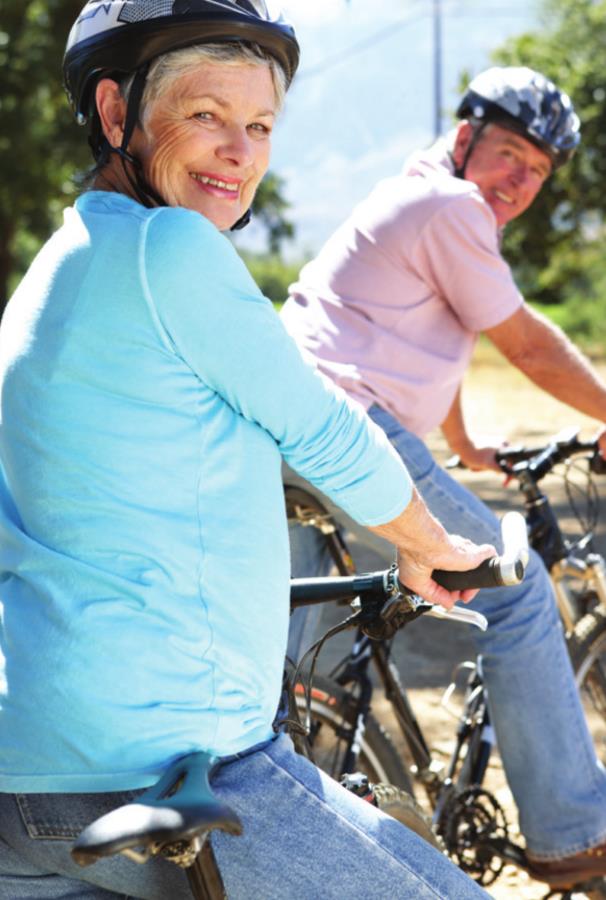
BEFORE HOPPING ON YOUR BIKE and pedaling down the road for the first time this spring, it might be a good idea to review some basic bicycle-safety tips. Here are four easy-to-remember rules to keep in mind on your two-wheeled excursions:
1) Ride predictably
Riding predictably simply means following the same rules of the road that all other drivers must follow. Obey all traffic signals and signs, yield the right-of-way when appropriate, signal your intentions before turning or proceeding from a stop, allow plenty of room between yourself and other cyclists or vehicles on the road, and always ride with traffic, not against it.
2) Ride visibly
Of course, it’s also vital for vulnerable cyclists to be clearly visible to others on the road. Wear brightly colored clothing and a light-colored helmet so you stand out in traffic during the day. At night, make sure you have an operational white front light and red rear reflector. Equipping your bike with a red rear light is also a good idea. Your clothing for night riding should be eye-catching and reflective.
Whenever possible, avoid riding in a motorist’s blind spot, and be sure to hold your place in a moving traffic lane. If you try to pass a line of stopped or slowing cars on the right to get through traffic faster, you may be invisible to a right-turning vehicle and cause a collision at the next intersection.
3) Ride defensively
Even though you may be following all the rules, others on the road may fail to do so, putting you at risk. If you ride defensively and try to anticipate the mistakes of other cyclists and drivers, you’ll be better poised to avoid accidents.
The key to defensive riding is to stay alert and continually scan the road ahead for obstructions, hazardous conditions, or motorists/other cyclists operating in an unsafe manner. Plan ways to maneuver around or away from danger. If you see a problem developing, be prepared to act decisively to avert it.
4) Ride with the right safety equipment
Of course, every cyclist should also wear appropriate protective gear, including a helmet, elbow pads, and knee pads. Considering that head injuries cause the majority of deaths and permanent disabilities resulting from bike accidents, the helmet should be considered the most critical element of the protective ensemble. Make sure it conforms to the standards provided by the Consumer Products Safety Commission (CPSC).