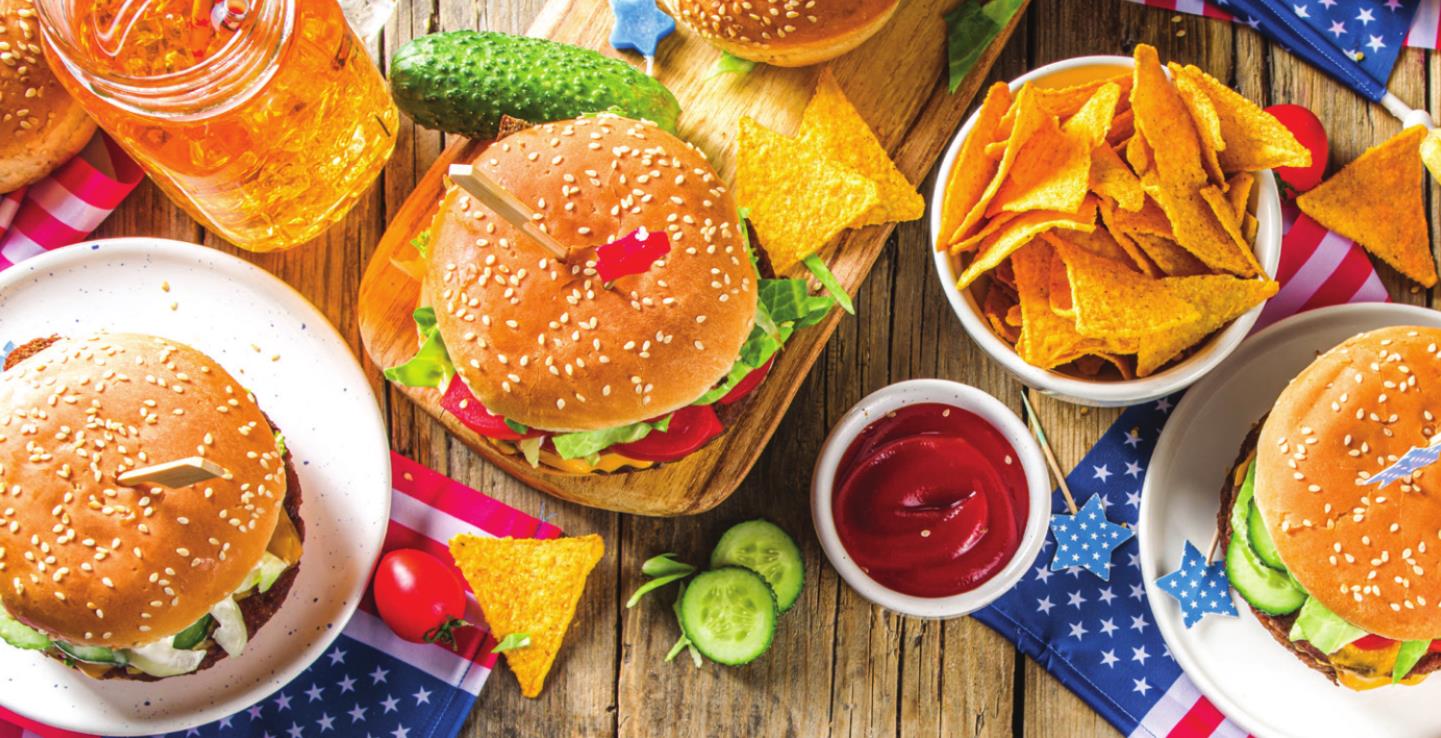
THE FOURTH OF JULY GOES HAND IN HAND WITH PICNICS, potlucks, and barbecues. However, as you prepare to feast in the great outdoors in celebration of our nation’s independence, it’s important to take certain precautions when cooking and handling the foods you plan to serve. Otherwise, you might just discover that a particularly nasty uninvited guest—foodborne illness—has crashed the party.
Picnic and potluck foods are a common source of foodborne illness for a variety of reasons. One is that many of these foods require a lot of handling during preparation, increasing the risk of contamination with harmful bacteria. Another reason is that we tend to be somewhat lax in our cooking and cleaning practices at picnics. Last but not least, it’s much more challenging to hold foods at a safe temperature when you’re feasting under the summer sun than it is when you’re cooking at home in the air-conditioned kitchen.
Here are five simple steps you can take to protect yourself and your guests from foodborne illness at your Independence Day picnic or any outdoor gathering where food is served:
1. Transport it safely
Picnic food-safety considerations begin with proper transportation of the foods you will be serving. In the hot summer sun, ice melts and foods can spoil quickly, so be sure to pack your coolers with plenty of ice. Also, keep in mind that, just as with your refrigerator and freezer at home, the more tightly you pack the cooler, the longer it will hold its temperature.
Foods packed in coolers should be mingled among the ice rather than placed on top with an air space above, and cold beverages should be packed in a separate cooler rather than mixed in with raw foods. If you combine raw foods and beverages in the same cooler, not only do you risk contaminating the beverage containers with harmful bacteria, but the constant opening and closing of the cooler by thirsty picnickers will also make it difficult to keep the raw foods at a constant, safe temperature.
2. Keep it clean
It’s common sense: the simple act of washing your hands and any utensils or surfaces you may be using for serving or preparing food will go a long way toward keeping bacteria at bay. If soap and clean water aren’t readily available at your picnic destination for hand washing, sanitizing hand wipes or waterless hand sanitizers can be used instead.
And don’t forget to wash fruits and melons as well as any vegetables intended to be eaten raw. A mouthwatering slice of watermelon may be the perfect complement to a summer picnic, but melons are also a very common source of foodborne illness. If harmful bacteria are present on the melon rind when you cut into it, the bacteria can be transferred on the knife to the edible portion of the melon. Rather than cut the melon on a (likely contaminated) picnic table, wash and cut it at home and transport it to the picnic in a clean container.
3. Serve it sensibly
How long can picnic foods be left sitting out safely? A good rule of thumb for grilled meats and many common picnic and potluck dishes—such as mayonnaise-based potato salad, macaroni salad, and coleslaw—is to leave them out for no longer than one hour. After that, they should be returned to a cooler and kept chilled. If some picnic guests show up late, they can always be taken back out again.
It may be safe to leave oil-andvinegar-based salads and sugar-based foods (e.g., fruit) out a little longer because they pose a lower risk of foodborne illness. However, it’s always better to be safe than sorry, so that one-hour time frame is still a sensible target. Cookies and brownies can be safely left out longer, which is good news to kids. Raw vegetables can also be left out longer, but don’t make the same assumption about veggie dips. If you have a large veggie tray, avoid putting out all the dip at once. Instead, put out just a small container of dip and then replace the container when it starts to get low. Don’t just refill the same dip container over and over again because the dip left on the edges of the container will begin to harbor bacteria.
Similarly, don’t assume that picnic dishes served on ice can be left out for more than an hour. The food in direct contact with the ice may be safe, but keep in mind that harmful bacteria may begin to proliferate in the top layer of the dish, which is exposed to the hot sun and warm air.
4. Cook meats to the proper temperature
It’s tempting to rely on visual cues, such as the color of the meat or clarity of the juices, to determine whether grilled meats are cooked completely, but this approach is unreliable and unsafe. Instead, use a meat thermometer to check the internal temperature of the meat with the thermometer probe inserted into its center. Listed below are the safe minimum internal temperatures for various grilled meats as recommended by the Centers for Disease Control and Prevention:
• Whole cuts of beef, veal, lamb, and pork, including fresh ham (raw): 145°F (then allow the meat to rest for 3 minutes before carving or eating)
• Fish with fins: 145°F or cook until flesh is opaque
• Ground meats, such as beef and pork: 160°F
• All poultry, including ground chicken and turkey: 165°F.
5. Be careful about crosscontamination
Plates, forks, tongs, spatulas, and other vessels, containers, or utensils that have come into contact with raw meat should never be used to handle or store cooked meats or any other foods destined for the plates of picnic-goers unless they are thoroughly washed first or, in the case of grilling utensils, have been exposed to heat intense enough to kill any bacteria. A better option is to keep plenty of clean dishes and utensils on hand or to use disposable items.
It’s also important to use caution when marinating meats. The CDC warns against putting any marinade, juice, sauce, or other liquid that has touched raw meat on your food after barbecuing unless you boil the marinade first to kill any bacteria. A much safer option is to prepare a separate batch of marinade or sauce to brush on the cooked meat. Also, when brushing a marinade or barbecue sauce onto any meat while grilling, it’s a good idea to brown both sides of the meat first to avoid transferring bacteria from the raw side to the cooked side. ✲