IS CURLING LIKE A FOUNTAIN OF YOUTH? Maybe. Take the case with Ed and Mary Glowacki. They are in their 41st season in the sport, sliding and sweeping a stone down a sheet of ice; like shuffleboard with action and attitude.
Each of them is 70 years old. Do they credit their longevity of years to their longevity of playing? “Curling is one of the contributing factors, yes,” Ed said.
Mary is president of the Bowling Green Curling Club; it’s her second stint as its leader. Ed’s also a two-time president of the group. They’ve long recognized the health benefits of the sport and sing its praises.
“It’s a mental and physical sport,” Ed said. “It’s a tremendous cardiovascular workout if you’re sweeping. It’s a game referred to as ‘chess on ice,” because you’re always thinking about the next couple of shots.”
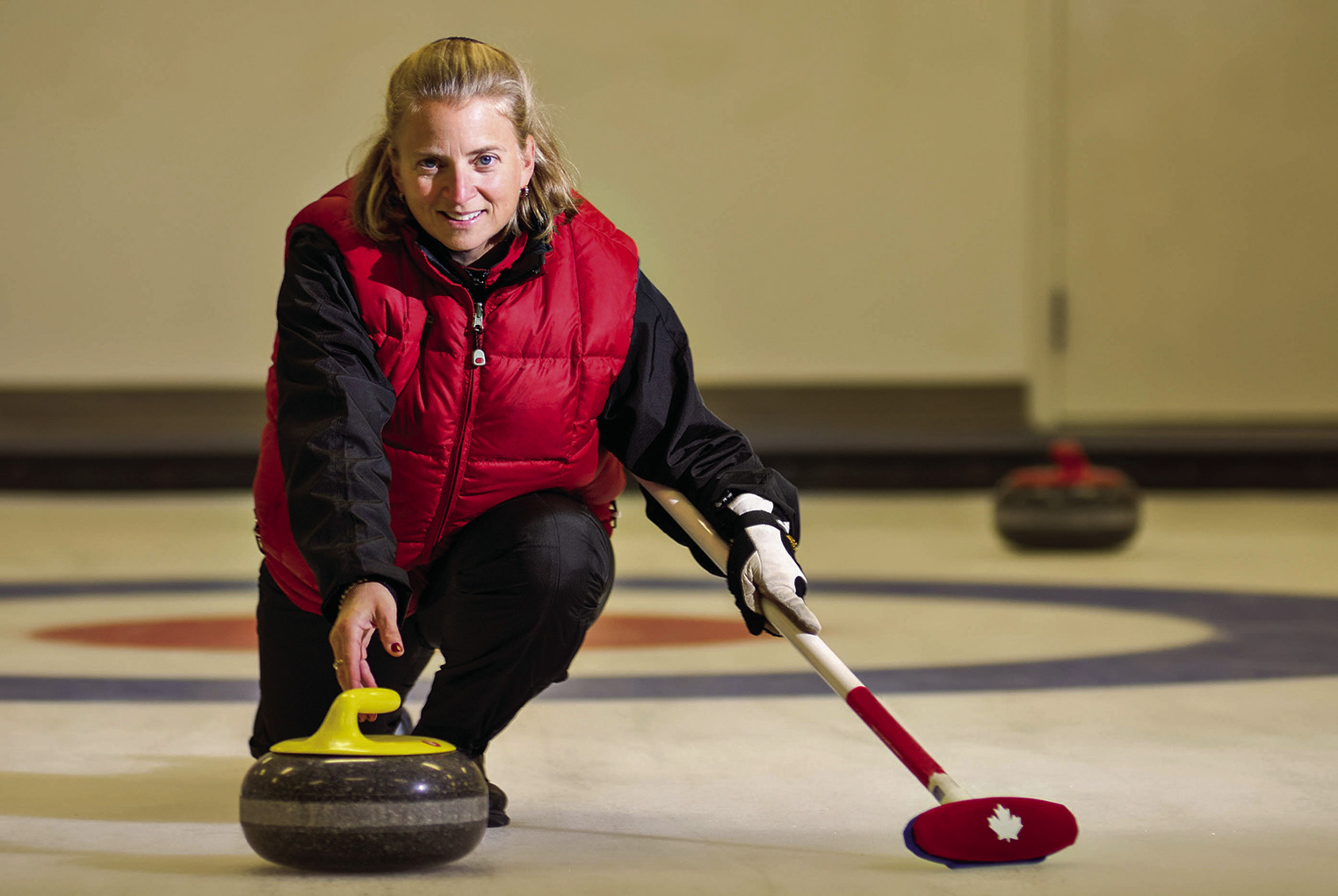
For those unfamiliar with the sport: Curling is where players slide polished granite stones on a sheet of ice.
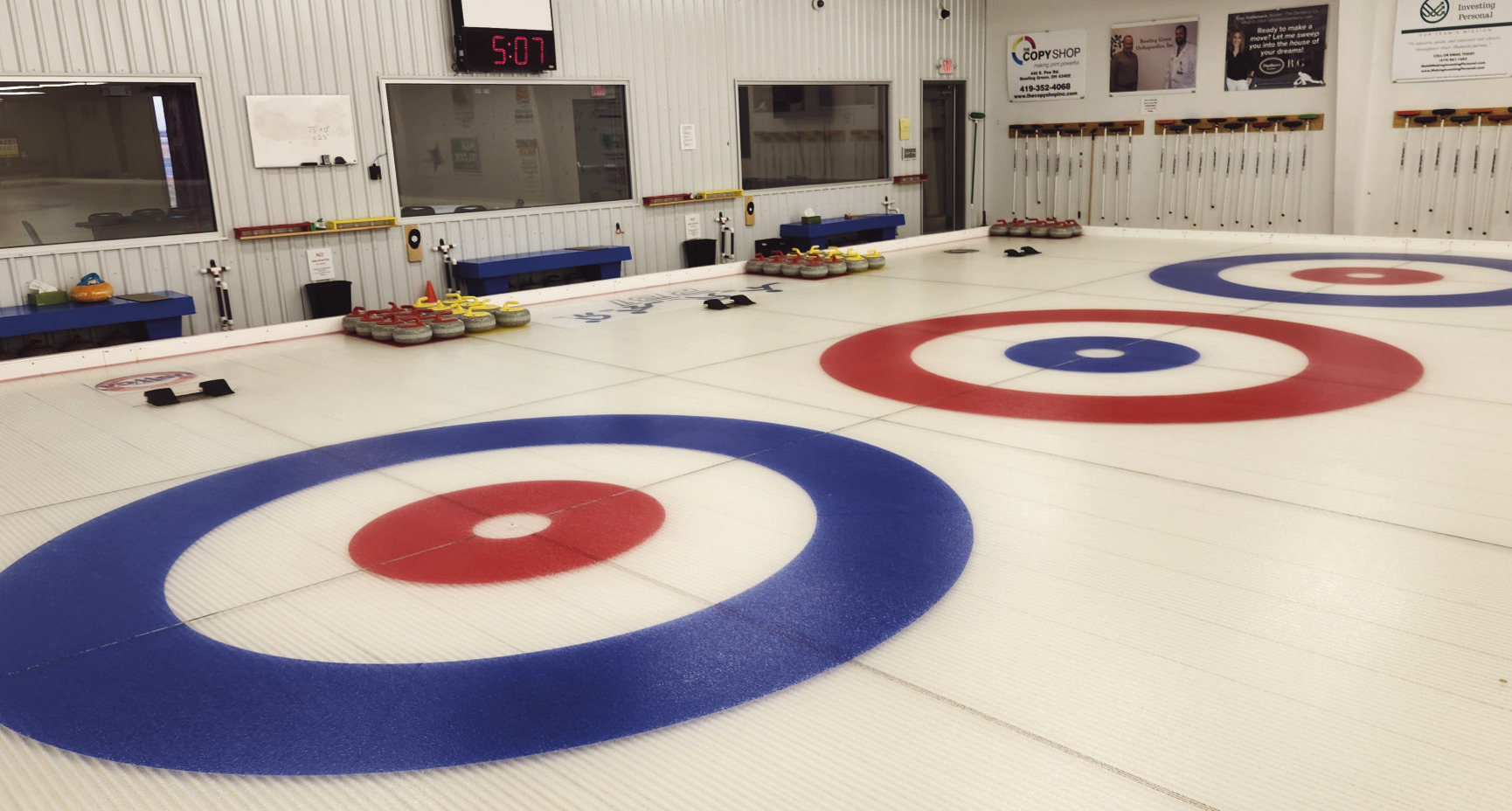
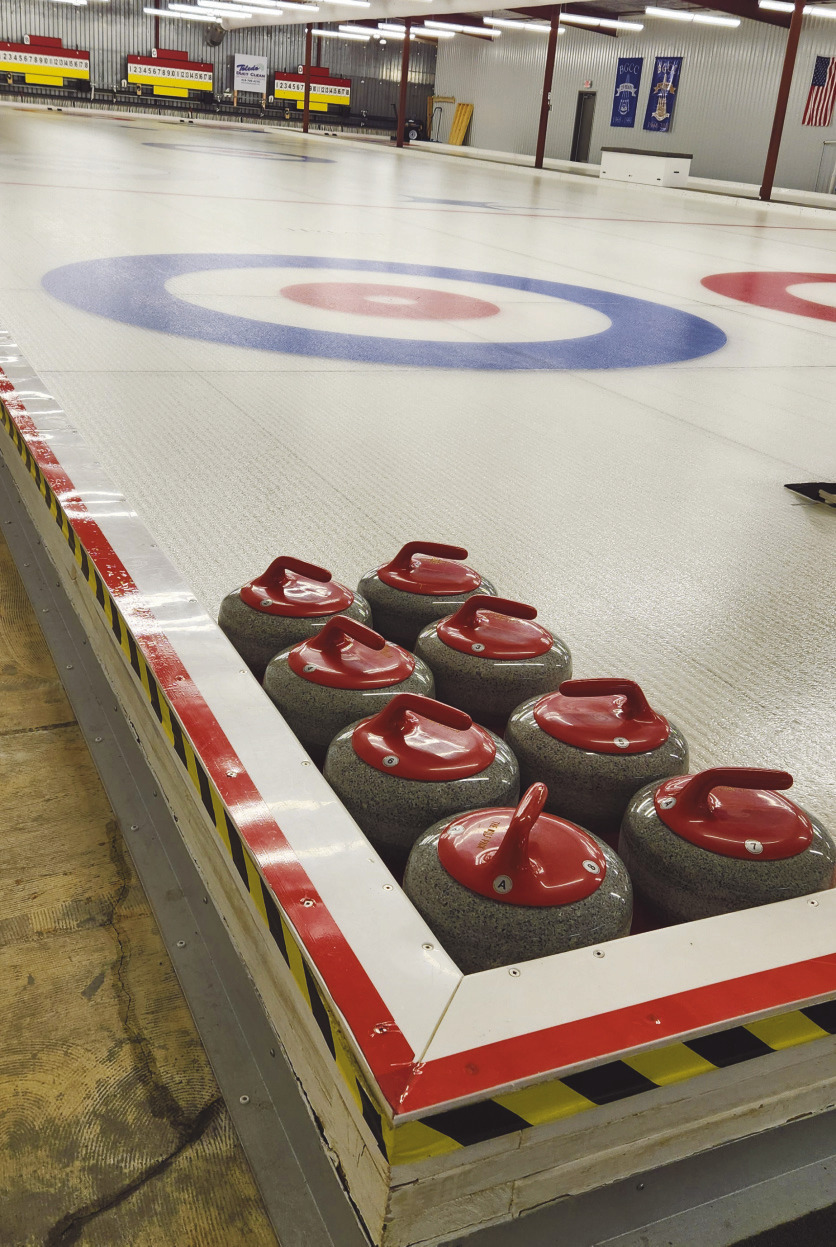
Two teams, each with four players, take turns sliding the stones, also called rocks, across the ice sheet toward the house, a circular target marked on the ice. Each team has eight stones, with each player throwing two.
Here’s where “curling” comes in. The player throwing the stone creates a curved trajectory, called a 'curl,' by gently rotating the stone on release. The stone path can also be influenced by two sweepers using brooms or brushes and move alongside it and sweep the ice in its path. Sweeping reduces friction, allowing the stone to travel farther and in a straighter line, with less curl.
The goal is to have the highest score for a game; points are scored for the stones resting closest to the center of the house at the conclusion of each end, which is completed when both teams have thrown all their stones once. There are eight to 10 ends.
Strategy and teamwork play a crucial role in selecting the best path and final placement of the stone.
“It’s a very friendly and cordial sport,” Mary said. “You go out and curl and socialize with teammates and opponents afterward. That camaraderie keeps people coming back.”
“At first, people are inquisitive,” Ed said about first-timers. “Once they try it, they like the physical aspects and certainly are wooed by the social aspects.”
“It’s the relationship you have with people in their teens and 20s,” Mary said of the age range of curlers. “The oldest member of our club is mid- to late 80s. It helps you feel younger when you’re curling with people of all ages.”
The National Institutes of Health (NIH) said initial research compared high-to low-experienced older curlers with non-curlers. “The results suggest that any level of curing experience can enhance older adult psychological well-being and warrants consideration for physical activity promotion and fall prevention programs,” NIH said.
Helping less-limber curlers, young and old, who have trouble squatting to deliver the rock, the curling community developed the delivery stick. “It’s like a shuffleboard stick,” Ed said. “It keeps them in the standing position.”
The delivery stick also makes the game accessible to all, Mary said, including those with physical problems or in wheelchairs.
The Glowacki's said the BG curling club has about 200 members who meet to curl–and socialize–at the Black Swamp Curling Center, 19901 North Dixie Highway, between Bowling Green and Perrysburg. “We’ll see that number probably surge after the Olympics,” Ed said. Curling is among the Winter Games that will be in Milan and Cortina d’Ampezzo, Italy, from February 6 to 22.
During the Olympics, Ed said, the club will be closed for league play. Instead, the club will offer learn-to-curl sessions.
“Some people know about curling, some don’t, but like to watch it on TV. We present the opportunity to come down and throw some stones. It’s about that point where they get hooked.”
Ed added that there’s not much difference between male and female curlers. “They both have the same ability,” he said. “It’s a sport for everyone.”
✲