
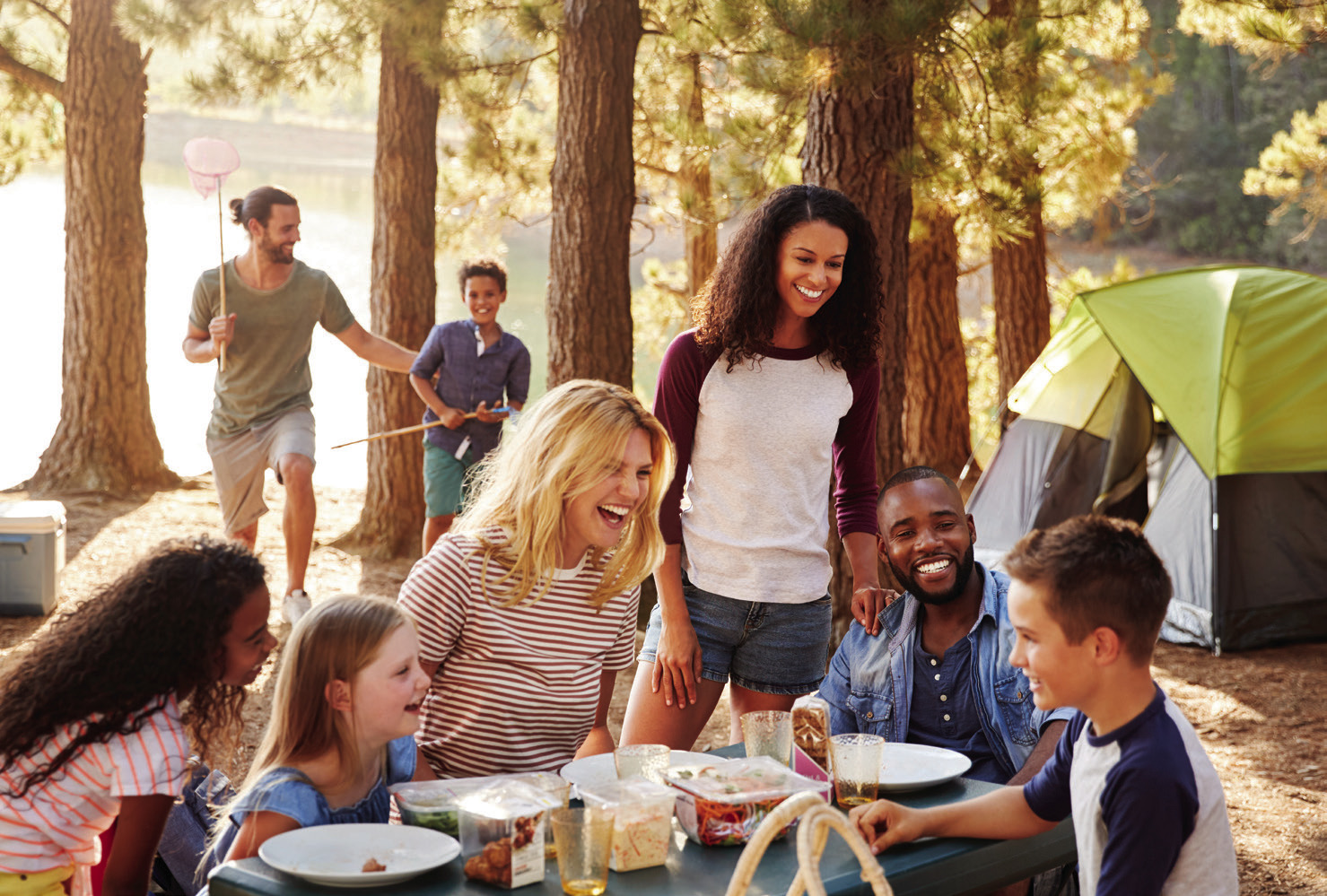
Camping offers a wonderful opportunity to reconnect with nature, engage in all manner of outdoor activities, bond with family and friends, unplug from technology and those ever-present screens, and simply de-stress, all for a fairly modest price relative to many other vacation getaways. However, your hoped-for sublime camping experience can quickly turn sour if you aren’t properly prepared and equipped.
As a novice camper, being “properly equipped” simply means having on hand all the basic tools and materials necessary for a successful first outing— not buying every camping “bell and whistle” available on the market. In addition to food, potable water, toiletries, and appropriate clothing, the following are essential items (many of which you might already have) that you should plan to take along on your camping “maiden voyage”:
A tent
For the purposes of this article, we’ll assume you won’t be RV camping or sleeping under the stars, so first and foremost you’re going to need a tent—your outdoor domicile—to provide protection against the elements and biting insects.
The appropriate size and style of tent will depend on several factors, such as the number of campers in your group, how far you’ll need to carry the tent from your vehicle to the campsite, and the weather/temperature conditions at your camping destination. For most first-timers who just want to enjoy a little summertime camping, a three-season tent will be more than adequate, and many different tent styles and configurations can be had for the cost of one or two nights in your average motel. Keep in mind that you’ll also want to place a footprint or tarp on the ground beneath the tent in order to protect the tent floor from rough surfaces and prevent moisture infiltration.
A sleeping surface
Speaking of rough surfaces, even if you’re using a thick sleeping bag, the ground will start to feel pretty hard and unyielding during the night if you don’t have some sort of sleeping surface to act as a cushion. As with tents, there are all kinds and sizes of sleeping surfaces to choose from, including various mats/pads, cots, and inflatable air mattresses. One could argue that a properly inflated air mattress offers the most home-like sleep experience as well as a good degree of insulation, but it’s really a matter of personal preference.
A sleeping bag and pillow
In addition to a quality sleeping surface, you’ll need a sleeping bag rated for the expected nighttime temperatures at your campsite. Choose the style you’re most comfortable with. A rectangular bag has a looser fit that allows for tossing and turning but may not be as warm as a mummy- style bag. A mummy bag, on the other hand, offers greater warmth but has a tighter, more restrictive fit.
And don’t forget a pillow! You can always bring the pillow from your bed at home, or, if you’d prefer to avoid soiling your daily-use pillow, you can buy a dedicated camping pillow. These can range anywhere from a simple stuff sack that you fill with extra clothes, to an inflatable or foam pillow, to a hybrid-style pillow that combines an inflatable bladder with foam, down, or other fill materials.
Folding chairs and table
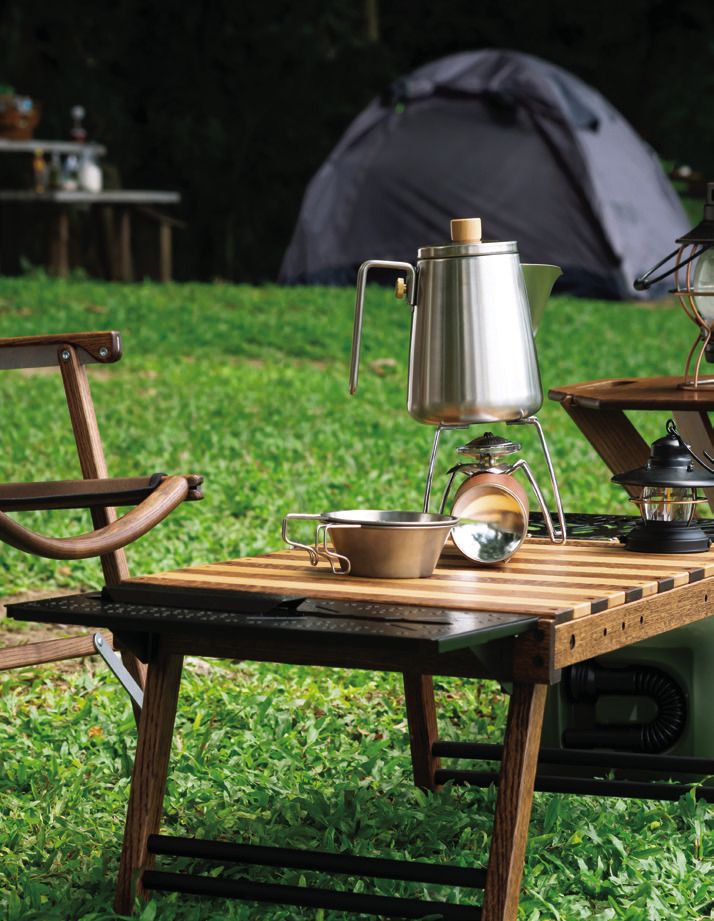
You won’t regret bringing a portable, folding camp chair for each member of your party. Not only can you move a folding chair to any area of your campsite with ease (e.g., to get out of the sun), but you can also take it with you when you leave the campsite and head to the beach, the river’s edge, a scenic overlook, or any other destination where a comfy seat might be welcome. A lightweight, collapsible table can also come in handy for those late-night card or board games, and for holding drinks and snacks.
A cook stove and cookware Unless all your meals are going to consist of hot dogs roasted over the campfire, you’ll want to bring a portable propane-powered camping stove as well as cookware (pot, pan, skillet, etc.) that is safe for use over an open flame. Make sure you have extra propane canisters so you don’t run out of cooking fuel mid-trip. Also, if your campsite will have an electrical hookup, it’s a great idea to bring along a plug-in electric kettle, which can be used to heat water for instant coffee as well as for cooking pasta and rice dishes, soups and stews, etc.
Dishes and utensils
For serving and enjoying your meals in the great outdoors, you’ll need a set of reusable dishes—plate, bowl, and cup—and silverware for everyone in your camping party. And don’t forget skewers for roasting hot dogs and marshmallows, serving spoons/tongs, barbecue utensils if there’s an onsite grill that you intend to use, a sharp knife and cutting board, as well as can and bottle openers. For washing dishes after meals, be sure to bring a plastic bin or basin and a towel for drying.
Lighting sources
A blazing campfire may be bright and cheerful, but you can’t take it with you into the tent or to the bathroom after dark. So, you’ll want to bring a lantern to provide general illumination around the campsite (there are many propane or battery-operated/ rechargeable styles to choose from) along with a flashlight or headlamp for each camper to light the path on night hikes and when heading to the restroom to answer nature’s call at night.
Nothing will ruin your camping experience quicker than a severe sunburn or relentless attacks by mosquitos, “no-see-ums,” or other biting bugs—so be sure to pack an ample supply of sunscreen and insect repellent.
When camping, it’s much better to have a tool and not need it than to need it and not have it—and the same applies to first-aid supplies. Don’t leave home without vital tools such as a mallet or hammer, a hatchet, a multitool, a camping saw, a lighter, and extra tent stakes and guylines; as well as a first-aid kit containing items such as bandages, band-aids, tweezers, scissors, antiseptic wipes, antibiotic ointment, and over-thecounter medications such as ibuprofen and antihistamines. You can either buy a ready-made kit or assemble your own.
Do a dry run!
This last item isn’t something you’ll pack and take with you on your first camping excursion, but it will help boost your confidence and comfort level ahead of time. Prior to your trip, it’s a good idea to set up your tent at home so you can become familiar with the process. Then, if possible, spend a night or two, either in your own backyard or at a close-to-home camping destination, putting the tent and all your supplies to use. Doing this dry run will not only help familiarize you with all the necessary tools and materials, but it might also help reveal something you might be lacking and need to acquire before departure. ✲
