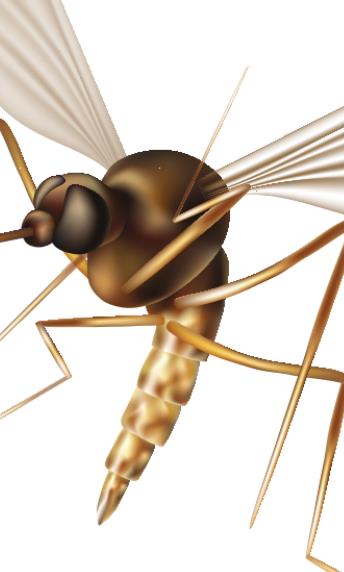
THOSE SPRING SHOWERS may bring beautiful flowers, but they’ll also eventually encourage the proliferation of an unwanted summer guest—the mosquito. This irksome insect plagues our barbecues, picnics, hikes, and other outings. It even invades homes to feed on unwary inhabitants. What’s worse, in addition to producing aggravating, itchy welts, mosquito bites can also be a vector for certain serious diseases, such as West Nile virus. What can you do to protect yourself and your family from these tiny, buzzing bloodsuckers?
Eradicate breeding areas
The first three stages of a mosquito’s life—egg, larva, and pupa—take place in stagnant or slow-moving water. Hence, by eliminating any sources of standing water on your property, you can help to make a dent in the mosquito population in and around your home. Ridding your property of potential breeding sites takes a keen eye and a bit of detective work because virtually anything that traps water—even something as seemingly insignificant as the saucer under a flower pot or a pet’s outdoor water dish—can support mosquitoes. Common breeding sites include:
Pools and ponds
If kept clean and chlorinated, swimming pools will not promote mosquito breeding. However, if the homeowner is away for a prolonged period, such as on a long summer vacation, and the chlorine is allowed to dissipate, the pool will then be able to support mosquitoes. Be sure to chlorinate your pool before leaving home for an extended period or arrange to have someone else tackle this chore while you’re gone. And, don’t forget that water accumulating on a pool cover can support mosquitoes, as well. Children’s wading pools should be drained after each use.
To keep a garden pond mosquito-free, either stock it with fish, which will happily feast on the larvae, or aerate the water to keep it moving.
Rain gutters
Clogged or improperly pitched rain gutters can readily trap enough water for mosquitoes to breed in. Be sure to clean leaves and other debris from your gutters regularly to keep them flowing properly.
Birdbaths and lawn ornaments
These should be emptied and refreshed at least once a week. Also, be aware that outdoor pottery, other decorative lawn ornaments, and the aforementioned flower pot saucers can trap water that attracts breeding mosquitoes. Empty these routinely, as well.
Pet water dishes and watering troughs
As mentioned, pet water dishes left standing will become a mosquito hatchery. Refresh them frequently. It’s the right thing to do for your pet’s health anyway!
Garbage cans and recycling bins
Garbage cans can contribute to mosquito breeding in one of two ways: 1) if water is allowed to infiltrate the can and collect in the bottom, and 2) if the lid is left inverted on the ground so it can capture rain water. Make sure your garbage can lids fit tightly and keep them on the cans at all times. If the lids aren’t snug, you can prevent water from accumulating inside the cans by drilling a small drainage hole in the bottom.
Recycling bins that are not equipped with a tight-fitting lid are not only a potential mosquito-breeding site in themselves, but they also tend to hold all kinds of plastic, glass, aluminum, and steel containers that can trap water. Ideally, uncovered recycling bins should be stored in a garage or shed or under an overhang where they are not exposed to rain.
Beating the bite of adult mosquitoes In spite of the best prevention
In spite of the best prevention efforts, it’s inevitable that at least some adult mosquitoes will be present around your home—especially if you live near a wooded or marshy area. Nonetheless, there are steps you can take to “beat the bite” of adult mosquitoes.
One is to minimize the presence of tall weeds and grasses, where adults tend to rest during the day. So, try to keep your lawn mowed and cut back brush that encroaches on your property. There are also EPA-approved insecticides that can be applied around your home’s foundation and on surrounding shrubs and grasses to prevent adults from resting there.
When spending time outdoors, a DEET-based insect repellent can be effective at preventing mosquitos from feasting on you. Treating your clothing (but not your skin) with a permethrin-based product will help deter mosquitoes, as well. When using any insecticide or repellant, be sure to apply it in strict accordance with product labeling.
On a windless day, citronella oil, burned in candles or tiki torches, and mosquito coils can offer a layer of protection against mosquitoes in outdoor areas.
Finally, to prevent adult mosquitos from gaining access to your home, make sure all your window and door screens are in good repair and have no gaps around their edges. That way, you’ll be able to enjoy those warm summer breezes in the evenings while avoiding painful, itchy mosquito bites. ✲