Sponsored by Wood County Park District
OUR NEIGHBOR CRAIG came over on Great Eclipse Day to peer through our piece of sky and share an adult beverage. We had worked together until I retired and he started a career in a different industry. Craig has planned to retire several times now, but stuff keeps getting in the way. When he mentioned that he would like to see the Grand Canyon some day, it was an indication that stuff was still getting in the way. So, I told him about our last trip there.
As I was sitting on the deck of the North Rim Lodge admiring the view, a woman pushed an ancient gentleman in a wheelchair up next to me.
“That’s my daughter,” he said. “She brought me here because it was on my bucket list.”
What a shame, I thought, that you waited until you were in a wheelchair to see the Grand Canyon.
I suggested to Craig that one option for people with limited time is to book a flight to Las Vegas and take a rental car. Flights to Vegas are often inexpensive, and the strategy appeals to people who are not enthusiastic about driving clear across the country.
Last winter at Clearwater Lake, FL, we met a couple with a big fifthwheel camper who were headed west of the Mississippi for the first time. Their plan was to be at the Grand Canyon in April and then continue to the Pacific Northwest. To reach the Canyon, they were headed first up to the Okefenokee Swamp in Georgia and across Alabama, Mississippi, and Louisiana. What were they going to see along the way? Didn’t know. Their plan was to look for places to stay for a night or two and then check with a travel website about what to see in that neighborhood. That is the opposite of how we would go about it, but they were working their plan.
Every month this column is devoted to something described as a walk in the park to indicate that it is easy, pleasant, and worthy of your consideration. There are numerous reasons, though, that a walk in the park could turn out to be neither easy nor pleasant. As with the gentleman at the Canyon, there may come a time when physical limitations interfere. Obviously, a plan has to include ways to deal with that and a myriad of other issues. How much time do we have? Where are we going to eat and sleep? How much is this going to cost? What is our preferred mode of travel? What route should we take? What is the best time to be there?
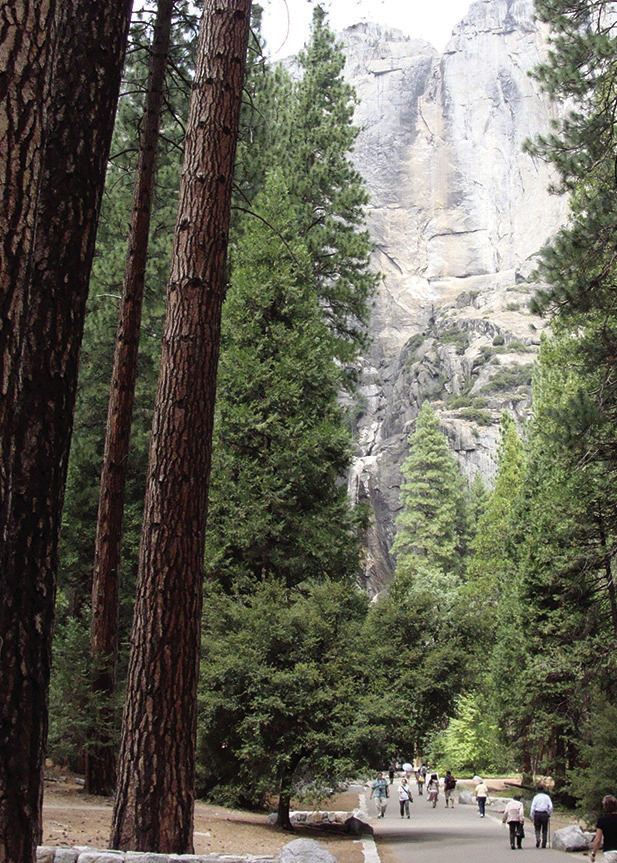
When Shirley and I were in Yosemite, we headed out to see 2,425-ft. Yosemite Fall. (The official names of all the waterfalls there are singular.) There is an easy, level, one-mile walk on a paved trail that begins near the lodge. As we started out, a tour bus pulled up and began unloading 59 blue-haired ladies and one bald, smiling old fellow. It took a while because several of the passengers had to unfold their aluminum walkers. They were highly motivated because they were headed for one of the premier attractions in the whole world.
Even at a leisurely pace, we reached the falls well ahead of them. Did I mention it was September? That is an important detail. There are countless waterfalls in Yosemite. Many are fed by snow melt in the high country, so the best time to see Yosemite Fall is in May and June. By August, Yosemite Creek is usually dried up and the falls are just a dark smudge on the face of the cliff. We admired the smudge for a minute and headed back. On the way, we met several ladies pushing their walkers. The bus driver might have informed them that they were not going to see what they expected to see.
Of course, neither did we because I had failed to plan effectively.
There was only an outside chance that there would be even a trickle. Now, I might have stopped at the lodge to ask, but refusing to ask is a guy thing.
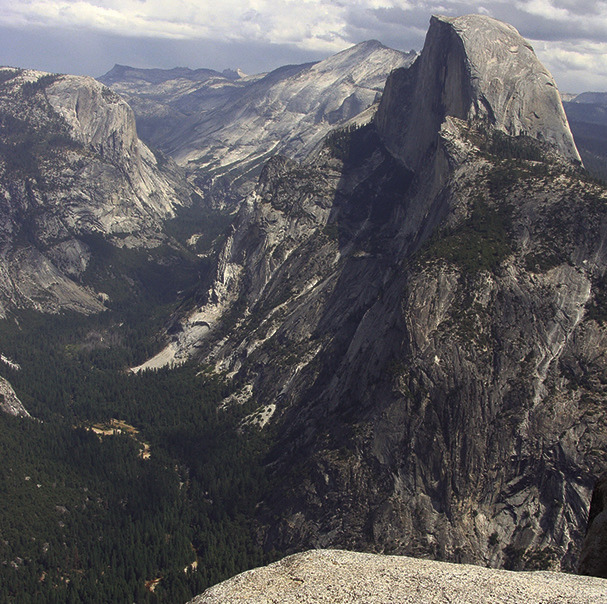
Though Yosemite Fall was disappointing, other attractions more than made up for it. This was undoubtedly true for the tour group as well. The good news is, regardless of your fitness level, nearly every national park has a scenic road with pullouts from which to enjoy the view. In Yosemite, the El Portal Road into the Valley goes right past Bridalveil Fall, Cathedral Rocks, El Capitan, and Half Dome. At the end of the road is a trail leading out to Vernal Fall and Nevada Fall, which don’t dry up. For an even more impressive perspective on the Valley, Glacier Point Road climbs to a viewing area from which all the magnificence is spread out before you. Most national park visitors choose to stay close to their vehicle and seem quite satisfied with the quality of the experience.
At Bandelier National Monument, near Santa Fe, we met a family from Dayton with their own plan. Dad said their objective was to visit all the national parks. Was he aware that several of the national parks in Alaska are accessible only by boat or float plane? Dry Tortugas NP is two hours by boat off the coast of Florida, and Biscayne NP near Miami is popular with boaters and divers because it is 95% under water. Above water there is not much to see. Did their plan account for these issues? And what did he mean by “national park”? There are 429 recreational areas managed by the National Parks Service, but only 63 have national park in their name. The rest are national battlefields, historic sites, cemeteries, memorials, preserves, scenic rivers, lakeshores, seashores, and monuments.
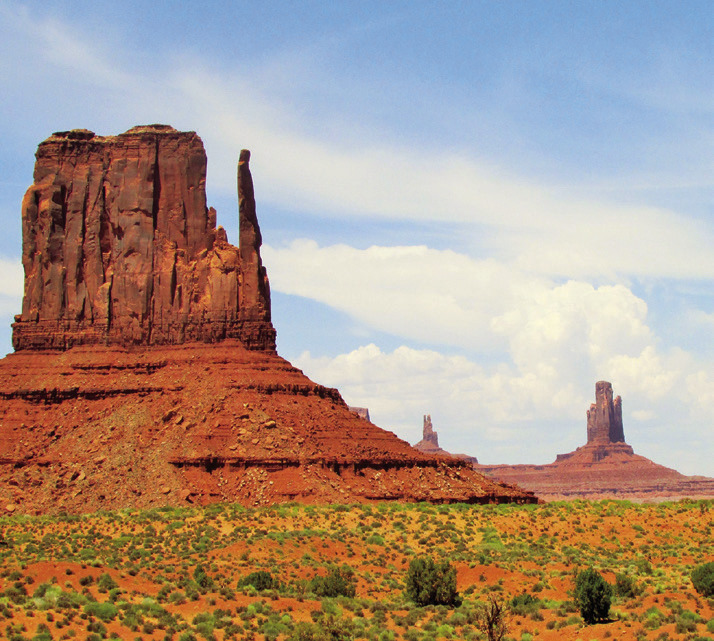
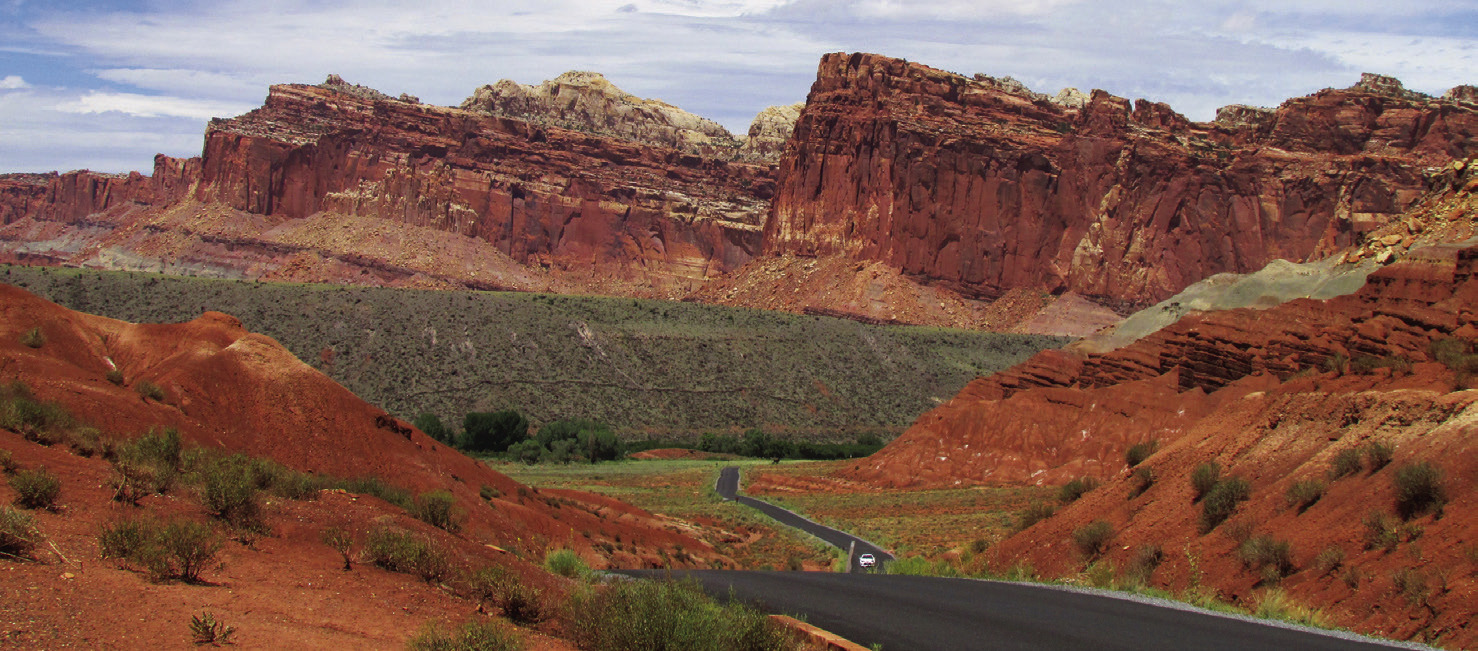
Bandelier is definitely worth a visit even if it is “just a monument.” Evidently, the family decided that it qualified for inclusion in their plan. Besides, Bandelier in northern New Mexico is relatively close to the five national parks in Utah and the North Rim of the Grand Canyon just across the state line in Arizona. Monument Valley, the iconic Navajo Tribal Park, straddles the state line. Some people are daunted by the thought of driving 2,000 miles to the Canyon. Others recognize that there is plenty to see and do between here and there. The advantage of developing your own plan is you get to include what you like.
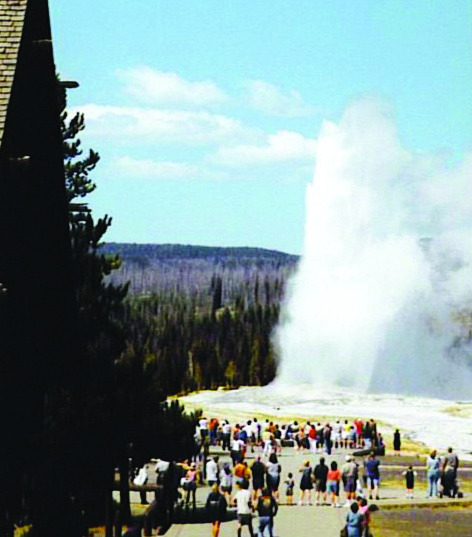
Still, developing your own plan is not always simple. Shirley has been reading a Facebook page on which travelers seek advice about Yellowstone. There were some interesting though rather naive and/or humorous questions. Some people who post warn you in advance by beginning, “This may be a stupid question but….” In early May, for example, someone said they were planning to visit the park in June. They drive a 40-foot RV towing another vehicle. Which campground should they stay in? What are the roads like? What should they see while they are there? Where are restrooms located? How’s the weather in June?
Shirley tends to be empathetic. I tend to be snarky. Beginning to plan for Yellowstone less than a month ahead is futile. The answer to their first question is Fishing Bridge because it is the only campground in the park with hookups and other amenities favored by folks who drive big rigs. It doesn’t matter, though, because Fishing Bridge and all the other campgrounds in the park have been fully booked for quite some time. But how are newbies supposed to know that? And even newbies usually know what they want to see in Yellowstone. That’s why they decided on Yellowstone in the first place. A visit to the park website could have answered all their questions.
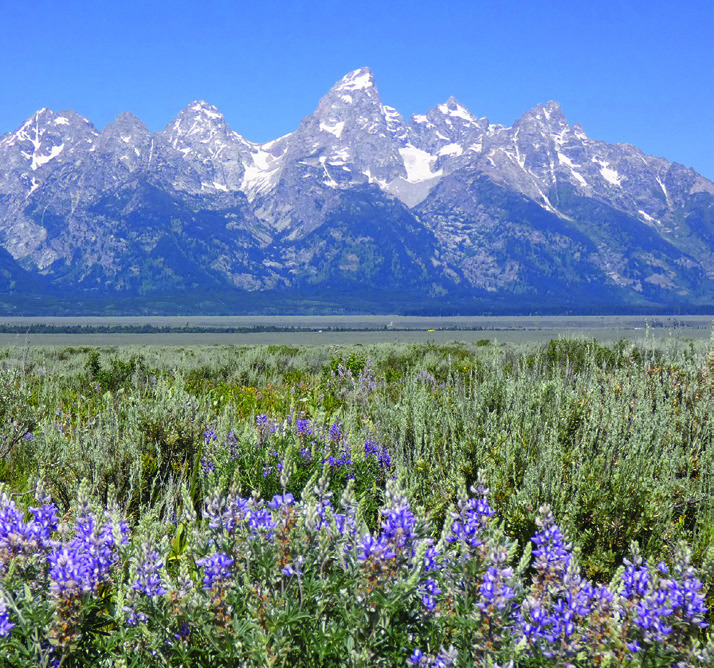
Or most of them anyway. Planning can be stressful when the answer to one question generates several more questions. What is the best route to Yellowstone? It depends. A web search can map the fastest route—if that’s your objective. Are you aware that the drop dead gorgeous Grand Teton NP is adjacent to Yellowstone? Perhaps there are additional places you would want to visit if you knew you were going right past them. How far are you willing to detour and how would that effect your schedule? Is Mount Rushmore worth a stop? How about Pompey’s Pillar National Monument? How do you know you don’t want to see it if you have never heard of it? In other words, you already have to know quite a bit if you are to choose the route that is best for your interests and priorities.
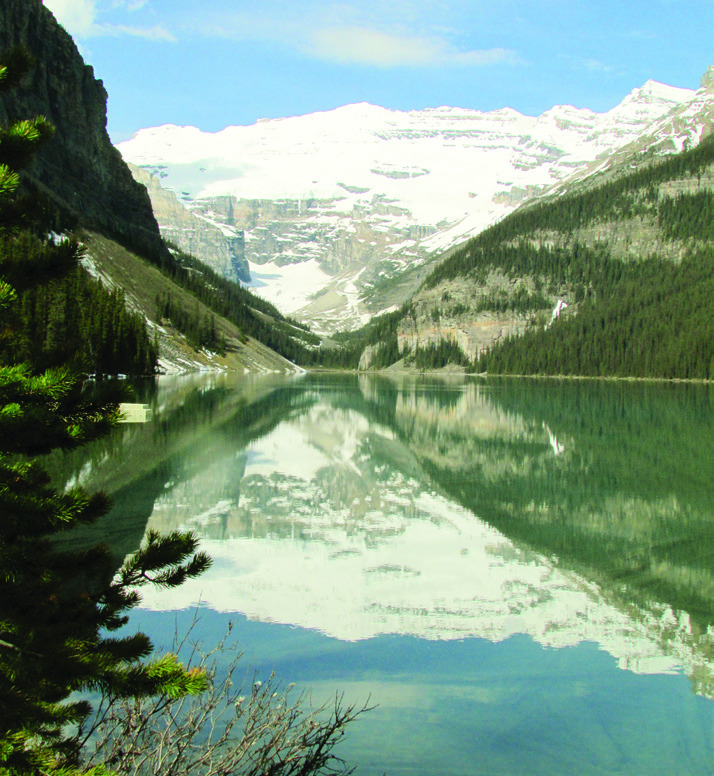
Suppose you have been intrigued by the grandeur of Alaska. We have been twice and drove our RV through the Tetons, Yellowstone, and Glacier NP. Visited five Canadian national parks in the breathtaking Canadian Rockies to the beginning of the Alaska Highway in Dawson Creek, BC. From there it is only another 1,400 miles to Delta Junction, AK. No matter how wonderful we say it is, not everyone looks forward to driving all the way to Alaska, but there are other ways of going about it.
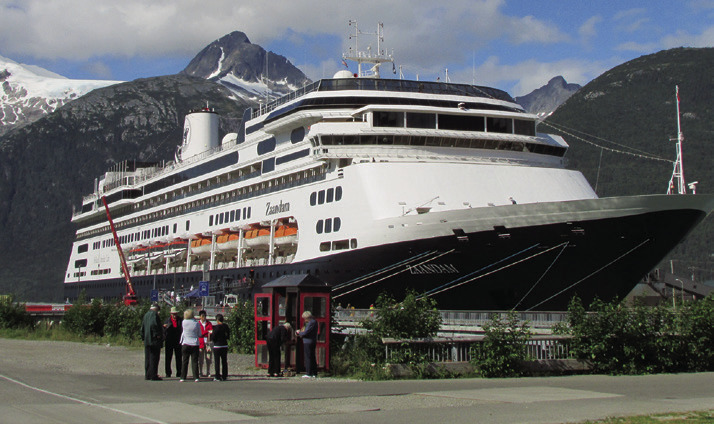
We know two couples who took Amtrak to Seattle, a cruise ship to Alaska, a motor coach tour around the state, and then flew back from Anchorage. Another couple drove their RV along the Alaska Highway route. They returned on the ferry that takes three days on the Inside Passage from Haines, AK to Bellingham, WA. “So many moments that were so surreal it didn’t even seem possible,” they said. Can’t quarrel with that.
There are even hybrid options such as guided RV caravan tours that eliminate the hassles of decision making. You drive your own rig and they choose the route, make reservations for all campgrounds, provide group meals en route, and offer the security of traveling in a group of 20 RVs with support vehicles and experienced guides. If you are concerned about what could happen if your rig breaks down when you are 4,000 miles from home, this can be reassuring and worth the considerable price.
While you are considering how you would deal with vehicle problems, your plan should anticipate how you would deal with other issues. In 2011, I developed a kidney stone while we were traveling. As you may have heard, that can be a tad uncomfortable. Fortunately, I was traveling with my personal healthcare professional who drove our RV for the first time. She is a quick learner, but both of us are still grateful that we were fairly close to an emergency room instead of 40 miles up a remote, deeply rutted forest service road. The older we get, the more likely we are to have something go wrong, so our first aid kit includes a pill for every ill.
If you are dreaming of someday visiting the Grand Canyon, consider the ancient Chinese saying that a journey of a thousand miles begins with a single step. What is the first step you have to take to turn a wish into a plan of action? How long can you put it off? One morning, I got out of the shower and wiped the steam off the bathroom mirror. There was my grandfather looking back at me. Pretty spooky. Still, if we are lucky, some day we will all wake up and find that suddenly we are much older than we ever expected to be. Those are the days when we are most grateful that we got around to taking a little walk in the park.
You might want to see more of his stories and photos at AnotherWalkinthePark. blogspot.com. ✲