
AS A VETERAN OF years of trauma, emergency, and urgent care, I have learned one thing: substance abuse affects all of us. From complete breakdown of routine living to significant medical invasion, this complex problem can be evasive to treat and easy to ignore. However, if there is one thing I have experienced, it is that addiction never gets better on its own.
The nature of the condition It is easy to think we know what substance abuse is. For certain it has been the centerpiece of numerous novels, movies, TV shows, and too many pop songs to list. As a physician, I think it is important to define for my patients and their family exactly what we see as substance abuse.
According to the American Psychological Association (www.apa.org), substance use, abuse, and addiction is defined as: “…a pattern of compulsive substance use marked by recurrent significant social, occupational, legal, or interpersonal adverse consequences, such as repeated absences from work or school, arrests, and marital difficulties.” what is also needed is a combination of medical and mental-health support, environmental stability, and community/family engagement.
These patterns are quite often ignored by the patient. Yet, they are easily detected by family, friends, and colleagues. More often than not, these symptoms come to the forefront because of a medical, legal, or professional issue.
Medical intervention first
No matter how far a person may be into a routine of abuse, there are always medical issues that need to be addressed. As someone who has seen and treated addiction and its adjunct medical issues, I believe strongly that there is little meaningful recovery when a patient tries to “go it alone.”
The medical focus on substance abuse is so important that the Substance Abuse and Mental Health Services Administration (www.samhsa.gov) lists it as the number-one dimension of recovery.
Medical intervention and treatment are not just limited to the physical. Mental health professionals and counseling are a large and important part of recovery.
Only a start
The SAMHSA guidelines make it clear that medical intervention, although paramount, is only the start of a road to long-term recovery. The additional steps include a stable home environment, purposeful activities (including work, home, family, volunteerism, even hobbies), and a community that will support and engender relationships.
All of this is a wordy way of saying that recovery, true and significant recovery, is not a solo endeavor. Naturally, a willingness on the part of the patient is needed. However, what is also needed is a combination of medical and mental-health support, environmental stability, and community/family engagement.
The best time is now
There is no question that when faced with substance abuse personally, in our family, or in our community, it is difficult to approach and discuss. Yet we know that people have become victims of this abuse. According to the State of Ohio (www.data.ohio.gov), there were over 5,200 overdoses in 2021 alone.
As a medical professional and a father, my first and best recommendation is do not wait. There are dozens of resources for the sufferer, their families, employers, and colleagues that can help.
Acknowledging these problems doesn’t just save a single life. Beginning to deal with substance abuse on a multilateral basis provides healing and comfort to all who are suffering. The first and most important medical advice I can give is simple: You are not alone.
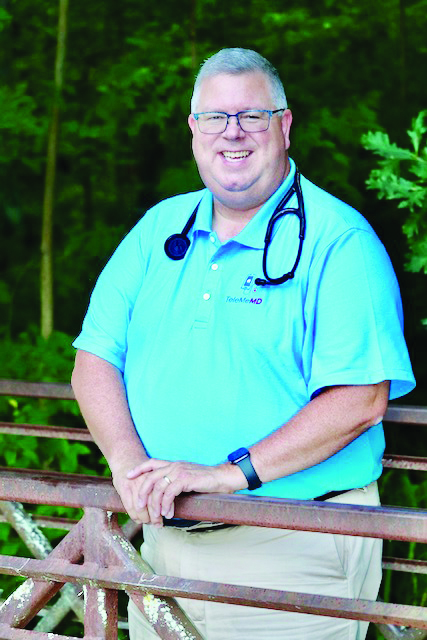
Dr. Steven Bills is the owner of TeleMeMD (www.mytelehealthmd.com) an on-demand urgent-care service. Dr. Bills was born, raised, and educated in Toledo, attending St. John’s Jesuit High School and the University of Toledo, and graduating in 1993 from the Medical College of Ohio. Dr. Bills completed Emergency Medicine Residency training at the joint St. Vincent/Mercy Medical Center and Toledo Hospital program. Since 1996, Dr. Bills has worked in the Northwest Ohio area in nearby emergency departments as well as being a flight physician on local area medical transport helicopters. ✲
