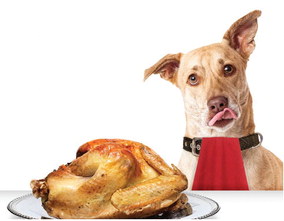

Most dog or cat owners view their pets as beloved family members, so it’s not surprising that pet owners are often tempted to share tidbits and table scraps from the Thanksgiving feast with their furry companions.
Thanksgiving fare, the result can be serious digestive problems, a trip to the vet, or even death.
Make no bones about it
One of the biggest mistakes pet owners can make is to throw turkey or ham bones to a pet or leave the bones sitting out where they can be snatched by an enterprising dog or cat. Cooked bones can easily splinter into sharp pieces when chewed, and when swallowed, these sharp splinters can become lodged in the animal’s throat or esophagus, puncture the stomach, cause blockages, or perforate the intestine.
Don’t chew the fat
Fatty turkey skin is another item that often gets slipped under the Thanksgiving table to a begging pet. But what many people don’t realize is that foods such as turkey skin, gravy, or other fatty items—can be just as dangerous as cooked bones to pets. Along with causing digestive upset, fatty foods can trigger a potentially deadly inflammation of the pancreas known as pancreatitis.
Say goodbye to Sam and Ella
Most people are aware that undercooked turkey or cooked turkey that has been left sitting out too long can cause a serious case of food poisoning. Usually, the culprit in these cases is a microorganism called salmonella. When turkey is cooked long enough and to the correct temperature (a minimum internal temperature of 165 degrees F), the salmonella organism is destroyed and the turkey is safe for people to eat.
However, with bigger birds or birds that are stuffed prior to cooking, it’s easier for the center to remain undercooked, leaving enough of the bacteria alive to multiply. If the bird carcass is then left out for several hours within reach of a dog or cat, the animal may consume contaminated meat and become ill.
Spare the stuffing
While no two turkey stuffing recipes are identical, certain common ingredients can spell serious trouble for dogs and cats. Among these oft-used-but-dangerous ingredients are onions, scallions, and garlic, which are extremely toxic to our furry friends.
Hold the grapes and raisins
Grapes and raisins commonly appear in certain Thanksgiving side dishes (think fruit salads, ambrosia salad, some turkey stuffings, etc.) but are poisonous and potentially deadly to dogs and cats.
Don’t string ‘em along
The string used to tie turkey legs can also pose a problem for pets. If ingested, the string can cause serious intestinal blockage. Cats are especially at risk because they love to play with string anyway, and the fact that the turkey string is soaked in delectable juices makes it all the more irresistible. To eliminate this hazard, put the string and carcass in a plastic bag and place it in a securely covered trash container outside the house.
Skip the dessert
Those of us who are carrying a few more pounds around the middle than we should might want to forego dessert on Thanksgiving. But for pets, the danger of eating sweets goes beyond mere weight gain. Take dogs and chocolate for example. Chocolate contains the drug theobromine, which can harm a dog’s heart and nervous system and can even be deadly in sufficient quantities. Though different forms of chocolate contain different levels of theobromine (e.g., ounce for ounce, baker’s chocolate contains more than milk chocolate does), it’s still wise to keep chocolaty treats well out of the reach of your furry friends.
This is by no means a comprehensive listing of Thanksgiving foods with the potential to harm our beloved pets. Considering the possible severe health ramifications of making the wrong assumption, it’s best to save the people food for people. If you want to treat your pet this Thanksgiving, stick with commercial pet products instead. Also, be sure to advise your guests that it’s dangerous to feed table scraps to your pet. Your dog or cat may whine at the injustice of it all, but protecting your furry friend from serious illness is worth a little whining. ✲