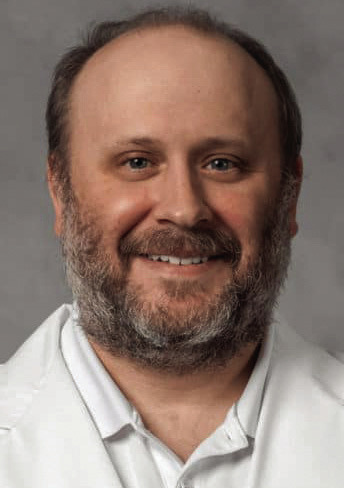
In fact, according to Richard Phinney, MD, of The Toledo Clinic Cancer Centers, the importance of regular and appropriate breast cancer screening cannot be overstated.
“The objective of breast cancer screening is early detection,” he explains. “Breast cancer caught early tends to be easier to treat with the greater potential of a superior outcome. Of course, the opposite is also true. When screening is infrequent or irregular, there’s a higher chance that breast cancer will be detected at a later stage when it’s more difficult to treat and the outcome is potentially less favorable.”
Unfortunately, despite the proven benefits of breast cancer screening and early detection, Dr. Phinney and his colleagues still see patients on a regular basis who don’t get screening mammograms as they should.
How effective is mammography at detecting breast cancer early? Dr. Phinney states that the answer to that depends on which source you ask. For example, the Susan G. Komen organization rates the overall sensitivity of mammography at 87 percent, while the University of Colorado Hospital rates the sensitivity of this technology at 78 percent overall. In any case, mammography has long been—and remains—the best available tool for early breast cancer detection.
In addition, technological advances continue to make mammography more effective. Dr. Phinney explains, “For a few decades, we had 2D mammography, which definitely helped in terms of earlier breast cancer detection. Then, around five to ten years ago, 3D imaging was introduced and proved to be a real gamechanger. Now, there’s an even newer technology called 3D mammography with tomosynthesis. In layman’s terms, this technology is a form of x-ray imaging added to mammography, which significantly improves its sensitivity. In my opinion, this should be the new standard of care for mammography, and I’d be surprised if it’s not available in every cancer center around the nation.”
The current recommendations on when and how often women should get mammograms can be a source of confusion because, as with the sensitivity ratings applied to mammography, different organizations offer different recommendations. According to the American Cancer Society, women between the ages of 40 and 44 should have the choice of whether or not they want to have mammograms. Then, starting at age 45, they should begin getting them once a year. On the other hand, the Mayo Clinic, a medical practice and medical research group based in Rochester, Minnesota, recommends getting an initial mammogram at age 40 and then getting one annually thereafter. Dr. Phinney share’s the Mayo Clinic’s recommendation— mammograms beginning at age 40 and continued annually for the long term— for women at average risk of breast cancer. “People who need them more frequently are those considered highrisk, for example individuals who have a genetic mutation that predisposes them to breast cancer or those with a first-degree relative who had breast cancer. I advise my high-risk patients to combine annual mammogram with annual MRI and to stagger them six months apart,” he says.
Some sources recommend that women age 55 or older could safely reduce the frequency of their mammograms to once every two years. As an oncologist, whose patients already have or had cancer, Dr. Phinney still adheres to the recommendation of once-a-year mammograms beginning at age 40. However, he concedes that women in that age group who are at average risk and followed by a primary care physician could potentially reduce the frequency of mammograms to once every one to two years.
One of the questions many patients ask Dr. Phinney is, “When can I stop getting mammograms?” His position on this important question takes into account the fact that many people today are living longer as well as maintaining better health at later stages of life. “If you discontinue
n screening mammograms too soon and end up living a much longer life, you risk developing breast cancer at a later age. My advice is, if your life expectancy is less than five years, it might make sense to stop, but if you’re likely to live more than five years, you should keep on going with screening mammograms,” he says.
The Toledo Clinic Cancer Centers, located at 4126 N. Holland Sylvania Road, Suite 105, also provides imaging, laboratory, chemotherapy, specialized pharmacy, and IV services. The cancer center consists of 8 medical and 3 radiation oncologists along with 11 nurse practitioners and 4 research nurses. The cancer center also has satellite centers in Maumee, Napoleon, Bowling Green, Wauseon, and Monroe.
The Toledo Clinic Cancer Centers has earned Patient-Centered Specialty Practice recognition and Oncology Medical Home recognition from the National Committee for Quality Assurance. Oncology homes align systems and resources with coordinated care focused on cancer patients and their needs. This reduces fragmentation, supports shared decision making, and improves the patient experience. They are the first oncology practice in the state of Michigan and the second oncology practice in the state of Ohio to receive this recognition.
For more information, please call The Toledo Clinic Cancer Centers at 419-479-5605. ✲