
MANY PEOPLE BELIEVE that because of the upcoming holidays, this is the best time of year. But in one sense, it’s not.
“This is the worst time of year for dieters,” observed Laurie Syring, clinical nutrition manager at ProMedica Flower Hospital. “It’s the trifecta. It starts with Halloween, then Thanksgiving and Christmas.”
She said for those who try to lose or maintain weight, the wealth of rich, sugary, calorie-laden food “can really sabotage your efforts. Thanksgiving can really tip the scales, so to speak, because we may eat on average 2,000 calories a day, but on Thanksgiving Day, with all the side dishes and hors d’oeuvres and pies, we can eat an excess of 3,000 calories.”
For a guide on how to eat healthy on the second of this trifecta, Syring offers what she calls the three Ps: planning, purchasing and prep, and portions.
“First, you have to have a plan. Part of your planning is deciding if you’re going to continue your weight loss efforts or maintain your weight if that is your goal over the holidays, or if you’re okay with gaining a few pounds. Once you have that plan, the next step is purchasing and prepping healthier foods for your meal.
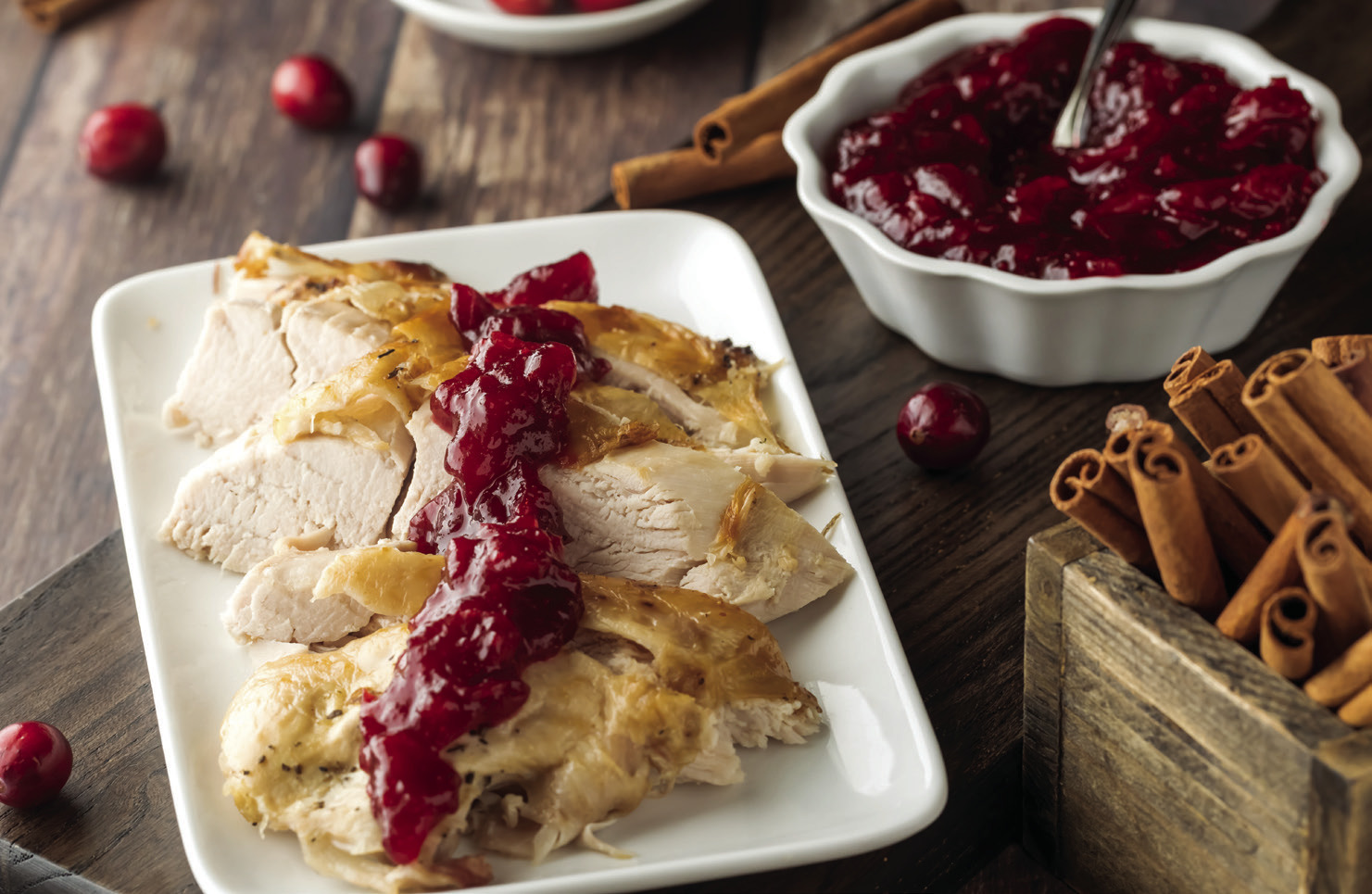
“It’s all the sides where we tend to get in trouble—candied sweet potatoes, green bean casseroles, mashed potatoes with gravy made from drippings.” For a healthy meal, “purchase and prepare healthy side dishes, like roasted butternut squash, roasted brussels sprouts, and carrots. Load up on vegetables.” Instead of canned cranberry sauce, Syring suggests making a healthy side by putting fresh cranberries with a cut-up apple and orange into a food processor with honey and ginger.
“If making mashed potatoes, use skim milk, half the butter you usually do, and just pepper—no salt. You can always mix in scallions.”
Turkey by itself is pretty healthy, she said, so long as it’s roasted. Even deep-frying the bird is fine. “If the oil is the proper temperature, it cooks the turkey nicely and the skin actually prohibits a lot of the oil from going into the turkey.” Don’t eat the skin, she said, because it’s all fat.
Some cooks brine their turkey overnight, but that adds a lot of salt to the meat. “If you’re salt-sensitive or following a low-sodium diet, soaking it in brine is not something you want to do.”
She shifted to the third “P.” “For people who eat healthy year-round, if this is your one day to splurge, then it comes down to portions. Take only a couple tablespoons of each side. Don't load up your plate like Mount Everest. Use portion control.”
When it comes to dessert, her advice: “If you’re faced with several options, take a piece of pumpkin pie. It’s packed with nutrients and far fewer calories than pecan pie or apple Dutch crumble pie, and has vitamin A and potassium and fiber. And if all the desserts are high-calorie, it comes down to portions.”
Make room for that pie by, she said, forgoing a dinner roll or a side. “Skip those because you know you’re going to work in that piece of pie.”
Think healthy early in the day. “Don’t starve yourself thinking you’re going to save your calories for later. That makes you hungrier. It’s important to start the day with breakfast—something simple and light, yogurt with granola, or a hardboiled egg, or oatmeal with some berries.”
She added, “Drink water throughout the day. Stay hydrated.” And remember that alcohol can add a lot of calories.
“The other thing I love is being active for the day. Plan for some activity, whether going for a walk in the morning or after dinner. Always plan for some type of activity, like getting the kids outside playing football in the yard.”
Syring wakes people up to the idea of not taking a nap after the meal. Turkey has tryptophan, which leads to drowsiness. “Fight the urge to go to sleep.”
Apart from the healthy suggestions, Syring raises a point: There likely will be a turkey shortage. She said an avian flu led to millions of turkeys being euthanized. “You might want to get your turkey early.”
There are alternatives. “Ham’s low in fat. It can certainly be a replacement.” As can a roast or roasted chicken. “There are vegetarians or vegans who will use a vegetarian roast—a meatless, healthy protein option.”
All that being said, Syring offers a happy conclusion: “The crux of the holiday is to enjoy who you’re with and what you’re eating. It’s all about spending time with family and loved ones over a good meal that doesn’t necessarily have to be bad for you.” Dennis Bova is a freelance writer and editor. ✲