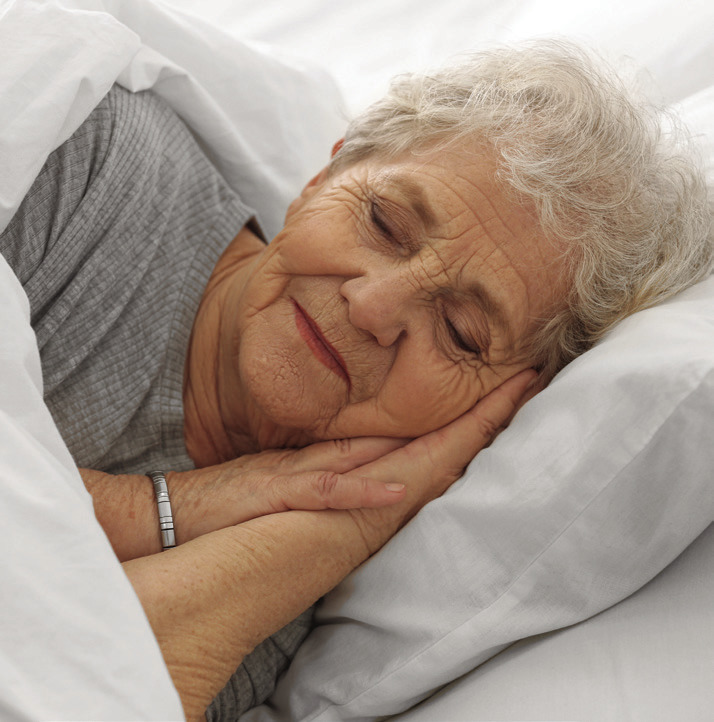
DO YOU GET ENOUGH SLEEP?
Most of us older adults struggle with getting a good night’s sleep. Due to the natural aging process and a decrease in hormone production, older adults experience less deep sleep— one of the most refreshing parts of the sleep cycle.
That’s also why older adults are prone to waking up more frequently and often wake up feeling less rested. We’ll explore remedies to help older adults achieve their best night’s sleep.
Experts at Harvard Medical School offer tips to improve sleep. Here are some:
• Establish a regular sleep schedule—that is, go to bed and get up at the same time every day. Turn your bedroom into a sleep-inducing environment. Make sure your bed and surroundings are comfortable. Arrange the pillows so you can maintain a comfortable position.
• Keep your bedroom dark and quiet, and use your bedroom for sleeping only—don’t work or watch TV in your bedroom.
If needed, use a sleep mask or get heavy curtains.
• Avoid napping during the day; nap early or not at all. Keep your nap short and before 5:00 pm. At the same time, remember to balance daily activity with periods of rest.
Maintain a regular exercise routine, but don’t exercise within two to three hours before the time you go to bed.
Naturally, the more energy used during the daytime, the more ready your body will be to rest at night. Getting in a day’s worth of moderate, regular physical activity contributes to better sleep. If you feel anxious or nervous, talk to your spouse, partner, or a trusted friend. Get your troubles off your mind.
• Listen to relaxing music. Do not rely on sleeping pills— they can be harmful when taken with other medications.
Take diuretics, or “water pills,” earlier if possible so you don’t have to get up in the middle of the night to use the bathroom.
Avoid caffeine, alcohol, and nicotine and other chemicals that interfere with sleep.
Limit coffee or tea after lunch, or use decaffeinated beverages.
Alcohol is commonly used as a sleep aid. However, although alcohol can help a person fall asleep more quickly, the quality of sleep is compromised. Drinkers beware and be informed: Irregular sleep isn’t the only bad result with regular drinking. It raises the risk of dementia and Alzheimer’s and also tends to worsen sleep apnea, which further disrupts sleep.
If you’re not getting seven-anda- half hours of sleep a night, ask your doctor for advice. Don’t ignore the need for quality sleep as you age. Instead, develop and maintain healthy sleep habits. Some say sleep is just as important for senior health as exercise and nutrition. Wishing you a restful sleep tonight.
Daniel J. Jachimiak, BA, is a feature writer, journalist, and speaker. He can be reached at djachimiak@bex.net or 419-787-2036. ✲