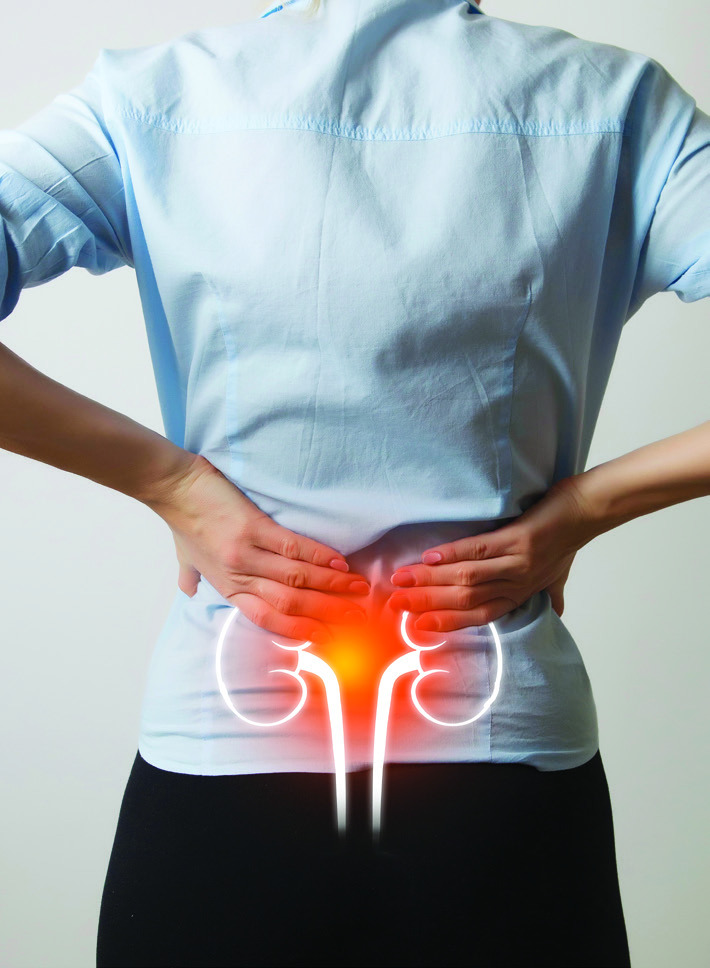
MOST OF US ARE blissfully unaware of the important role the kidneys play in keeping us alive and healthy—and what can happen if these vital organs stop functioning as they should. In fact, it’s the rare individual who can identify the exact location of the kidneys in the body without doing a quick Google search.
What do the kidneys actually do? According to the Kidney Foundation of Northwest Ohio (KFNWO), healthy kidneys perform several vital functions. They include:
• Removing waste products and drugs from the body
• Balancing the body’s fluids
• Synthesizing vitamins that control growth
• Controlling the production of red blood cells
• Releasing hormones that regulate blood pressure.
On a daily basis, your kidneys filter approximately 200 quarts of blood and remove about two quarts of waste products and excess water, which is eliminated as urine.
This filtering process is carried out by tiny structures in the kidneys known as nephrons, and there are about one million of them in each kidney. Kidney disease begins when the nephrons are damaged and begin to decline in their ability to remove waste products from the blood. Left untreated, kidney disease can progress to the point of kidney failure, or end-stage renal disease, which necessitates dialysis or kidney transplantation.
Who is at risk of developing kidney disease? People with diabetes are at significantly higher risk than the general population. Other risk factors include poorly treated or untreated high blood pressure, congestive heart failure, heart disease, peripheral vascular disease, and smoking. African Americans, Hispanic Americans, Asians, Pacific Islanders, Native Americans, and individuals with a family history of kidney disease are at greater risk, as well.
When it comes to chronic kidney disease, an ounce of prevention is far superior to a pound of cure, so here are several steps you can take to help keep your kidneys healthy for a lifetime:
Stay hydrated
Dehydration is no friend to proper kidney function, so be sure to drink plenty of water every day—even if you don’t feel thirsty. Staying well hydrated will not only help prevent the obstruction and impairment of those tiny filtering nephrons, but it will also reduce the likelihood of kidney stone formation. Try to drink at least four to six cups of water per day.
Adopt a healthy diet
The same dietary habits that help prevent diabetes, high blood pressure, and heart disease will be beneficial in keeping kidney disease at bay. That means avoiding foods high in fat, salt, and sugar as well as highly processed foods in general, adopting instead a diet rich in fruits, veggies, and whole grains.
Get regular moderate exercise To help prevent diabetes and other chronic health conditions that can lead to kidney disease, try to do at least 150 minutes of moderate- intensity physical activity each week. A common recommendation is to do 30 minutes of exercise five days per week. However, you can also break up that 150 minutes of exercise into shorter periods and ultimately derive the same benefit. If you aren’t accustomed to exertion, start out slowly and work your way up gradually to a higher level of intensity, and be sure to consult with your physician before beginning any exercise regimen.
Be careful with medications and supplements Certain medications, such as nonsteroidal anti-inflammatory drugs (e.g., ibuprofen), proton pump inhibitors, and certain antibiotics, can damage the kidneys if taken too often, for too long, or in too high a dose. Also, certain herbal supplements can be harmful to the kidneys or may interact adversely with medications. Be sure to get clearance from your doctor before you start taking any medication or supplement.
Avoid smoking and limit alcohol Among the numerous health risks associated with smoking is that it damages the cardiovascular system, which can impair blood flow to the kidneys, causing damage over time. Smoking is also known to increase the risk of certain forms of kidney cancer. So, if you smoke, find a way to quit, and if you don’t smoke, don’t start. Occasionally consuming small amounts of alcohol is not typically harmful to the kidneys. However, binge drinking or regularly drinking too much too often can cause kidney damage. Men are advised to limit their alcohol consumption to no more than two drinks per day, and women to no more than one drink per day.
As already noted, certain chronic conditions, most notably diabetes and high blood pressure, can lead to kidney disease if not properly managed. In addition to adopting the healthy habits outlined above, it’s critical for individuals with known chronic ailments to work closely with their healthcare provider in monitoring the levels and blood values specific to their condition, as well as to adhere carefully to their prescribed treatment regimen.
So now you know what your kidneys do and, more important, how to keep them healthy.
Oh, and if you’re still wondering where your kidneys are located, they’re in the middle of your back, just below your rib cage, at the approximate level of your elbows. ✲