Just get the shot!
“YOU ARE A GOOD Dr. Wasczak! A nice Dr. Wasczak,” I chattered.
I was trying to sweet talk our family doctor when I was five years old decades ago. My mother took me to the downtown Detroit office where I was supposed to get my toddler checkup and a booster shot.
I did not worry about it—I obsessed about it. Days before my appointment, I dreamt about the shot, the pain, and passing out in the doctor's office. I cried myself to sleep from anxiety. I really did a fine job working myself up into a near-frenzy about an injection.
Despite my mother’s attempts to calm me, I was a nervous wreck. Of course, my two older brothers did not help matters by telling me that “only four out of five little kids die from the painful injection.”
Finally, the day arrived and my heart was pounding (I can still feel it today). I jumped up on the examination table, and Dr. Wasczak came in. I looked around for needles on the counter, but there was only some cotton and the wooden tongue things (depressors). So far, so good! Dr. Wasczak washed his hands and asked my mother some questions about me. The doctor then opened a wooden cabinet and I knew my end was near.
That’s when I started the brown-nosing, the schmoozing of the doctor who was going to give me that booster shot. My plan was to distract him so that he would forget to give me the shot. I let it rip.
“Hi, Dr. Wasczak. You look really nice today. I like you. You are a smart, Dr. Wasczak.”
I do not know how he managed it, but he gave me the shot right in the middle of my routine.
“You bad Dr. Wasczak!” I shouted as he wiped the injection site with a cotton ball.
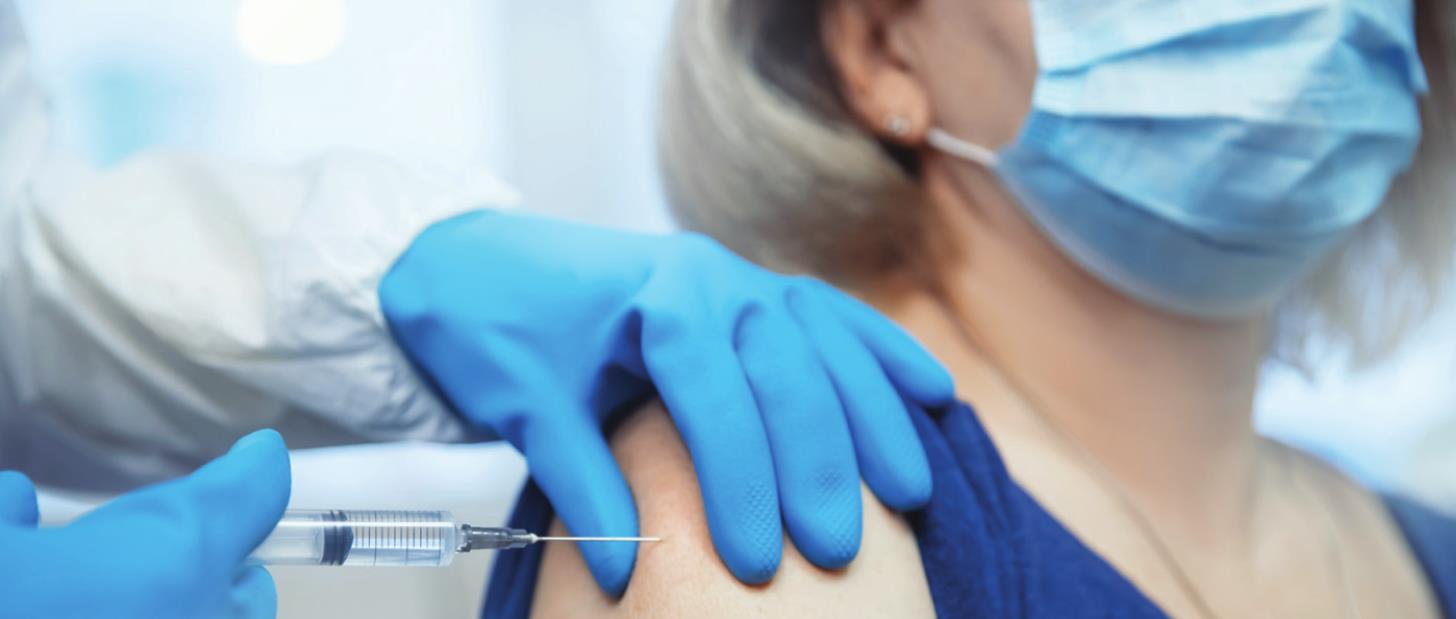
So today, during this pandemic, our medicine comes through an intramuscular injection. Why does it have to be an injection? Won’t my life with injections ever stop? I asked my friend Judi L. Nath,
I asked my friend Judi L. Nath, Ph.D. (check out her website which is impressive: www.judinath.com)—author, biology professor, and just an excellent medical and health translator for all of us—why we had to deal with the injection delivery route for COVID-19.
Judi explained, “When delivering a drug into the body, we have to consider what the drug is made of and where it needs to go. For example, if we need something to act really quickly, it can be delivered directly into a vein. Some drugs like nitroglycerin are given under the tongue (sublingually) so they dissolve rapidly and reach target cells/tissue. This is why some drugs can be given by mouth (orally) while others have to be delivered with injection (subcutaneously or intramuscularly).”
She continued saying that the drug needed enough potency to reach the target tissue without harming the body. So, if a drug is given by mouth, enough of the drug itself has to reach its target after going through the digestive system. Our livers are really good at metabolizing things we consume—it’s what the liver does. And this metabolism is referred to as “first-pass,” which means once the broken-down products have been through the liver and back out to the bloodstream, there has to be enough drug available to do its job. It’s a tricky balance in drug development: you have to reach the sweet spot.
So, with vaccines, the adjuvant, which is the substance that enhances the body’s immune response to an antigen, has to be delivered in a muscle so the drug reaches its target. In all, we need to take into consideration the makeup of the drug, its pharmacodynamics (biochemical and physiologic effects and mechanisms of action), pharmacokinetics (how it is absorbed and distributed), and biotransformation (metabolism).
Judi’s information helped me understand a little better why injections are needed to deliver certain drugs efficiently. Knowledge is power, and when I understand more, I feel like I have more control over it. I have learned a lot in my own medical journey about some medications. I’ve also learned that there are many things I cannot sweet-talk my way out of! If a medication will help me from developing severe disease or delay its progression, I will roll up my sleeve and meet my needle.
Life is funny. The little girl who obsessed about her booster shot and for years hated needles and had been on MS-delaying drugs (injections!) for almost 20 years, even self-injecting three days a week, now takes oral MS medication.
A number of us have an aversion to needles in our bodies, but the overall good is well worth it for our health and well-being. Do what many of us needle wimps do—close your eyes or look away. And ask for a fun band aid if they have them.
Sister Karen Zielinski is the Director of Canticle Studio. Canticle Studio is a part of the Sisters of St. Francis of Sylvania, OH’s overall advancement effort and has a mission of being a creative center where artists generate works, products, and services in harmony with the mission of the Sisters St. Francis. She can be reached at kzielins@sistersosf.org or 419-824-3543.