Crushing chest pain may be the classic symptom of heart attack, but if you think it’s the only sign to watch for, you might want to think again.
It's also important to recognize that heart disease and heart attack are not just a “men’s issue” as popular perception would have it. In fact, heart disease is the number-one killer of both men and women.
A heart attack occurs when waxy plaques block the flow of oxygen-rich blood to the heart muscle. If the blockage isn’t relieved promptly, the heart muscle tissue that is supplied by the blocked artery will soon begin to die. The more time that is lost in seeking emergency medical care for a heart attack, the more heart tissue is lost. Hence, it’s critical to be aware of your level of heart attack risk and to educate yourselfonthewiderangeofsymptoms that heart attacks can cause.
The National Institutes of Health (NIH) identifies the following risk factors for heart attack: family history of heart disease, age, stress, unhealthy diet, smoking, overweight/obesity, diabetes or pre-diabetes, high blood pressure, high triglycerides, and high cholesterol. It’s important to discuss your risk factors with your doctor. Some can be controlled through appropriate lifestyle changes—exercise, proper diet, smoking cessation, etc.—while others might be manageable with proper medical treatment.
With respect to the major symptoms of heart attack, some degree of chest pain or discomfort is, indeed, the most common. According to the Centers for Disease Control and Prevention website, cdc.gov, “Most heart attacks involve discomfort in the center or left side of the chest that lasts for more than a few minutes or that goes away and comes back. The discomfort can feel like uncomfortable pressure, squeezing, fullness, or pain.”
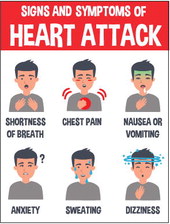
However, it’s not unusual for very different symptoms to manifest themselves during a heart attack. In addition to chest pain or discomfort, symptoms of a heart attack might include (but aren’t limited to) pain radiating down the inside of the arm, usually, but not always, the left arm; pain in the upper body, such as above the upper back, in the jaw, or in the neck; shortness of breath; lightheadedness; nausea and vomiting; abdominal pain or heartburn; sweating; and anxiety. Both men and women can experience any of these symptoms during a heart attack, but it’s important to note that symptoms unrelated to chest pain are more likely to occur in women than in men.
Interestingly, many women who have had a heart attack report having experienced warning signs as early as a month or more before the actual event—though they may not have recognized them for what they were at the time. NIH research shows that the most common early warning signs of heart attack among women are unusual fatigue, sleep disturbance, and shortness of breath.
Whenpeopleexperiencemoresubtle heart attack symptoms and chest pain is absent, they commonly attribute the symptoms to other common ailments, such as the flu, gastrointestinal issues, or arthritis pain. As a result, they may delay seeking medical help until after significant damage has already been done to the heart. This is an especially commonphenomenonamongwomen who, as already noted, are more likely than men to experience atypical heart attack symptoms.
Another factor that often contributes to women ignoring potential heart attack symptoms or delaying seeking treatment is the tendency of women to assume the role of family caregiver. Women commonly put the needs of children, spouses, elderly parents, and other loved ones ahead of their own and, so, feel awkward or embarrassed about drawing attention to themselves or putting their needs ahead of others—even when it comes to major health concerns. Also, since women’s heart attack symptoms or early warning signs tend to be more subtle, they may wait to see if they resolve on their own or try remedies for other ailments, such as indigestion or arthritis pain, before seeking help.
What’s more, once women do seek medical help for atypical symptoms, it’s all too easy for doctors to misdiagnose the problem because many are conditioned to view crushing chest pain as the hallmark sign of heart attack.
If you think you or someone else is having a heart attack, call 911 without delay. Don’t attempt to drive yourself or another victim to the emergency room. Emergency medical technicians will be able to initiate medical treatment as soon as they arrive on the scene as well as en route to the ER, which can buy your heart valuable time. They’ll also get you to the hospital—and advanced care—as quickly and safely as possible.
Most important, don’t let concern about a potential false alarm dissuade you from seeking prompt emergency medical care if you suspect you’re having a heart attack. When it comes to the number-one killer of both men and women, it’s always better to be safe than sorry. ✲