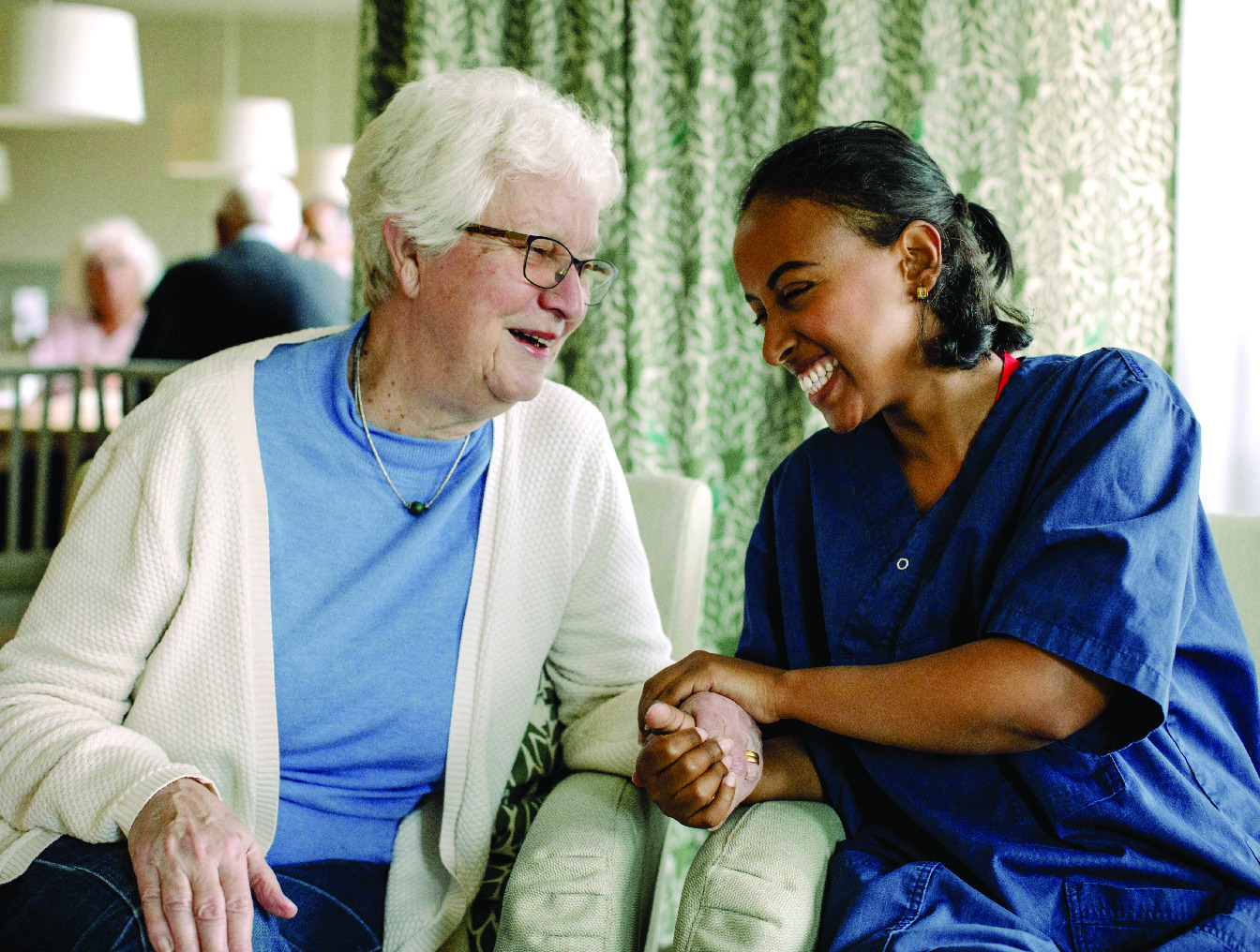
SUPPORTING A LOVED ONE THROUGH MEMORY LOSS IS A JOURNEY.
Acting ahead creates a proactive plan that fosters continued engagement and joy. Recognize early cues to find a supportive environment that feels like home. While memory loss is a significant transition, the transition provides an opportunity for a loved one with the highest quality of life and dignity. Proactive care ensures a loved one stays connected, cherished, and well-supported every step along the way.
Early signs
The Alzheimer's Association highlights several common early signs beyond occasional forgetfulness.
These include difficulty with familiar tasks (e.g., preparing a traditional family recipe), issues with simple problem-solving, disorientation to time or place, new problems with words in speaking or writing and significant, sometimes unsettling, changes in mood or personality. If these patterns become consistent, a medical evaluation is warranted to discuss next steps and essential care.
Respite care: A vital support system for caregivers Caring for a loved one with memory loss demands full-time commitment. It is essential for caregivers to prioritize well-being to avoid burnout. Respite care provides temporary relief for primary caregivers to offer a muchneeded break from the daily responsibilities of caregiving.
At the same time, it ensures a loved one continues to receive high-quality, specialized care in a safe and supportive environment.
Respite care takes on various forms, from a few hours a day to a few days or even weeks, depending on specific needs.
The following ways respite care can be beneficial •Prevent caregiver burnout. Taking the time to rest, manage personal appointments, or simply re-energize is crucial for your physical and emotional health.
•Manage emergencies or unexpected events. If time is needed to travel, undergo a medical procedure, or deal with an unforeseen event, respite care offers a reliable solution.
•Test out a memory care community. Respite stays can serve as a beneficial trial period to ease the transition, while allowing a loved one to experience the environment and activities of a memory care community, before a more permanent move.
•Provide social engagement for a loved one. While in respite care, a loved one will benefit from structured activities, social interaction, and specialized care that might not always be feasible at home.
•Choose the right memory care community. Selecting a loving and supportive memory care community is essential.
Madonna Manor in Villa Hills, Kentucky, has specialized medical staff trained in dementia care to engage activities tailored to specific cognitive levels that encourage joy, care and connection and a low resident-to-staff ratio for personalized care.
•When it comes to evaluating options, look for a positive, warm atmosphere where a loved one feels valued and supported.
Ask about their approach to managing behavioral changes, family involvement, and medication protocols.
•Broach the conversation. Discussing memory care can be a sensitive conversation necessary to have with empathy and patience.
The Geriatric Mental Health Foundation suggests approaching the topic with deep understanding, focusing on safety, comfort, and, importantly, how this new environment will allow them to maintain as much independence as possible within a supportive framework.
Frame it as a decision to enhance well-being, and provide a specialized, loving and thriving community, rather than a loss of autonomy.
Involve a trusted physician who can explain the benefits of specialized care and reinforce the need for support, often lending a level of authority that can be helpful. Remember, this is a process, and is essential to have the patience for repeated conversations.
Early exploration of respite care offers flexibility and peace of mind for both caregivers and their loved one and a step towards a longterm care plan.
Navigating memory loss is a journey, but with informed decisions and communication, families can ensure a loved one receives the dignity, joy and support deserved.
For more information, experts at St. Clare Commons are here to help.
Please contact Brandon Hemminger, executive director, at 567336-6337 or email brandon.hemm inger@commonspirit.org. ✲