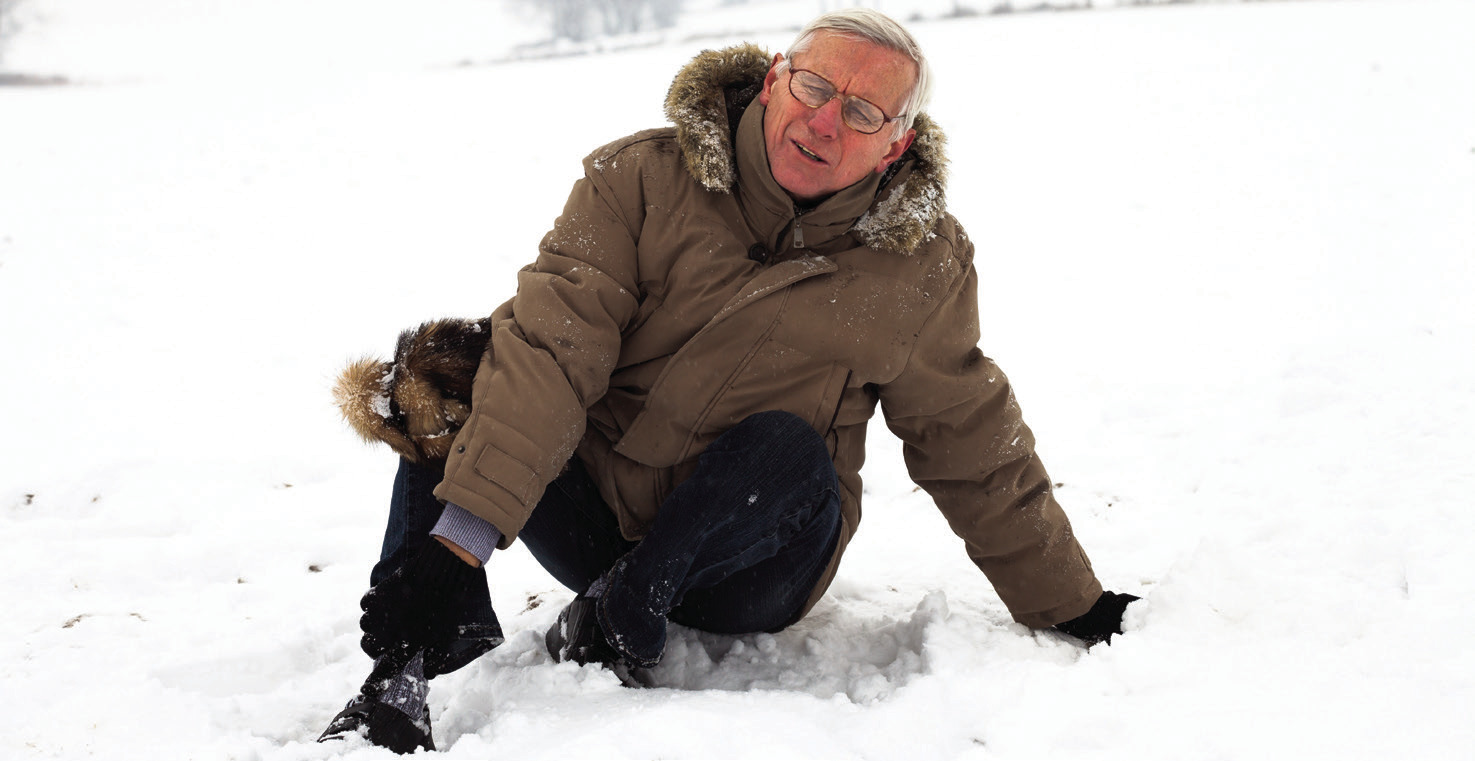
IT MAY STILL BE AUTUMN, but very soon Old Man Winter will arrive and, if history is any guide, turn all of Northwest Ohio and Southeast Michigan into one big slip-and-fall hazard. Area residents who aren’t especially cautious and vigilant while navigating icy or snow-covered surfaces can all too easily end up taking a painful tumble.
However, with a few simple precautions, you can greatly reduce the risk of falling on slick outdoor surfaces. Here are some strategies to consider now that will help you avert disaster once winter arrives:
1. Ensure deicer is easily accessible
Sidewalk/driveway deicer isn’t much help if you have to walk across perilously slick surfaces to reach it in a detached garage or storage shed. Keep your deicing product within easy reach inside your home (e.g., in a foyer or mudroom) or an attached garage. The same applies to your snow shovel.
2. Outsource snow and ice removal Not only can the act of shoveling heavy snow in the cold present serious health risks in and of itself, but it can also put people in much greater jeopardy of experiencing a slip-and-fall accident. Consider hiring a professional snow-removal service—if not one of your kids or grandkids—to take on this treacherous chore for you. It will be money well spent, and your body will thank you for it.
3. Choose slip-resistant shoes We all know it’s wise to verify that we have adequate tread on our vehicle tires before winter sets in, but it’s equally important to ensure that our shoes, boots, and other footwear will provide adequate traction on snow and ice. Dress shoes can be particularly slip-prone, so if you’re heading somewhere dressy, it’s a good idea to wear slip-resistant shoes or boots en route and then change into your dress shoes once you arrive.
4. Evaluate your railings
That ornate wrought-iron railing along your sidewalk front stairs may give your home wonderful curb appeal, but how will it hold up in the event that it has to support your entire body weight after you slip on ice? If inspection reveals that a railing is wobbly, rusty, or otherwise structurally compromised, consider getting it replaced with something sturdier before winter returns.
5. Keep your hands at the ready While navigating potentially slick sidewalks, driveways, steps, or parking lots, be sure to keep your hands free so you can grab a railing or other stable object in the event of a slip—and so you can break your fall if you can’t regain your balance. Wear gloves or mittens instead of warming your hands in your pockets, and get help with carrying groceries or other loads on icy or snowy surfaces.
6. Leave the snow and ice outdoors
Snow and ice carried indoors on boots and shoes can create a major slip-and-fall hazard on hard flooring surfaces, such as wood, linoleum, and laminate. Remove snowy/icy footwear at the door (and encourage visitors to do the same), and be sure to wipe up tracked-in snow, ice, or water promptly.
7. Seniors: consider a medical alert system We all recall—and have probably snickered at—that famous Life Alert catchphrase: “Help! I’ve fallen and I can’t get up!” But experiencing a debilitating fall with no one nearby to help is no laughing matter. Factor in extremely cold temperatures, and such a fall can quickly turn deadly. To avoid this scenario, it’s strongly advised that seniors utilize a medical alert system so medical help and other emergency services can be reached at the push of a button.
Of course, having a lifeline to help isn’t important only for seniors. People of all ages are encouraged to carry a cell phone in an easily accessible location on their body during the winter months so they can call for assistance if they should fall and can’t get back on their feet.
8. Take advantage of preventive physical therapy This last strategy can be especially helpful for anyone who may be in a “deconditioned” state due to inactivity. Stronger arm, leg, and core muscles will help you maintain your balance better, make it easier to catch and stabilize yourself if you slip, reduce the risk of serious injury in the event of a fall, and help you get back on your feet more easily. A qualified physical therapist or personal trainer should be able to help you implement a manageable workout regimen that will strengthen these key muscles. ✲